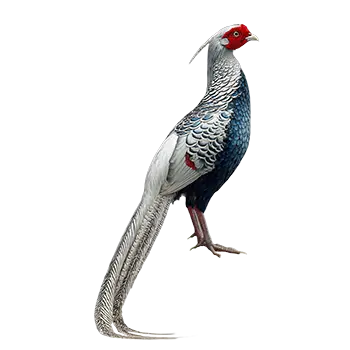

International Conservation Status & Treaty Protections

The Silver Pheasant (Lophura nycthemera) is currently classified as Least Concern on the International Union for Conservation of Nature Red List, a designation that reflects the species' broad geographic range, relatively stable global population, and capacity to tolerate moderate habitat disturbance. This conservation assessment, however, does not exempt the Silver Pheasant from the regulatory frameworks that govern international trade in wildlife. Understanding where the species sits within these frameworks is essential for anyone involved in keeping, breeding, or transporting Silver Pheasants across national boundaries.

The primary international instrument governing trade in wild animals is the Convention on International Trade in Endangered Species of Wild Fauna and Flora, commonly known as CITES. The Silver Pheasant is not listed on CITES Appendix I or Appendix II at the species level, which means that it does not face the most stringent trade restrictions imposed by the convention. However, individual range states may include the species under Appendix III, which allows a country to request the cooperation of other CITES parties in regulating trade in species that the listing country manages under its own domestic law. China, for example, has at various times placed certain pheasant species under heightened domestic protection, and exporters and importers must verify the current listing status before arranging any cross-border transaction.

Beyond CITES, other multilateral agreements may affect the movement of Silver Pheasants depending on the countries involved. The European Union's Wildlife Trade Regulations, which implement CITES within EU member states, apply their own categorization system and may impose additional requirements beyond those of the convention itself. Similarly, bilateral agreements between specific countries can create regulatory obligations that go beyond the baseline established by CITES. Prospective importers and exporters of Silver Pheasants must research not only the CITES status of the species but also any applicable regional or bilateral instruments that may govern their particular transaction.

It is critical to note that conservation status designations and trade regulations are subject to change. Species may be uplisted or downlisted on the IUCN Red List as new population data become available, and CITES appendix listings are reviewed at regular Conferences of the Parties. Anyone involved in the trade or keeping of Silver Pheasants should consult the most current regulatory information from their national CITES authority and relevant wildlife management agencies before undertaking any transaction involving the species.

National Wildlife Laws & Federal Regulations

In the United States, the regulatory environment for keeping and breeding Silver Pheasants is shaped primarily by federal law and its interaction with state-level statutes. At the federal level, the Lacey Act prohibits the trade in wildlife that has been illegally captured, transported, or sold in violation of any federal, state, tribal, or foreign law. For Silver Pheasant keepers, this means that any bird acquired through illegal channels, whether domestic or international, is subject to federal prosecution regardless of the keeper's knowledge of the bird's provenance. Maintaining clear documentation of the legal origin of all birds in a collection is therefore not merely good practice but a legal necessity.

The Migratory Bird Treaty Act, which provides comprehensive federal protection to most native North American bird species, does not apply to the Silver Pheasant, as the species is not native to North America and is not covered by the treaties that the act implements. This distinction is significant because it means that Silver Pheasants in the United States are regulated primarily as exotic or non-native wildlife rather than under the framework of migratory bird protections. The practical consequence is that federal permitting requirements for Silver Pheasants are generally less onerous than those for covered native species, though this does not eliminate regulatory obligations.

The United States Department of Agriculture's Animal and Plant Health Inspection Service (APHIS) regulates the importation of live birds into the country, including Silver Pheasants, under the authority of the Animal Health Protection Act. Imported birds are subject to quarantine requirements designed to prevent the introduction of avian diseases, particularly avian influenza and Newcastle disease. Compliance with APHIS import protocols, which include pre-import testing, approved quarantine facilities, and veterinary certification, is mandatory and can involve significant logistical planning and expense.

In other countries, the legal framework for Silver Pheasant ownership varies widely. In the United Kingdom, the keeping of pheasants, including non-native species such as the Silver Pheasant, is generally permitted without a specific license, though keepers must comply with animal welfare legislation and may need to meet local council requirements related to noise, enclosure standards, and environmental impact. In Australia, which maintains some of the strictest biosecurity and wildlife importation laws in the world, the importation of new Silver Pheasant stock is effectively prohibited, and existing captive populations are managed under state and territory regulations that vary in their permissiveness. Prospective keepers in any jurisdiction should consult their national wildlife authority before acquiring Silver Pheasants.

State & Provincial Permit Requirements

Within the United States, the legal requirements for keeping Silver Pheasants vary substantially from state to state, creating a regulatory patchwork that keepers must navigate with care. Some states classify the Silver Pheasant as a game bird and regulate its keeping under the same framework that governs native upland species, requiring hunters' licenses, game bird permits, or propagation licenses for anyone who wishes to maintain breeding stock. Other states treat it as an exotic or non-native species and may require a separate exotic animal permit, a wildlife possession license, or a combination of both.

States with significant pheasant farming industries, such as Pennsylvania, South Dakota, and Wisconsin, generally have well-established permitting systems for the propagation and sale of non-native galliforms, including the Silver Pheasant. In these jurisdictions, the process of obtaining a propagation permit is typically straightforward, involving an application, a modest fee, and periodic reporting of bird numbers and sales. Keepers in these states benefit from regulatory clarity and from the existence of a community of similarly licensed breeders and game bird operators.

Other states impose more restrictive requirements that can make Silver Pheasant keeping more challenging. Hawaii, for example, maintains strict controls on the importation and keeping of non-native bird species due to the vulnerability of its endemic avifauna to introduced diseases and competitors. Several states require facility inspections before issuing permits for exotic bird species, and enclosure standards may be specified in considerable detail. In a few jurisdictions, the keeping of certain non-native galliforms is prohibited entirely, or is restricted to licensed educational or zoological institutions.

In Canada, the regulation of non-native bird species falls primarily under provincial jurisdiction, and the requirements for Silver Pheasant keeping differ from one province to another. British Columbia, Ontario, and Alberta each maintain their own permitting frameworks, and keepers moving birds across provincial boundaries must ensure compliance with both the originating and destination province's regulations. The Canadian Food Inspection Agency also plays a role in regulating the importation of live birds into the country, with requirements that parallel but do not duplicate those of the United States' APHIS system. Prospective keepers should contact their provincial wildlife office and the CFIA well in advance of acquiring or transporting Silver Pheasants.

Import, Export & Interstate Transport Controls

The movement of Silver Pheasants across international borders is governed by a combination of CITES requirements, national import and export regulations, and veterinary health protocols. Even where the Silver Pheasant is not listed on a CITES appendix, exporters in range states may be required to obtain national export permits under their own domestic wildlife legislation. Importers must secure the necessary documentation from their own country's authorities before the birds leave the country of origin. Failure to obtain proper documentation can result in seizure of the birds at the port of entry, criminal prosecution, and significant financial penalties.

Veterinary health certification is a critical component of any international Silver Pheasant shipment. Most importing countries require that birds be tested for avian influenza, Newcastle disease, and other notifiable avian diseases within a specified window before departure. The testing protocols, approved laboratories, and acceptable timeframes for pre-export testing vary by country and may change in response to disease outbreaks. Exporters and importers must verify the current requirements with the veterinary authorities of both the exporting and importing nations and should build sufficient lead time into their plans to accommodate testing, certification, and any required quarantine periods.

Within the United States, the interstate transport of Silver Pheasants is subject to both federal and state regulation. The National Poultry Improvement Plan, administered by APHIS, provides a framework for the testing and certification of poultry and game birds moved across state lines. Many states require that incoming birds be accompanied by a Certificate of Veterinary Inspection, commonly known as a health certificate, issued by a licensed veterinarian within a specified number of days before transport. Some states impose additional testing requirements, particularly for pullorum-typhoid, before birds may be legally imported.

Keepers who sell or ship Silver Pheasants should also be aware of the regulations governing commercial animal transport. The Animal Welfare Act, enforced by APHIS, sets standards for the humane transport of certain categories of animals, and while its application to galliforms is limited, state anti-cruelty statutes may impose their own transport requirements. Shipping live birds through commercial carriers such as airlines or ground freight services triggers additional regulatory and carrier-specific requirements related to container specifications, temperature controls, and documentation. The complexity of these overlapping requirements makes it advisable for anyone planning to transport Silver Pheasants, whether domestically or internationally, to consult with an experienced avian transport broker or a wildlife trade compliance specialist.

Captive Breeding & Ownership Regulations

The regulatory framework for captive breeding of Silver Pheasants reflects the broader tension between the desire to support avicultural activity and the need to prevent the uncontrolled release of non-native species into the environment. In many jurisdictions, captive breeding of non-native galliforms is permitted under a propagation or breeding license that requires the keeper to maintain records of breeding pairs, hatchlings, sales, and dispositions. These records serve both regulatory and conservation purposes, providing authorities with data on the size and distribution of captive populations and enabling traceability in the event of disease outbreaks or legal disputes.

Enclosure requirements for Silver Pheasants are specified with varying degrees of detail across jurisdictions. Some states and countries set minimum dimensions for pheasant aviaries, specify the types of fencing materials that may be used, and require overhead netting or roofing to prevent escape. Others leave enclosure standards to the judgment of the keeper, relying on general animal welfare statutes to ensure adequate conditions. The rationale for prescriptive enclosure standards is twofold: to ensure the welfare of the birds and to minimize the risk of escape, which could lead to the establishment of feral populations or the introduction of diseases to native wildlife.

The sale of captive-bred Silver Pheasants is subject to its own regulatory considerations. In some jurisdictions, the sale of live game birds requires a specific sales or dealer license in addition to the breeding or propagation permit. Record-keeping requirements may extend to documenting the identity of purchasers, the number and sex of birds sold, and the date and method of transfer. These requirements are designed to create an auditable chain of custody for captive-bred birds and to facilitate enforcement actions against illegal wildlife trafficking.

Zoning and local ordinances represent an additional layer of regulation that Silver Pheasant keepers must consider. Many municipalities classify pheasants as poultry or livestock and restrict their keeping to areas zoned for agricultural use. Urban and suburban keepers may find that local ordinances prohibit the keeping of galliforms entirely, or impose limits on the number of birds, the proximity of enclosures to property lines, and the management of noise and waste. Before establishing a Silver Pheasant breeding program, keepers should verify that their property is appropriately zoned and that they are in compliance with all applicable local regulations.

Enforcement, Penalties & Compliance Best Practices

Enforcement of wildlife regulations affecting Silver Pheasant keepers is carried out by a range of agencies at the federal, state, and local levels. In the United States, the U.S. Fish and Wildlife Service is the primary federal agency responsible for enforcing CITES, the Lacey Act, and other federal wildlife statutes. At the state level, departments of natural resources, fish and game commissions, and agricultural agencies each play roles in permitting, inspection, and enforcement. Local animal control officers may also become involved where zoning violations or animal welfare concerns are raised. The multiplicity of enforcement bodies reflects the layered regulatory structure and underscores the importance of comprehensive compliance.

Penalties for violations of wildlife regulations can be severe. Federal offenses under the Lacey Act carry potential criminal penalties including fines of up to $250,000 for individuals and imprisonment of up to five years for knowing violations. State-level penalties vary but may include fines, license revocation, confiscation of birds, and criminal charges. Even unintentional violations, such as the failure to obtain a required permit or the inadvertent acquisition of a bird of illegal origin, can result in enforcement action, making proactive compliance an essential part of responsible Silver Pheasant keeping.

Best practices for regulatory compliance begin with thorough research into the specific legal requirements of the keeper's jurisdiction before acquiring any birds. Maintaining meticulous records of acquisitions, breedings, sales, and veterinary care is fundamental. These records should include the source and provenance of all birds, copies of relevant permits and health certificates, and documentation of any transactions involving the transfer of birds to other parties. Organized record-keeping not only satisfies regulatory requirements but also provides a defense in the event of an audit or investigation.

Engaging with avicultural organizations such as the American Pheasant and Waterfowl Society, the World Pheasant Association, or regional bird breeding clubs can provide keepers with access to current regulatory information, legal guidance, and community support. These organizations often maintain relationships with regulatory agencies and can serve as intermediaries in matters involving permitting, compliance, and policy development. Participation in the organized avicultural community also signals a commitment to responsible keeping that can benefit the keeper in interactions with regulators and in the broader public perception of the hobby. Staying informed, maintaining thorough documentation, and engaging constructively with both fellow keepers and regulatory authorities constitute the foundation of legal and ethical Silver Pheasant ownership.

Always consult a qualified professional before making any health-related decisions. This content is provided for informational reference only and should not replace professional guidance specific to your animal.