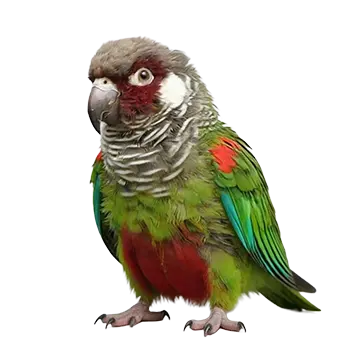

Pre-Travel Health Checks & Veterinary Preparation

Any journey with a Scaly Breasted Parakeet should begin with a visit to an avian veterinarian, ideally one experienced with lorikeets and their specific health considerations. A pre-travel health check establishes that the bird is fit to withstand the physical and psychological stresses of transport and provides an opportunity to identify any underlying conditions that could be exacerbated by travel. The veterinarian should assess the bird's weight, body condition, respiratory function, and general alertness, and should review the feather condition for signs of stress-related plucking or disease that might compromise thermoregulation during transit.

For interstate or international travel, a veterinary health certificate is almost always required by the destination jurisdiction's authorities. This certificate must typically be issued within a specified window prior to departure, often seven to ten days, and must confirm that the bird has been examined, found healthy, and is free of symptoms of notifiable diseases including psittacosis, avian influenza, and psittacine beak and feather disease. Depending on the destination, the certificate may need to be endorsed by a government-accredited veterinarian or a designated government authority, and failure to present valid documentation at the point of arrival can result in the bird being quarantined or refused entry.

Vaccination is not typically required or available for Scaly Breasted Parakeets in the same way that it is for dogs and cats, but disease testing may be mandated by the importing jurisdiction. Tests for Chlamydia psittaci, the bacterium responsible for psittacosis, are commonly required for birds being transported across international borders, and some countries also require testing for avian polyomavirus, Pacheco's disease, and proventricular dilatation disease. Keepers should confirm the specific testing requirements of their destination well in advance, as laboratory results may take several days to process and may need to be included in the accompanying documentation.

It is advisable to discuss the bird's dietary management during transit with the veterinarian during the pre-travel visit. The Scaly Breasted Parakeet's nectarivorous diet presents unique challenges during transport, as liquid nectar mixes can spill, spoil, or become contaminated in transit. The veterinarian can advise on suitable travel food options, including dry lorikeet powder, fresh fruit, and methods for providing hydration without creating a messy or unhygienic environment inside the carrier. Establishing a feeding plan that maintains the bird's energy and hydration without excessive mess is a critical component of travel preparation for any lorikeet species.

Carrier Selection & Setup

Choosing an appropriate travel carrier is one of the most important decisions when preparing to transport a Scaly Breasted Parakeet. The carrier must be large enough for the bird to stand, turn around, and extend its wings partially, but not so large that the bird is thrown around by movement during transit. For a species measuring approximately 22 to 24 centimeters in length, a small to medium hard-sided pet carrier or a purpose-built bird travel cage is generally suitable. The carrier should have secure latching mechanisms, adequate ventilation on multiple sides, and a solid, opaque base that prevents the bird from seeing movement below, which can be disorienting and stressful.

The interior setup of the carrier requires careful attention. A low perch positioned near the bottom of the carrier gives the bird a secure resting place and reduces the risk of injury from falls during sudden stops or turbulence. The perch should be of a diameter appropriate for the bird's feet, roughly 12 to 15 millimeters, and should be fixed firmly so it cannot shift or rotate. Lining the carrier floor with absorbent material such as paper towels or unprinted newsprint facilitates cleanup and helps manage the liquid droppings characteristic of lorikeets, which produce notably wetter waste than seed-eating parrots due to their nectar-based diet.

Ventilation is critical, particularly during warm weather or in vehicles without climate control. Hard-sided carriers with ventilation grilles on at least two sides allow adequate airflow while preventing drafts. Wire-front carriers can work well for short trips but may expose the bird to temperature extremes or allow it to push feathers or toes through the bars, creating a risk of injury. For air travel, the carrier must meet the specifications of the International Air Transport Association, which publishes detailed requirements for the construction, ventilation, labeling, and dimensions of live animal containers used on commercial flights.

For longer journeys, attaching small food and water containers inside the carrier is essential. Spill-resistant cups or dishes that clip to the carrier walls minimize mess while providing access to fresh fruit, dry lorikeet powder, or small amounts of nectar mix. A shallow water dish should be secured in a position where the bird can drink without risk of the contents spilling during movement. Some keepers prefer to offer hydration through water-rich fruits such as grapes or melon, which provide moisture without the spillage risk associated with open water containers. Whatever arrangement is used, the carrier setup should be tested at home before the actual journey to identify and resolve any issues with stability, access, or hygiene.

Domestic Road & Vehicle Travel

Road travel is the most common form of transport for Scaly Breasted Parakeets within Australia and is often the simplest to manage, provided that basic precautions are observed. The carrier should be secured in the vehicle using a seatbelt or placed on the floor behind a front seat, where it is protected from direct sunlight and cannot slide or tip during braking and cornering. The carrier should never be placed in the boot of a car, where temperature extremes, exhaust fumes, and lack of ventilation create dangerous conditions. Similarly, leaving a bird unattended in a parked vehicle, even briefly, is extremely hazardous, as interior temperatures can reach lethal levels within minutes on warm days.

Temperature management is a primary concern during road travel. Scaly Breasted Parakeets are adapted to the warm, humid conditions of eastern Australia's coastal lowlands and tolerate heat reasonably well, but they are susceptible to overheating in confined, poorly ventilated spaces. Air conditioning should be used to maintain a comfortable temperature inside the vehicle, typically between 20 and 28 degrees Celsius, and direct airflow from vents should not be aimed at the carrier. In cooler weather, the carrier can be partially covered with a light cloth to retain warmth while maintaining airflow, but the bird must never be fully enclosed in a way that restricts ventilation.

Regular stops during long road journeys allow the keeper to check on the bird, offer food and water, and clean the carrier if necessary. Stops every two to three hours are a reasonable guideline for trips lasting more than half a day, though the frequency may need to be increased in hot weather or if the bird appears distressed. Signs of stress in a traveling Scaly Breasted Parakeet include excessive vocalization, rapid breathing with an open beak, fluffed feathers, lethargy, and loss of grip on the perch. If the bird shows signs of heat stress, the priority is to move it to a cooler environment immediately, offer water, and allow it to calm before resuming travel.

For interstate road travel within Australia, keepers should be aware that moving a native bird across state or territory boundaries may require notification of the destination state's wildlife authority and, in some cases, a specific movement permit. The requirements vary by jurisdiction and may depend on whether the bird is being permanently relocated or transported temporarily for exhibition or veterinary care. Confirming the regulatory requirements before departure and carrying all relevant documentation, including the wildlife licence, band or microchip records, and any required movement permits, prevents complications at state borders or at the destination.

Air Travel Policies & Procedures

Air travel with a Scaly Breasted Parakeet is feasible but involves navigating a patchwork of airline policies, government biosecurity requirements, and practical logistics that demand careful advance planning. Airlines vary widely in their willingness to transport live birds, and policies can change with little notice. Within Australia, the major domestic carriers have historically offered live animal transport services, typically as checked cargo or in climate-controlled cargo holds rather than in the passenger cabin. Contacting the airline well in advance to confirm current policies, booking requirements, container specifications, and any seasonal restrictions is an essential first step.

The International Air Transport Association publishes Live Animals Regulations that establish global standards for the air transport of live animals, including birds. These regulations specify minimum container dimensions based on the bird's body length and wingspan, construction requirements including ventilation standards and securing mechanisms, and labeling obligations including orientation arrows, live animal stickers, and contact information for the shipper and consignee. Carriers used for air transport must comply with these standards, and airlines may refuse to accept birds presented in containers that do not meet IATA specifications.

For international air travel, the documentation requirements are substantially more complex than for domestic flights. In addition to the veterinary health certificate and any required disease test results, the shipper must typically obtain a CITES export permit from the country of origin, an import permit from the destination country, and an airway bill prepared by the airline or a freight forwarding agent. Some countries also require an import quarantine booking to be confirmed before the bird can be shipped, ensuring that a quarantine facility is ready to receive the animal upon arrival. Assembling this documentation can take weeks or months, and keepers should begin the process as early as possible to avoid delays.

The physical welfare of the bird during air transport requires careful management. The cargo hold environment, while pressurized and climate-controlled on most modern aircraft, subjects birds to noise, vibration, pressure changes, and temperature fluctuations that can be stressful. Providing familiar items in the carrier, such as a favored perch or a small piece of fabric with the keeper's scent, may help reduce anxiety. Food and water should be provided according to the airline's guidelines, and absorbent litter should be placed on the carrier floor to manage waste. Direct flights are strongly preferred over routes with layovers, as each transfer introduces additional handling, temperature exposure, and the risk of delays or misrouting.

International Relocation & Quarantine Protocols

Relocating a Scaly Breasted Parakeet internationally is among the most logistically demanding undertakings a keeper can face, requiring coordination between veterinary professionals, government authorities, airlines, quarantine facilities, and often specialist animal transport companies. The process begins months before the intended departure date and involves securing the full suite of permits, health certificates, and test results required by both the exporting and importing countries. For birds leaving Australia, a permit under the EPBC Act is required, and approval is granted only in limited circumstances, making international relocation of Australian-origin birds a rare and tightly controlled event.

Quarantine requirements at the destination represent one of the most significant logistical and financial considerations in international bird relocation. Australia itself maintains one of the world's most stringent import quarantine regimes for live birds, requiring an extended isolation period in a government-approved quarantine facility upon arrival. Other countries, including the United Kingdom, the United States, and various EU member states, have their own quarantine protocols that may involve isolation periods ranging from 30 to 90 days, during which the bird is housed in a designated facility, monitored for signs of disease, and tested for specified pathogens. The costs of quarantine, including facility fees, veterinary oversight, and daily care, can be substantial and are borne by the importer.

The selection of a quarantine facility, where the keeper has any choice in the matter, should be guided by the facility's experience with psittacine species and its ability to meet the dietary needs of a nectarivorous lorikeet. Not all quarantine stations are equipped to prepare and serve the liquid or semi-liquid diets that lorikeets require, and birds that are maintained on inappropriate food during quarantine may emerge in poor condition. Communicating the bird's specific dietary and husbandry requirements to the quarantine facility in advance, and providing a supply of the bird's usual food if permitted, can help ensure that the quarantine period does not compromise the animal's health.

For keepers who are relocating permanently and bringing their Scaly Breasted Parakeet with them, engaging a specialist animal transport company is strongly recommended. These companies have experience navigating the regulatory, logistical, and practical challenges of international animal relocation and can manage the permit applications, veterinary coordination, airline bookings, quarantine arrangements, and customs clearance on the keeper's behalf. While the cost of professional transport services adds to the overall expense of relocation, the peace of mind and reduction in administrative burden can be well worth the investment, particularly for keepers unfamiliar with the import requirements of their destination country.

Minimizing Stress & Post-Travel Settling In

The Scaly Breasted Parakeet, like all lorikeets, is an active, social, and environmentally sensitive bird, and travel represents a significant departure from the stable, familiar conditions it requires to thrive. Minimizing stress before, during, and after transport is essential to protecting the bird's physical and psychological wellbeing. In the days leading up to a journey, maintaining the bird's normal routine as closely as possible, including familiar feeding times, social interaction, and sleep schedules, helps ensure that the bird enters the travel period in a calm and well-nourished state. Abrupt changes to routine, handling by unfamiliar people, or exposure to novel environments immediately before departure should be avoided.

During transit, reducing sensory stimulation helps keep stress levels manageable. Partially covering the carrier with a lightweight cloth dampens visual stimuli and creates a more enclosed, cave-like environment that many birds find calming. Keeping noise levels low, avoiding sudden movements, and speaking to the bird in a calm, familiar voice when checking on it during stops all contribute to a less distressing travel experience. The liquid droppings typical of lorikeets mean that the carrier will need more frequent cleaning than would be necessary for a seed-eating parrot, and keepers should be prepared to change the carrier lining at rest stops to maintain a hygienic and comfortable environment.

Upon arrival at the destination, the bird should be transferred to its permanent enclosure or a quiet temporary setup as soon as practicable. The enclosure should be prepared in advance with familiar perches, food dishes, and enrichment items so that the bird can begin to settle into its new surroundings immediately. Offering a fresh serving of the bird's preferred nectar mix or favored fruit upon arrival encourages eating and provides reassurance through the familiar routine of feeding. The enclosure should be placed in a quiet area of the home, away from high-traffic zones, loud appliances, and other pets, to allow the bird to decompress without additional stressors.

A post-travel observation period of at least one to two weeks is advisable, during which the keeper monitors the bird closely for signs of illness or prolonged stress. Changes in appetite, droppings, activity level, vocalization patterns, or feather condition may indicate that the bird is struggling to adjust or has developed a health issue triggered by the stresses of travel. If any concerning signs are observed, a prompt visit to an avian veterinarian is warranted. Most Scaly Breasted Parakeets, given appropriate preparation and post-travel care, recover fully from the disruption of transport within a few days to a couple of weeks, resuming their normal feeding, vocalizing, and social behaviors as they acclimate to their new environment.

Always consult a qualified professional before making any health-related decisions. This content is provided for informational reference only and should not replace professional guidance specific to your animal.