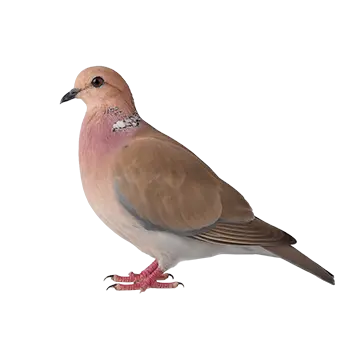

Preparing Your Dove for Travel

Successful transport of a Senegal Dove begins well before the journey itself. Doves are inherently more fragile travelers than many parrot species, and the Laughing Dove's relatively small body mass, typically between 90 and 120 grams, means that it has less physiological reserve to buffer the stress of temperature fluctuations, dehydration, and disrupted routines. Preparation should ideally begin at least two weeks before the planned travel date, allowing time for a veterinary health check, carrier acclimation, and any required documentation.

A pre-travel veterinary examination is strongly recommended regardless of the journey's length or mode. The examining veterinarian should assess the bird's body condition, check for signs of respiratory illness or parasitic infection, and confirm that the dove is fit to travel. Birds that are molting heavily, underweight, or showing any signs of illness should not be transported until they have recovered. If the journey involves crossing state or national borders, the veterinarian can also issue the health certificates that are typically required by receiving jurisdictions. These certificates generally must be issued within a specified number of days before departure, so timing the veterinary visit appropriately is essential.

Carrier acclimation is a step that many keepers overlook but that can substantially reduce travel-related stress. Introducing the dove to its travel carrier several days or even a week before the journey allows the bird to become familiar with the enclosure in a low-pressure setting. Placing the carrier in the bird's usual living area with the door open, adding a familiar perch or piece of cage lining, and offering treats inside the carrier all help to transform an unfamiliar box into a recognized and tolerable space. A dove that has been acclimated to its carrier will typically settle more quickly during transport and show fewer signs of panic or distress.

Diet management in the days leading up to travel deserves attention as well. Some keepers offer a slightly simplified seed mix in the 48 hours before departure to reduce the likelihood of digestive upset, while ensuring that the bird enters the journey well hydrated and at a healthy weight. Fresh water should be available until the moment of departure, and for longer journeys, provisions for in-transit hydration should be planned. Dehydration is one of the most significant risks during avian transport, and a bird that begins a journey already mildly dehydrated is at a meaningful disadvantage.

Selecting the Right Carrier

The choice of transport carrier is one of the most consequential decisions a Laughing Dove keeper will make when planning any journey. The carrier must be appropriately sized, adequately ventilated, secure against escape, and designed to minimize visual stimulation that can provoke panic. For the Senegal Dove, which is a small, relatively delicate species, the ideal carrier strikes a balance between providing enough space for the bird to stand comfortably and turn around without excessive room that could lead to tumbling during movement.

For short road trips a small, hard-sided pet carrier with ventilation holes on multiple sides is generally the best option. The interior should be fitted with a low perch that the bird can grip during transit, secured firmly so that it does not shift or rotate. The floor should be lined with a non-slip material such as a towel or paper towels to prevent the bird from sliding during acceleration and braking. Newspaper, while commonly used in stationary cages, can become slippery and is less ideal for transport. The carrier should be dark enough to discourage the bird from fluttering against the walls but not so enclosed that ventilation is compromised.

For air travel, carriers must meet the specific requirements of the airline and the applicable aviation authority. The International Air Transport Association (IATA) publishes Live Animals Regulations (LAR) that specify construction standards, ventilation requirements, and labeling for containers used to transport live birds. IATA-compliant containers for small doves are typically rigid, made from fiberglass or high-density polyethylene, and feature ventilation openings that provide adequate airflow without allowing the bird to protrude body parts. The container must include a water dish that can be refilled from outside without opening the door and must be labeled with orientation arrows and live animal stickers.

Specialty bird carriers designed for avian transport are available from avicultural supply vendors and offer features that generic pet carriers lack, including adjustable perches, integrated food and water dishes, and ventilation patterns optimized for airflow around a perched bird. While these specialty carriers represent a higher upfront cost, their design advantages can meaningfully reduce stress for the bird and inconvenience for the keeper, particularly on longer or more complex journeys. Keepers who travel with their birds regularly will generally find the investment worthwhile.

Road Travel & Short-Distance Transport

Road travel is the most common mode of transport for Senegal Doves, whether for veterinary visits, moves to a new home, or trips to avicultural shows and events. The Laughing Dove's small size and generally calm temperament make it a relatively manageable car passenger compared to larger or more reactive bird species, but attention to temperature, noise, and vibration is still essential. The carrier should be placed on a stable surface such as the floor of the back seat or secured with a seatbelt on the seat itself. It should never be placed in the trunk, where temperature extremes and exhaust fumes pose serious risks.

Temperature management is the single most critical factor during road transport. The Senegal Dove is adapted to warm climates and tolerates heat better than cold, but the interior of a parked car can reach lethal temperatures within minutes on a warm day. The bird should never be left unattended in a vehicle, even for brief stops. During winter travel in temperate climates, the car's heating system should maintain a cabin temperature comfortable for the bird, generally between 18 and 28 degrees Celsius. Drafts from open windows or air conditioning vents directed at the carrier should be avoided, as doves are susceptible to respiratory stress from rapid temperature changes.

Noise and vibration are secondary stressors that can be mitigated with simple precautions. Placing a light cloth over the carrier, leaving the front partially uncovered for ventilation, helps reduce visual overstimulation from passing scenery and the movements of other passengers. The car's audio system should be kept at a low volume, and sudden loud noises such as honking should be minimized where possible. The steady vibration of a moving vehicle is generally tolerated well by doves, and many birds will settle into a resting posture within minutes of departure once the initial startle response subsides.

For journeys exceeding two hours, periodic checks on the bird's condition are advisable. A brief stop every two to three hours to offer water, either through a small dish or a dropper held to the beak, helps prevent dehydration. Food can be offered during these stops as well, though many birds will not eat during active transport and will resume feeding once they reach their destination. The keeper should observe the bird's posture, breathing rate, and alertness during each check. A bird that is panting heavily, sitting fluffed with closed eyes, or showing signs of distress beyond normal travel anxiety may require a longer rest period or, in extreme cases, veterinary attention.

Air Travel & Professional Shipping

Air transport of Senegal Doves is less common than road travel but may be necessary for long-distance relocations, sales to distant buyers, or international transfers. The process is significantly more complex than loading a bird into a car and involves coordination with airlines, compliance with IATA live animal regulations, and fulfillment of destination country import requirements. Keepers who are not experienced in avian shipping are strongly encouraged to use a professional animal transport service that specializes in live bird shipments.

Most commercial airlines accept live birds only as checked cargo, not as cabin baggage or carry-on items. This means the bird will travel in the climate-controlled cargo hold of the aircraft, which is pressurized and temperature-regulated but subject to ambient noise, vibration, and periods of darkness. The Laughing Dove's calm disposition is an advantage in this environment, but the keeper must ensure that the shipping container meets all airline and IATA specifications and that the bird has been prepared for the journey with adequate hydration and a pre-flight period of reduced feeding to minimize soiling during transit.

Professional bird shippers handle the logistical complexities of air transport, including booking cargo space, preparing IATA-compliant containers, arranging veterinary health certificates, and coordinating pickup and delivery at both ends. These services typically charge fees that reflect the specialized nature of the work, and costs can vary significantly depending on the route, the airline, and the documentation requirements of the destination country. For international shipments, the shipper will also manage customs declarations, CITES paperwork if applicable, and quarantine arrangements at the receiving end.

Timing is a critical consideration for air shipments. Most experienced shippers recommend avoiding extreme weather periods, both hot summers and cold winters, to reduce the risk of temperature stress during ground handling, when the container may be exposed to ambient conditions on the tarmac or in a warehouse. Mid-season months with moderate temperatures are ideal. Direct flights are strongly preferred over itineraries with connections, as each transfer adds handling time, noise exposure, and the possibility of delays. The shorter the total transit time from door to door, the lower the stress on the bird and the higher the likelihood of a successful outcome.

Cross-Border Documentation & Quarantine

Transporting a Senegal Dove across national borders requires documentation that satisfies both the exporting and importing countries' regulatory frameworks. The specific documents needed vary by jurisdiction, but a core set of requirements is common to most international avian transfers. At minimum, the keeper or shipper should expect to provide an official veterinary health certificate issued by an accredited veterinarian, an export permit from the country of origin if required, and an import permit from the destination country. For shipments involving commercial sale, a bill of sale or invoice and proof of captive-bred origin may also be required.

Veterinary health certificates for international bird shipments typically must attest that the bird has been examined within a specified window before departure, usually 48 to 72 hours, and that it is free from signs of infectious disease. Many importing countries require specific disease testing, most commonly for avian influenza (AI) and Newcastle disease (paramyxovirus), and the results must be documented on the health certificate. Testing protocols and the laboratories authorized to perform them vary by country, so early consultation with the destination country's veterinary import authority is essential to avoid last-minute complications.

Quarantine requirements are among the most variable and potentially disruptive elements of cross-border bird transport. Some countries, including Australia and New Zealand, impose mandatory quarantine periods of 30 days or more on imported birds, during which the animals are held in government-approved quarantine facilities at the owner's expense. The European Union requires imported birds to undergo a quarantine of at least 30 days in an approved establishment, with testing for avian influenza and Newcastle disease during the quarantine period. The United States imposes a 30-day quarantine at USDA-approved facilities for most imported birds, with specific testing and observation protocols.

The costs associated with quarantine can be substantial and should be factored into the overall budget for any international transfer. Quarantine facility fees, veterinary testing during the quarantine period, and associated administrative charges can easily exceed the value of the bird itself, particularly for a modestly priced species like the Laughing Dove. Keepers contemplating an international move with their bird should research quarantine requirements and costs well in advance and should consider whether the stress of extended quarantine is appropriate for a small, sensitive species. In some cases, it may be more humane and practical to rehome the bird locally and acquire a new one at the destination.

Post-Travel Recovery & Settling In

The period immediately following transport is critical to the Senegal Dove's recovery and long-term well-being. Even a short journey can be taxing for a small bird, and the keeper should plan for a quiet, low-stimulation recovery period upon arrival at the destination. The bird should be transferred from its travel carrier to its permanent enclosure as smoothly and calmly as possible, ideally in a room that is warm, quiet, and free from the presence of other pets or unfamiliar people.

Fresh water should be the first priority upon arrival. Dehydration is the most immediate physiological risk following transport, and the dove should have access to clean water as soon as it is settled in its enclosure. Some keepers add a small amount of electrolyte supplement to the water for the first 24 to 48 hours after travel, a practice supported by avian veterinarians as a way to help the bird rehydrate and restore electrolyte balance. Food should also be offered promptly, though many birds will not eat immediately after arrival. A familiar seed mix, supplemented with a small amount of soft food such as finely chopped greens or soaked millet, can encourage resumption of feeding.

Behavioral observation during the first few days after travel is important. A Laughing Dove that is recovering normally will begin eating and drinking within a few hours of arrival, will resume normal preening behavior within a day, and will begin vocalizing within two to three days. A bird that remains fluffed, lethargic, or refuses food for more than 24 hours after arrival should be evaluated by an avian veterinarian, as these signs can indicate illness, severe stress, or injury sustained during transport. Respiratory symptoms such as tail bobbing, open-mouth breathing, or nasal discharge are particularly concerning and warrant immediate veterinary attention.

The settling-in period should be treated as a quarantine even when no formal quarantine is required. If the dove is being introduced to a household with existing birds, it should be housed in a separate room for a minimum of 30 days to reduce the risk of disease transmission. During this period the keeper should monitor the new arrival's droppings, appetite, and behavior for any abnormalities that might indicate an incubating illness. This precautionary isolation protects both the new bird and the established flock, and is considered standard practice by avicultural organizations and avian veterinary professionals worldwide.

Once the settling-in period has passed and the bird has been confirmed healthy, gradual introduction to its permanent environment and any companion birds can proceed. The Laughing Dove's naturally sociable disposition generally facilitates smooth introductions, but patience is essential. Rushing the process risks triggering stress responses that can set back the bird's recovery and undermine the trust-building that is the foundation of a positive keeper-bird relationship.

Always consult a qualified professional before making any health-related decisions. This content is provided for informational reference only and should not replace professional guidance specific to your animal.