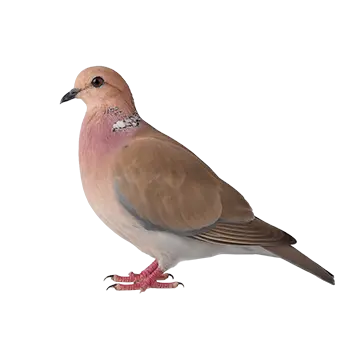

The Senegal Dove's legal standing in international trade is shaped primarily by its classification under the Convention on International Trade in Endangered Species of Wild Fauna and Flora (CITES). As of the most recent CITES listings, the Laughing Dove is not included on any of the convention's three appendices, meaning that international trade in the species is not subject to CITES permit requirements. This absence from CITES reflects the species' overall population health: BirdLife International and the International Union for Conservation of Nature (IUCN) classify it as Least Concern, with a global population estimated in the tens of millions and a range that continues to expand in some areas.
The lack of a CITES listing does not, however, mean that international trade in Senegal Doves is unregulated. Many countries impose their own import and export controls on live birds regardless of CITES status, and these national regulations can be stringent. The European Union, for example, maintains a framework of veterinary and phytosanitary requirements for the importation of live birds that applies to all species, including those not listed under CITES. Any shipment of Laughing Doves into an EU member state must comply with health certification, quarantine, and avian influenza testing protocols that can be time-consuming and expensive.
Similarly, the United States regulates the importation of live birds through a combination of federal agencies including the U.S. Fish and Wildlife Service, the Animal and Plant Health Inspection Service (APHIS), and the Centers for Disease Control and Prevention (CDC). The Wild Bird Conservation Act of 1992 imposed broad restrictions on the importation of exotic bird species, and while certain exemptions exist for captive-bred birds and approved breeding programs, the practical effect has been to sharply curtail the commercial importation of wild-caught doves and other avian species into the United States.
Prospective keepers and breeders engaged in international transactions should be aware that the regulatory landscape is subject to change. Periodic outbreaks of avian influenza or Newcastle disease can trigger temporary import bans that affect all live bird shipments, and evolving conservation assessments could result in future trade restrictions. The absence of a CITES listing provides no guarantee of perpetual freedom from international regulation, and anyone involved in cross-border trade in Laughing Doves should verify current requirements with the relevant national authorities before initiating any transaction.