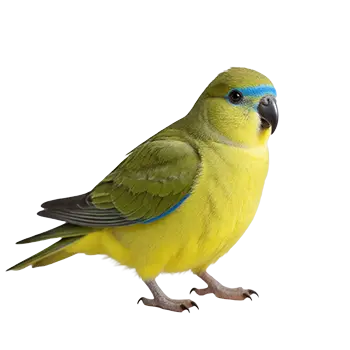

Key Birding Sites in Western Australia

Western Australia offers the most extensive and accessible opportunities for observing wild Rock Parrots, and the state's southern coastline should be the starting point for any birding trip focused on this species. The single most reliable site is Rottnest Island, located approximately 19 kilometers off the coast of Fremantle. Rottnest supports a resident population of Rock Parrots that are unusually tame due to long habituation to the island's heavy tourist traffic. Birds are regularly encountered around the settlement area, along coastal walking trails, and in the low vegetation behind beaches, often allowing close approach and extended observation.

Access to Rottnest Island is straightforward. Regular ferry services operate from Fremantle, with the crossing taking approximately 25 minutes on the fast ferry. Day trips are feasible, but an overnight stay significantly increases the chance of quality encounters during the dawn and dusk activity periods when Rock Parrots are most conspicuous. Accommodation on the island ranges from self-contained cottages to a hotel and a campground, and bicycles are the primary mode of transport, as private cars are not permitted. Visiting birders should explore the coastline around Geordie Bay, Longreach Bay, and the rocky headlands at the island's western end for reliable sightings.

On the Western Australian mainland, the coast between Perth and Esperance hosts scattered Rock Parrot populations. The Cape Naturaliste to Cape Leeuwin stretch along the Leeuwin-Naturaliste Ridge, the rocky coastline around Albany, and the shores and islands of the Recherche Archipelago east of Esperance are all areas where the species has been recorded. Access to mainland sites is typically by private vehicle, and birders should be prepared for significant driving distances between productive areas. Coastal campsites, caravan parks, and small-town accommodations are available throughout the region.

The Abrolhos Islands, a chain of coral islands located about 60 kilometers off the coast of Geraldton in the mid-west, represent a more remote but rewarding destination for Rock Parrot observation. Access is by charter boat or light aircraft, and visits typically require advance planning and booking. The islands support breeding populations of Rock Parrots alongside significant seabird colonies, and the combination of birdlife, marine ecosystems, and historical interest makes the Abrolhos a compelling destination for naturalists willing to undertake the logistical effort required to reach them.

Key Birding Sites in South Australia & Victoria

South Australia offers numerous opportunities to encounter the Rock Parrot along its extensive coastline and on its many offshore islands. The Eyre Peninsula is one of the strongest areas, with birds regularly recorded along the rocky shores and dune systems between Port Lincoln and Ceduna. Lincoln National Park, located at the southern tip of the peninsula, provides a particularly accessible site, with walking trails traversing coastal habitat favored by the species. The rocky shorelines and islands of Spencer Gulf and Gulf St Vincent also support populations, and birders based in Adelaide can reach productive sites on the Fleurieu Peninsula or Yorke Peninsula within a few hours' drive.

Kangaroo Island, South Australia's largest island, hosts a resident Rock Parrot population and is accessible by ferry from Cape Jervis on the Fleurieu Peninsula, with the crossing taking approximately 45 minutes. The island's coastline offers numerous potential encounter sites, particularly along the rocky southern and western shores. Birders visiting Kangaroo Island for other target species such as the Glossy Black-Cockatoo or the subspecies of Crimson Rosella found there can combine these targets with Rock Parrot searches along the coast.

Smaller islands in South Australian waters, including Neptune Islands, Gambier Islands, and the Sir Joseph Banks Group, support breeding Rock Parrots but are generally accessible only by chartered boat and may require permits from the state's wildlife authorities for landing. These sites are best suited to dedicated naturalists or birding tours that can justify the logistical investment. The remoteness of these locations, however, often means that the birds are less habituated to humans and may be more wary than at accessible mainland and large-island sites.

In Victoria, the Rock Parrot is uncommon and localized, with records concentrated along the far western coast near the South Australian border. The coastline around Portland, Bridgewater Bay, and Discovery Bay Coastal Park represents the species' eastern range limit. Encounters here are less predictable than in Western Australia or South Australia, and birders targeting the species in Victoria should be prepared for the possibility of missing it. Combining a Victorian coastal trip with a cross-border foray into the more productive areas of southeastern South Australia can improve the chances of a successful encounter.

Seasonal Timing & Field Strategy

The Rock Parrot is a resident species throughout its range, meaning it does not undertake long-distance seasonal migrations. However, there are seasonal patterns in its behavior that affect detectability, and timing a visit to coincide with these patterns can significantly improve the quality of a birding trip. The breeding season, which typically runs from August through December depending on location and local conditions, is when Rock Parrots are most tied to their nesting areas and most predictable in their movements. Visiting known breeding sites during this period increases the likelihood of observing courtship behavior, nest-site inspection, and the comings and goings of incubating and chick-rearing adults.

Outside the breeding season, Rock Parrots may range more widely along the coast, forming small foraging flocks that move between patches of seeding vegetation. During autumn and winter, birds may congregate at productive feeding sites, and coastal grasslands or dune margins carrying ripe seed can attract groups that are relatively easy to locate. These non-breeding aggregations can be ephemeral, appearing and disappearing as food availability shifts, so birders should be prepared to cover ground and check multiple sites.

Field strategy for finding Rock Parrots centers on understanding the species' daily activity rhythm and habitat preferences. Rock Parrots tend to be most active in the early morning and late afternoon, retreating to sheltered roosting sites among rocks or dense vegetation during the middle of the day. Walking slowly along rocky shorelines, scanning boulder fields and low coastal scrub, and listening for the species' soft, high-pitched contact calls are the most productive field techniques. The birds can be surprisingly difficult to spot when stationary, as their olive-green plumage blends effectively with the muted tones of coastal vegetation and lichen-covered rock.

Weather conditions influence Rock Parrot activity and should be factored into trip planning. Calm, mild days are generally best for observation, as strong winds, which are frequent on the southern Australian coast, tend to suppress bird activity and make detection of contact calls difficult. Light rain does not necessarily preclude observation, but heavy or sustained rain typically drives birds into cover. The southern coast of Australia can experience rapid weather changes, and birders should come prepared with layered clothing and wind protection regardless of the season.

Transport of Captive Rock Parrots Within Australia

Transporting captive Rock Parrots within Australia is subject to a regulatory framework that varies by state and requires careful compliance with both the sending and receiving jurisdictions' wildlife laws. The fundamental principle is that any movement of a native bird between license holders must be documented, and in many cases authorized in advance, to ensure traceability and prevent the laundering of illegally obtained birds into the captive population.

Intrastate transport, meaning movement within a single state, is generally the simpler scenario. State wildlife regulations typically require that the bird be accompanied by documentation identifying it by species, band number, and the license details of both the current holder and the intended recipient. In some states, a transfer notification must be submitted to the wildlife authority within a specified time frame. The physical transport itself should be conducted in a manner that minimizes stress to the bird, using a secure, well-ventilated carrier of appropriate size, shielded from extreme temperatures and direct sunlight.

Interstate transport introduces additional complexity because each state administers its own licensing and permit system independently. Moving a Rock Parrot from Western Australia to South Australia, for example, may require an interstate transfer permit from one or both states, export documentation from the sending state, and import documentation from the receiving state. The specific requirements differ between jurisdictions, and keepers should contact the relevant wildlife agencies well in advance of any planned transfer to determine exactly what paperwork is needed. Some states maintain reciprocal recognition agreements that simplify the process, while others require separate applications on both ends.

The welfare of the bird during transport is a practical and legal consideration. Australian animal welfare legislation and codes of practice for the transport of live animals apply to the movement of native birds, and keepers are expected to ensure that transport duration, conditions, and handling meet acceptable standards. For road transport, the carrier should be secured in the vehicle in a position that avoids vibration, exhaust fumes, and temperature extremes. For air transport within Australia, domestic airlines have specific policies regarding the carriage of live birds in the cargo hold, and advance booking and compliance with airline requirements for carrier dimensions, labeling, and documentation are essential. Keepers should avoid transporting birds during extreme heat or cold, and should plan routes and timing to minimize the total journey time.

Practical Travel Logistics for Birders

A birding trip focused on the Rock Parrot typically requires travel through regional and sometimes remote areas of southern Australia, and advance logistical planning is important. For international visitors, the most practical approach is to fly into Perth (for a Western Australian itinerary) or Adelaide (for a South Australian focus) and hire a vehicle for the duration of the trip. Both cities are served by major international and domestic airlines, and car hire is widely available at the airports and in the city centers.

Driving distances between Rock Parrot sites can be substantial, particularly in Western Australia, where the coast between Perth and Esperance spans more than 700 kilometers. Fuel is readily available in regional towns but can be more expensive and less frequently encountered on remote stretches of highway. Visitors should ensure their vehicle is in good condition, carry adequate water and supplies, and be aware that mobile phone coverage can be patchy or absent in coastal and rural areas between towns.

Accommodation options along the southern Australian coast range from hotels and motels in regional centers to caravan parks, campgrounds, and self-contained holiday rentals in smaller coastal towns. Booking in advance is advisable during Australian school holiday periods, particularly over the Christmas and January summer break, when coastal destinations experience peak visitor numbers. For birders on a budget, the national park and conservation park campground networks in both states offer affordable options that place visitors directly in or adjacent to Rock Parrot habitat.

Combining a Rock Parrot trip with broader birding objectives is highly recommended, as the species' coastal habitat overlaps with areas that support a rich diversity of other bird species. The Western Australian south coast is home to species such as the Western Bristlebird, Noisy Scrub-bird, and Red-eared Firetail, while South Australian sites offer the chance to encounter species like the Southern Emu-wren, Beautiful Firetail, and various honeyeaters associated with coastal heath. Planning an itinerary that incorporates multiple target species and habitat types makes the most efficient use of the significant travel investment required to reach these areas.

Responsible Wildlife Tourism & Ethical Observation

Observing Rock Parrots in the wild carries a responsibility to minimize disturbance to the birds and their habitat, particularly during the breeding season when ground-nesting species are most vulnerable. The Rock Parrot's reliance on rocky crevices and ground-level sites for nesting means that careless approach by observers can cause nest abandonment, egg exposure to predators, or trampling of nest contents. Birders should maintain a respectful distance from any bird that appears to be associated with a nest site and should never attempt to peer into crevices or move rocks to inspect potential nests.

The ethical framework for wildlife observation in Australia is well established and is reinforced by both legal requirements and community norms within the birding community. National parks and conservation reserves typically post guidelines for visitor behavior around wildlife, and these should be followed. Dogs, which can disturb ground-nesting birds and may injure or kill them, are prohibited in most areas where Rock Parrots breed, and this restriction should be treated as non-negotiable rather than advisory.

Photography is one of the primary reasons birders seek out Rock Parrots, and ethical photographic practice is an important consideration. Using long focal lengths to capture images from a distance is preferable to approaching closely, even at sites where the birds are habituated to people. Playback of recorded calls to attract birds is a contentious practice in the birding community and should be used sparingly if at all with the Rock Parrot. During the breeding season, playback near nest sites can disrupt incubation, draw adults away from eggs or chicks, and attract predators to nesting areas. Many birding organizations and site managers discourage or prohibit the use of playback, and visiting birders should respect local guidelines.

The broader context of responsible wildlife tourism includes supporting the communities and conservation programs that maintain Rock Parrot habitat. Choosing locally owned accommodation, purchasing supplies from regional businesses, contributing to conservation organizations working on coastal and island habitat management, and sharing observations through citizen-science platforms like eBird all contribute positively. The Rock Parrot's future depends not only on legal protection but on the sustained engagement of the public, including visiting birders, with the conservation of the coastal ecosystems it calls home.

Always consult a qualified professional before making any health-related decisions. This content is provided for informational reference only and should not replace professional guidance specific to your animal.