
Representation in Wildlife Documentaries

The Rock Parrot has appeared in Australian wildlife documentaries, though it has never been the primary subject of a major standalone production. Its screen time has typically come as part of broader treatments of Australian coastal ecosystems, island wildlife, or the Neophema genus. Documentaries exploring the biodiversity of southern Australia's offshore islands have occasionally featured footage of Rock Parrots foraging on rocky shorelines or entering crevice nest sites, providing viewers with glimpses of a species that most Australians have never seen in the wild.

The species' most significant documentary exposure has come through programs about its critically endangered relative, the Orange-bellied Parrot. Productions chronicling the conservation crisis facing the Orange-bellied Parrot have sometimes included comparative footage or discussion of other Neophema species, positioning the Rock Parrot as a point of reference for understanding the genus and its varying conservation outcomes. In this context, the Rock Parrot has served as an example of a species that, while not without challenges, has maintained viable populations where its closest relative has not.

Australian state-produced educational content and natural history segments on programs broadcast by the Australian Broadcasting Corporation have periodically featured the Rock Parrot in segments about coastal wildlife, shorebird conservation, and the ecological significance of offshore islands. These shorter-format appearances have introduced the species to audiences who might otherwise be unaware of its existence, particularly viewers in eastern states where the Rock Parrot is rare or absent.

The challenges of filming the Rock Parrot are considerable. The species is cryptically colored, quiet in behavior, and most active during the low-light periods of dawn and dusk when it moves between foraging areas and roost sites. Its preferred habitats of rocky shorelines, boulder fields, and island cliffs present logistical difficulties for film crews. These factors have contributed to the relative scarcity of high-quality broadcast footage, and the Rock Parrot remains one of Australia's less-documented parrots on screen.

Field Guides & Ornithological Literature

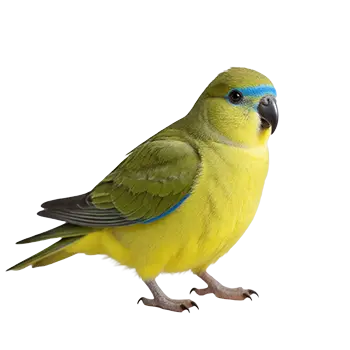
The Rock Parrot features in every comprehensive field guide to Australian birds, from the foundational works of the mid-20th century to the digital identification apps of the present day. In these references, the species is typically illustrated in its characteristic olive-green plumage with its subtle blue frontal band and dark blue wing margins, perched on a coastal rock or shown in flight against a shoreline backdrop. Guide descriptions emphasize its restricted coastal habitat as the primary identification aid, noting that habitat alone can help separate the Rock Parrot from the superficially similar Elegant Parrot, which favors woodland and open country.

John Gould's original plates in The Birds of Australia established the Rock Parrot's visual identity in ornithological literature, and subsequent illustrators have followed his lead in depicting the species in its rocky coastal setting. The Pizzey and Knight field guide, the Simpson and Day guide, and the Morcombe guide, all standard references for Australian birders, provide detailed species accounts that cover identification, distribution, habitat, voice, and breeding biology. These accounts have shaped how generations of birdwatchers understand and seek out the Rock Parrot in the field.

Specialist monographs on Australian parrots have treated the Rock Parrot in greater depth. Joseph Forshaw's Parrots of the World, the definitive global reference on psittacine species, includes an extensive account of Neophema petrophila that covers its taxonomy, geographic variation, ecology, and conservation status. Regional ornithological works focused on the avifauna of South Australia and Western Australia have similarly devoted detailed treatment to the species, reflecting its importance as a characteristic element of southern coastal bird communities.

In the digital age, the Rock Parrot's presence in online databases and citizen-science platforms has expanded its accessibility to birders worldwide. Platforms such as eBird, the Atlas of Living Australia, and iNaturalist host thousands of Rock Parrot observations, photographs, and audio recordings contributed by field observers. These platforms have democratized access to information about the species and have provided researchers with distribution and phenology data at a scale that was previously unattainable through traditional survey methods alone.

Wildlife Photography & Visual Art

The Rock Parrot is a subject of growing interest among wildlife photographers, particularly those specializing in Australian bird photography. The species presents both challenges and rewards for the photographer. Its muted plumage does not offer the immediate visual impact of more vividly colored parrots, but the subtlety of its olive, blue, and yellow tones against the textures of weathered granite, lichen-covered boulders, and coastal vegetation can produce images of considerable aesthetic quality. The best Rock Parrot photographs tend to succeed by integrating the bird into its environment rather than isolating it from it.

Photographic opportunities are most accessible at well-known sites where Rock Parrots are habituated to human presence. Rottnest Island in Western Australia is perhaps the single best-known location for Rock Parrot photography, as the island's population is relatively tame and the birds can often be approached closely in picnic areas, around buildings, and along walking trails. On Rottnest, the Rock Parrot's tolerance of people has produced a body of intimate, high-quality images that have circulated widely through birding publications, social media, and nature photography forums.

Beyond photography, the Rock Parrot has appeared in Australian wildlife art, though less frequently than the continent's more visually dramatic bird species. Illustrators specializing in Australian fauna have included the Rock Parrot in works depicting the birdlife of southern coastal regions, and the species has featured on interpretive panels, educational posters, and signage at coastal parks and nature reserves. Its association with a specific and visually appealing habitat type, the rocky southern Australian coastline, makes it a natural subject for artworks that celebrate the intersection of birdlife and landscape.

The advent of social media has given the Rock Parrot a modest but growing online visual presence. Birding and nature photography accounts on platforms such as Instagram and Flickr regularly share Rock Parrot images, and the species has developed a following among photographers who appreciate its understated beauty and the coastal settings in which it is found. While it will never rival the galah or the rainbow lorikeet for popular appeal, the Rock Parrot's visual profile has expanded considerably in the age of digital photography and online sharing.

The Rock Parrot in Birding Culture

Within the Australian birding community, the Rock Parrot occupies a distinctive niche. It is not a rare bird in the strict sense, but its restricted coastal habitat and somewhat secretive behavior mean that many inland and eastern-seaboard birders have never seen one. For Australian listers working toward a comprehensive national bird list, the Rock Parrot is a species that requires a deliberate trip to the southern coast or its offshore islands, making it a satisfying tick for those who encounter it and a source of mild frustration for those who do not.

For international birders visiting Australia, the Rock Parrot is frequently included on target lists precisely because it is an endemic species that cannot be seen anywhere else in the world. Birding tour operators running itineraries through southern Western Australia and South Australia routinely include Rock Parrot sites in their schedules, and the species is often highlighted in trip reports and birding blogs as a characterful encounter on the southern coast. Its ground-nesting habits and willingness to forage in the open at certain sites make it a rewarding subject for observation once located.

The birding community's relationship with the Rock Parrot also reflects broader themes in contemporary birdwatching culture, particularly the growing appreciation for common and overlooked species as opposed to an exclusive focus on rarities. Birders who spend extended time in Rock Parrot habitat often come to value the species for its ecological distinctiveness and the quality of the coastal environments it inhabits, rather than for any showy visual or behavioral display. This shift in birding values, from spectacle to ecology, has benefited the Rock Parrot's reputation among serious field naturalists.

The species also appears in the records and discussions of Australian bird banding programs, where data collected from banded Rock Parrots has contributed to understanding of the species' movements, survival rates, and site fidelity. Banding encounters, particularly retraps of birds originally banded on offshore islands, have provided insights into the Rock Parrot's longevity and its patterns of dispersal between breeding and non-breeding areas, adding a layer of scientific narrative to the birding community's engagement with the species.

Presence in Regional Tourism & Interpretation

The Rock Parrot has become a minor but recognizable element of nature-based tourism in southern Australia, particularly in regions where the species is conspicuous and accessible. Rottnest Island, already one of Western Australia's most popular tourist destinations, features the Rock Parrot in its wildlife interpretation materials, and visitors to the island frequently encounter the birds during walks, cycling tours, and beach visits. The species' tameness on Rottnest has made it one of the island's most approachable native animals, alongside the quokka, and tourism operators have incorporated it into guided natural history walks and printed wildlife guides.

Along the coast of South Australia, the Rock Parrot appears in interpretive signage at national parks, conservation parks, and coastal walking trails. Parks such as Innes National Park on the Yorke Peninsula and Lincoln National Park near Port Lincoln include Rock Parrot habitat, and the species is mentioned in park literature as one of the notable birds visitors may observe. Similar interpretive efforts exist in Western Australia at sites along the south coast and on other accessible islands within the Rock Parrot's range.

The species' contribution to regional tourism identity is modest compared to that of more charismatic Australian fauna, but it is genuine. In communities where nature tourism is an economic driver, the presence of a reliable population of an endemic parrot species adds to the overall appeal of the destination for domestic and international visitors. The Rock Parrot's association with scenic coastal landscapes enhances this appeal; the bird is invariably seen in settings that are themselves attractive, reinforcing the connection between wildlife and place that nature tourism depends upon.

Local environmental education programs have also drawn on the Rock Parrot as a teaching tool. Schools and community groups in coastal regions of South Australia and Western Australia have used the species as a case study in discussions of habitat specialization, introduced predators, island ecology, and conservation management. These programs help embed the Rock Parrot in local cultural awareness in a way that extends beyond tourism and into the educational fabric of coastal communities.

Digital Presence & Community Engagement

The Rock Parrot's digital footprint has expanded significantly in the 21st century, driven by the growth of citizen-science platforms, online birding communities, and social media. On eBird, the Cornell Lab of Ornithology's global bird observation database, the Rock Parrot has accumulated thousands of records from observers across its range, generating detailed distribution maps and seasonal abundance charts that are accessible to anyone with an internet connection. These records have transformed the Rock Parrot from a species known primarily through field guide entries into one whose occurrence patterns can be explored in near-real time.

Online birding forums and discussion groups, both Australian and international, regularly feature threads about the Rock Parrot, typically in the context of trip planning, site information, or identification queries. Platforms such as BirdForum, the Birding-Aus email list, and Facebook birding groups serve as informal clearinghouses for Rock Parrot sightings and site intelligence, connecting birders who are planning visits to the southern coast with those who have local knowledge. This digital word-of-mouth has increased awareness of the species among birders who might not otherwise have prioritized it.

The species has also appeared in online content produced by conservation organizations and government agencies. BirdLife Australia, the state-based departments of environment, and various regional conservation groups have published web articles, fact sheets, and blog posts about the Rock Parrot, covering topics from its ecology and conservation status to its presence at specific sites. This institutional content provides a more authoritative counterpoint to the informal observations shared on social media and birding forums, ensuring that accurate information about the species is readily available.

Despite this growing digital presence, the Rock Parrot remains far from a viral sensation. It does not possess the visual flamboyance, behavioral drama, or narrative hook that tends to drive mass engagement on social media platforms. Its audience is composed primarily of birders, naturalists, and wildlife photographers rather than the general public. This niche following, however, is engaged and knowledgeable, and the quality of online discussion about the Rock Parrot reflects a genuine interest in the species' biology and conservation rather than superficial curiosity. In this respect, the Rock Parrot's digital presence mirrors its real-world character: modest, specific, and quietly rewarding for those who take the time to look.

Always consult a qualified professional before making any health-related decisions. This content is provided for informational reference only and should not replace professional guidance specific to your animal.