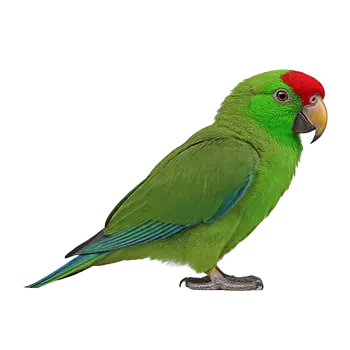

CITES Protections & International Trade Law

The Red-Lored Amazon (Amazona autumnalis) is listed under Appendix II of the Convention on International Trade in Endangered Species of Wild Fauna and Flora, commonly known as CITES. Appendix II includes species that are not necessarily threatened with extinction at this time but whose trade must be controlled to avoid utilization incompatible with their survival. This listing means that any international commercial trade in Red-Lored Amazons, whether live birds, eggs, feathers, or other derivatives, requires the issuance of export permits by the country of origin, which must certify that the specimens were legally obtained and that the trade will not be detrimental to the survival of the species in the wild.

The CITES framework operates through a system of national management and scientific authorities in each of the treaty's signatory nations, which now number over 180 countries. For the Red-Lored Amazon, the management authorities in range states such as Mexico, Guatemala, Honduras, Belize, Costa Rica, Panama, Colombia, and Ecuador are responsible for evaluating export applications and making non-detriment findings, assessments that the proposed trade will not harm the wild population. Importing countries, including the United States and the member states of the European Union, require corresponding import permits and may impose additional conditions beyond the baseline CITES requirements.

The practical effect of the Appendix II listing has been to create a paper trail that accompanies every legally traded Red-Lored Amazon across international borders. Birds moving between countries must be accompanied by valid CITES permits, and customs and wildlife authorities at ports of entry are responsible for verifying these documents. Birds found without proper documentation are subject to seizure, and the individuals or entities involved may face criminal prosecution under both CITES-implementing legislation and the domestic wildlife laws of the countries concerned.

It is important for prospective and current owners to understand that the CITES listing does not prohibit ownership of the Red-Lored Amazon but rather regulates the international movement of the species. Captive-bred birds born within a country's borders are generally subject to domestic law rather than CITES export controls, though they may still require documentation proving their captive-bred status if they are subsequently sold or transferred across national boundaries. The distinction between wild-caught and captive-bred birds is a central feature of the legal landscape governing this species.

United States Federal Regulations

In the United States, the primary federal statute governing the importation of parrots is the Wild Bird Conservation Act of 1992, which was enacted specifically to address the impact of the wild bird trade on global parrot populations. The WBCA effectively bans the import of most wild-caught parrots, including the Red-Lored Amazon, into the United States for commercial purposes. Limited exceptions exist for birds imported under approved cooperative breeding programs, for scientific research, and for certain zoological institutions, but these exceptions are narrowly drawn and require advance approval from the United States Fish and Wildlife Service.

Beyond the WBCA, the Lacey Act serves as a broad enforcement tool that makes it a federal offense to trade in wildlife that has been taken, possessed, transported, or sold in violation of any federal, state, tribal, or foreign law. For Red-Lored Amazon owners, this means that acquiring a bird that was illegally captured or smuggled, even unknowingly, can expose the buyer to federal criminal liability. The Lacey Act's reach extends to birds that were illegally exported from their country of origin, even if the buyer purchased the bird domestically and in apparent good faith.

The Endangered Species Act, while primarily focused on species listed as endangered or threatened, intersects with Red-Lored Amazon regulation in indirect but important ways. Although the Red-Lored Amazon is not currently listed under the ESA, the broader regulatory infrastructure created by the Act, including the Fish and Wildlife Service's enforcement capabilities and its interagency coordination with customs authorities, supports the detection and prosecution of illegal parrot trafficking that may involve the species.

Federal regulations also govern the interstate transport of captive birds. The Animal Welfare Act, administered by the United States Department of Agriculture, establishes standards for the humane treatment of animals in commerce, including birds sold by licensed dealers and breeders. While individual pet owners are generally exempt from AWA licensing requirements, commercial breeders and dealers who sell Red-Lored Amazons are subject to inspection and must comply with standards covering housing, sanitation, veterinary care, and record keeping. Understanding the interplay of these federal statutes is essential for anyone involved in the sale, purchase, or transport of Red-Lored Amazons within the United States.

State & Local Ownership Laws

In addition to federal regulation, the legality of owning a Red-Lored Amazon in the United States is subject to a patchwork of state and local laws that vary significantly from one jurisdiction to another. Most states permit the private ownership of Amazon parrots without requiring a specific permit, treating them as domesticated companion animals once they are legally within the country. However, a number of states and municipalities have enacted exotic animal ordinances that may affect parrot keepers, and the specific requirements can differ substantially even between neighboring jurisdictions.

Some states require permits or registrations for the possession of certain exotic or non-native bird species. While Amazon parrots are commonly exempted from the most restrictive exotic animal statutes, which tend to focus on large carnivores, venomous reptiles, and primates, keepers should verify the specific regulations in their state of residence. States with more comprehensive exotic animal frameworks may require owners to register their birds, provide proof of legal acquisition, or comply with housing and care standards that go beyond general animal welfare provisions.

At the municipal and county level, local ordinances may impose noise restrictions, zoning limitations, or outright bans on certain types of pets that can affect parrot keepers. The Red-Lored Amazon, like other Amazon parrot species, is a vocal bird capable of producing loud calls that can carry considerable distances. In densely populated areas, noise complaints from neighbors can trigger enforcement actions under local nuisance ordinances, and some homeowners associations and rental agreements include restrictions on bird ownership. Prospective Red-Lored Amazon owners in urban and suburban settings are well advised to review their local regulations and housing agreements before acquiring a bird.

The legal landscape at the state and local level is dynamic, with new ordinances and regulatory changes occurring regularly. Keepers who breed Red-Lored Amazons face additional regulatory considerations, as some jurisdictions require breeding permits, impose limits on the number of birds that may be kept at a single location, or mandate inspections of breeding facilities. Staying current with applicable regulations is an ongoing responsibility for Red-Lored Amazon owners, and consultation with a local attorney or relevant state wildlife agency can help clarify obligations that may not be immediately apparent from a general reading of the statutes.

Regulations in Range Countries

The legal protections afforded to the Red-Lored Amazon in its native range countries reflect a growing recognition of the need to conserve wild parrot populations that have been diminished by decades of habitat loss and trapping. In Mexico, a comprehensive ban on the capture and sale of native parrot species took effect in 2008, making it illegal to trap, possess, sell, or purchase wild-caught parrots of any species, including the Red-Lored Amazon. The ban was the culmination of years of advocacy by conservation organizations and represented a landmark shift in Mexican wildlife policy. Enforcement of the ban has been uneven, with violations continuing in remote rural areas, but the legal framework itself is unambiguous.

Guatemala, Honduras, and other Central American range states have enacted their own wildlife protection laws that include provisions covering native parrot species. In Guatemala, the capture and trade of wild parrots is prohibited under the national wildlife law, and the country is a party to CITES, requiring export permits for any legal international trade. Honduras has adopted similar protections, though enforcement capacity varies across the country, and illegal trapping remains a concern in areas with limited government presence. Belize has established protected areas that encompass important Red-Lored Amazon habitat and has integrated parrot conservation into its national biodiversity strategies.

In Colombia and Ecuador, where the southern subspecies of the Red-Lored Amazon occurs, national environmental laws provide broad protections for native wildlife, including parrots. Both countries have CITES management authorities responsible for regulating any legal trade and for coordinating with international enforcement efforts. Colombia's environmental regulatory framework, administered through regional autonomous corporations, addresses habitat conservation and wildlife trafficking at both national and regional levels, though the practical challenges of enforcement in remote Pacific lowland forests remain significant.

The enforcement landscape across range countries is characterized by a gap between legal protections on paper and their implementation in the field. Limited resources, vast and often inaccessible terrain, and deeply rooted cultural practices of parrot keeping all contribute to ongoing violations of protective legislation. International cooperation, supported by CITES and by bilateral and multilateral agreements, has improved cross-border enforcement in some areas, but the persistence of illegal domestic trade in several range countries remains one of the most pressing challenges in Red-Lored Amazon conservation.

Breeding Regulations & Documentation

The legal requirements for breeding Red-Lored Amazons vary by jurisdiction and are closely tied to the broader regulatory framework governing the captive propagation of non-native bird species. In the United States, commercial breeders who sell birds are generally required to hold a USDA license under the Animal Welfare Act, which mandates compliance with standards for housing, husbandry, veterinary care, and record keeping. Hobbyist breeders who produce a small number of birds for sale may fall below the threshold for federal licensing, but they remain subject to applicable state and local laws governing animal sales, and they should maintain thorough records documenting the provenance and parentage of every bird they produce.

Documentation of captive-bred status is a critical legal consideration for Red-Lored Amazon breeders. Because the species is listed under CITES Appendix II, any bird that is to be sold or transferred across international borders must be accompanied by documentation establishing that it was bred in captivity rather than taken from the wild. In practice, this means that breeders must maintain closed and verifiable breeding records, including band numbers, hatch dates, parentage information, and sales records. Leg bands or microchips are commonly used to identify individual birds and to link them to their breeding documentation, providing a chain of custody that can be verified by regulatory authorities.

In the European Union, breeding and sale of CITES Appendix II species are governed by the EU Wildlife Trade Regulations, which implement CITES requirements and, in some cases, impose stricter conditions. Breeders in EU member states may be required to register their breeding facilities with national CITES authorities and to obtain Article 10 certificates for each bird offered for commercial sale. These certificates confirm the captive-bred status of the bird and authorize its sale within the EU. The specific procedures and documentation requirements vary among member states, and breeders are advised to consult their national CITES management authority for current guidance.

In range countries where the Red-Lored Amazon is native, the legal framework for captive breeding is typically more restrictive. In Mexico, for example, authorized breeding facilities must be registered with the Secretariat of Environment and Natural Resources and must comply with detailed regulations governing the origin of breeding stock, facility standards, and the disposition of offspring. These regulations are designed to ensure that captive breeding operations do not serve as laundering mechanisms for wild-caught birds, a concern that has shaped the regulatory approach in several range countries. Prospective breeders anywhere in the world should thoroughly research and comply with all applicable regulations before establishing a breeding program for the Red-Lored Amazon.

Enforcement Challenges & Owner Responsibilities

The enforcement of laws governing Red-Lored Amazon ownership and trade faces a range of practical challenges that affect both regulatory authorities and individual bird owners. At the international level, the sheer volume of goods crossing national borders makes comprehensive inspection of wildlife shipments impossible, and smugglers have developed sophisticated methods for concealing live birds in luggage, cargo containers, and even personal clothing. Red-Lored Amazons, being medium-sized and relatively resilient compared to some parrot species, have been documented in smuggling seizures at border crossings between Mexico and the United States, as well as at airports and seaports in Central America and Europe.

Domestically, enforcement of exotic animal regulations is typically the responsibility of state wildlife agencies, local animal control authorities, or, in cases involving federal law, the United States Fish and Wildlife Service. The effectiveness of enforcement depends heavily on the resources available to these agencies and on the priority assigned to parrot-related cases relative to other wildlife and animal welfare concerns. In many jurisdictions, enforcement is complaint-driven, meaning that violations come to light primarily when reported by neighbors, competitors, or concerned citizens rather than through proactive inspection programs.

For individual Red-Lored Amazon owners, understanding and complying with the applicable legal framework is both a practical necessity and an ethical responsibility. Owners should retain all documentation related to their bird's acquisition, including sales receipts, breeder records, leg band or microchip information, and any CITES permits or certificates that accompanied the bird at the time of purchase. This documentation may be needed to demonstrate legal ownership in the event of a move to a new jurisdiction, a border crossing, an inheritance situation, or an inquiry from regulatory authorities. Given the species' potential lifespan of 50 years or more, the importance of maintaining these records over time cannot be overstated.

The legal landscape surrounding Red-Lored Amazon ownership continues to evolve as governments at all levels respond to new information about the species' conservation status, the dynamics of the pet trade, and changing public attitudes toward exotic animal ownership. Owners who stay informed about regulatory developments, maintain proper documentation, and engage with reputable breeders and avicultural organizations are best positioned to navigate this landscape successfully. Ultimately, compliance with the legal framework governing the Red-Lored Amazon is inseparable from the broader commitment to responsible stewardship that the species demands of those who choose to share their lives with it.

Always consult a qualified professional before making any health-related decisions. This content is provided for informational reference only and should not replace professional guidance specific to your animal.