
Origins & Native Range

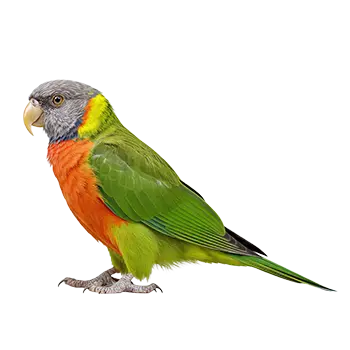
The Red-bellied Parrot (Poicephalus rufiventris) is a small African parrot native to the dry woodland and savanna regions of East Africa. Its natural range stretches primarily across Ethiopia, Somalia, Kenya, and Tanzania, where it inhabits arid and semi-arid landscapes dotted with acacia and commiphora trees. Unlike many parrot species that favor dense tropical forests, the Red-bellied Parrot has adapted remarkably well to drier habitats, feeding on seeds, fruits, and blossoms found in open woodland.

The species was first formally described by European naturalists in the early nineteenth century as scientific expeditions cataloged the birdlife of the Horn of Africa. Early specimens sent back to European museums helped ornithologists understand the diversity of the Poicephalus genus, a group of stocky, short-tailed African parrots that also includes the more widely known Senegal Parrot and Meyer's Parrot. The Red-bellied Parrot stood out within this group for its striking sexual dimorphism, with males displaying a vivid orange belly while females retain a greenish-grey breast.

For centuries before Western science took note, local communities in East Africa were well acquainted with these parrots. Indigenous groups observed them feeding in small flocks and nesting in tree cavities along riverbanks and escarpments. The bird's presence was often associated with seasonal patterns in the landscape, as flocks would shift their range in response to the availability of fruiting and flowering trees across the dry season.

Historical Roles in Aviculture

The Red-bellied Parrot entered the European avicultural scene relatively late compared to larger, more flamboyant parrot species. While macaws and cockatoos had been prized in European courts since the age of exploration, the smaller Poicephalus parrots did not gain widespread attention among bird keepers until the twentieth century. Early imports were sporadic, and the species was considered uncommon in collections through much of the mid-1900s.

By the 1970s and 1980s, growing interest in African parrots brought the Red-bellied Parrot into sharper focus among aviculturists in Europe and North America. Breeders recognized the species for its manageable size, relatively quiet disposition, and engaging personality. Captive breeding programs began to take shape, driven partly by increasing restrictions on wild-caught bird imports and partly by genuine enthusiasm for establishing sustainable captive populations.

The Red-bellied Parrot proved to be a rewarding but sometimes challenging species to breed in captivity. Pairs could be slow to bond, and hens were occasionally aggressive toward mates during the breeding season. Successful breeders shared techniques through avicultural societies and specialty journals, gradually building a base of knowledge that helped the species become more consistently available in the pet trade by the 1990s and into the 2000s.

Today, captive-bred Red-bellied Parrots are the standard source for the pet market in countries where the species is kept. The legacy of those early breeding efforts is a population of well-socialized, domestically raised birds that are far better suited to life in human households than their wild-caught predecessors ever were.

Cultural Symbolism in East Africa

In its native range, the Red-bellied Parrot occupies a modest but meaningful place in local cultural awareness. Among pastoralist and agricultural communities in Kenya and Ethiopia, parrots are often noted as indicators of environmental health. Their presence near water sources and fruiting trees signals productive habitat, and their seasonal movements offer informal cues about rainfall patterns and the condition of the bush.

The vivid orange plumage of the male Red-bellied Parrot has drawn attention in communities where colorful feathers carry symbolic weight. In some East African traditions, bright feathers are incorporated into ceremonial dress or used as decorative elements, though the Red-bellied Parrot's feathers are less commonly used than those of larger, more dramatically colored birds such as turacos or starlings.

Storytelling traditions in parts of the Horn of Africa include parrots as characters known for cleverness and mimicry. While these stories often reference parrots in a general sense rather than singling out specific species, the Red-bellied Parrot's intelligence and vocal abilities align well with the archetype. The bird's reputation for being observant and cautious in the wild reinforces its cultural association with shrewdness and resourcefulness.

Avicultural Societies & Breed Standards

The Red-bellied Parrot does not have formal breed standards in the way that domesticated animals such as dogs or chickens do, but avicultural societies have played a crucial role in defining best practices for the species' care and breeding. Organizations such as the International Parrotlet Society and various national avicultural federations maintain studbooks, publish care guidelines, and facilitate communication among breeders working with Poicephalus species.

In the United Kingdom, the Parrot Society UK has long served as a hub for keepers of African parrots, including the Red-bellied Parrot. The society's publications have featured articles on breeding successes, dietary research, and veterinary insights specific to Poicephalus species. Similar organizations in Germany, the Netherlands, and the United States have contributed to a growing international knowledge base.

Color mutations have emerged in captive Red-bellied Parrot populations, drawing interest from breeders focused on avian genetics. While the wild-type coloration remains the most common and widely appreciated form, mutations such as lutino and pied variants have appeared. Avicultural societies generally encourage responsible breeding practices that prioritize the health and genetic diversity of captive populations over the pursuit of novel color forms.

These organizations also serve as advocates for conservation awareness, reminding their members that the species' long-term future depends on protecting wild populations and their habitats as much as it does on maintaining healthy captive flocks.

The Red-bellied Parrot Today

In the contemporary pet bird community, the Red-bellied Parrot occupies a distinctive niche. It is often described as one of the best-kept secrets among parrot enthusiasts — a species with the personality and intelligence of more popular parrots but without the noise levels or space requirements that make larger species challenging in typical households. Owners frequently praise the bird's gentle and curious temperament, noting that well-socialized individuals form deep bonds with their primary caregivers.

The species remains less common in the pet trade than Senegal Parrots or cockatiels, which contributes to both its appeal and its relative obscurity. Prospective owners may need to seek out specialty breeders or join waiting lists, a process that tends to attract more experienced and committed bird keepers. This selectivity has generally been beneficial for the species, as Red-bellied Parrots are more likely to end up in knowledgeable homes.

Online communities have become important gathering places for Red-bellied Parrot owners and breeders. Social media groups, dedicated forums, and species-specific websites allow keepers from around the world to share observations, troubleshoot behavioral issues, and celebrate the unique qualities of their birds. These digital communities have helped raise the species' profile and connect people who might otherwise feel isolated in their appreciation for a relatively uncommon pet bird.

Conservation concerns for wild populations remain a backdrop to the species' story. Habitat loss driven by agricultural expansion and deforestation in East Africa poses ongoing threats, and monitoring of wild populations is limited. The avicultural community's investment in sustainable captive breeding contributes to reducing demand for wild-caught birds, but broader conservation efforts focused on habitat preservation remain essential.

Notable Red-bellied Parrots

While the Red-bellied Parrot has not achieved the individual celebrity status enjoyed by some parrot species, a number of birds have gained recognition within avicultural circles and online communities. Breeders who established early captive breeding programs in Europe and North America are credited with producing founding stock that shaped the genetic health of today's captive population. Their birds, though rarely known by name to the general public, represent important milestones in the species' avicultural history.

In online spaces, individual Red-bellied Parrots have attracted followings through video and photo sharing. Owners document their birds' playful antics, vocal repertoires, and social behaviors, offering glimpses into the species' personality that static descriptions cannot capture. These informal ambassadors have done much to introduce the Red-bellied Parrot to audiences who might never encounter one in person.

Zoological collections in Europe and Africa have also housed Red-bellied Parrots as part of educational exhibits focused on African biodiversity. While these birds may not be singled out with individual names in the way that zoo elephants or great apes often are, their presence in professionally managed collections contributes to public awareness of African parrot diversity and the ecological roles these birds play in their native habitats.

The species' growing — if still modest — visibility reflects a broader trend in aviculture toward appreciating understated, well-tempered companion birds. As more owners share their experiences and breeders continue to refine husbandry practices, the Red-bellied Parrot's place in the cultural landscape of pet bird keeping continues to evolve.

Always consult a qualified professional before making any health-related decisions. This content is provided for informational reference only and should not replace professional guidance specific to your animal.