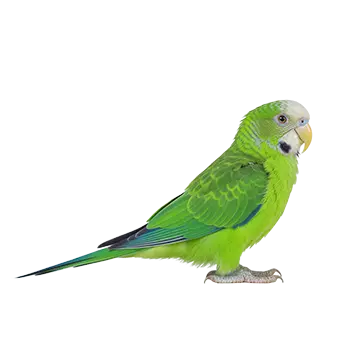

Origins & Native Range

The Quaker Parrot, also known as the Monk Parakeet (Myiopsitta monachus), is native to the temperate and subtropical regions of South America. Its natural range stretches across central Argentina, southern Brazil, Uruguay, Paraguay, and Bolivia, where it thrives in open woodlands, savannas, and agricultural areas. Unlike most parrots, which nest in tree cavities, the Quaker Parrot is remarkable for constructing large communal stick nests, sometimes housing dozens of breeding pairs within a single structure.

European naturalists first documented the species during the colonial era, when explorers traveling through the grasslands of the Río de la Plata region noted the large, conspicuous nests and the birds' bold, gregarious behavior. The species was formally described by the French ornithologist Pieter Boddaert in 1783, and its common name likely derives from the gray facial plumage that early observers likened to a Quaker's traditional clothing.

Within its native habitat, the Quaker Parrot has long been both admired and viewed as a nuisance. Its intelligence and social nature endeared it to locals who kept them as household companions, while its tendency to raid grain crops and orchards made it one of the most commonly persecuted bird species in Argentine agriculture. This dual identity as both a beloved pet and a persistent agricultural pest has shaped the bird's story for centuries.

The species' adaptability proved extraordinary. Quaker Parrots are among the few parrot species capable of thriving in temperate climates, an attribute that would later play a pivotal role when escaped or released pet birds established feral populations far from South America.

Introduction to the Pet Trade

The Quaker Parrot entered the international pet trade in significant numbers during the mid-twentieth century. Through the 1960s and 1970s, tens of thousands of Monk Parakeets were exported from Argentina and neighboring countries to meet growing demand in the United States, Europe, and Japan. Their relatively affordable price, hardiness in captivity, and exceptional talking ability made them one of the most popular parrot species for first-time bird owners.

Importers valued the Quaker Parrot for traits that set it apart from other similarly sized parrots. The species adapted quickly to captive environments, bred readily in aviaries, and displayed a level of vocal mimicry that rivaled birds twice its size. Pet shops across North America and Europe marketed them as ideal companion birds, and their playful, affectionate personalities lived up to the reputation.

The surge in imports, however, carried unintended consequences. Escaped and intentionally released Quaker Parrots began establishing feral colonies in urban and suburban areas throughout the United States and Europe. By the late 1970s, wild populations were documented in several U.S. states, and authorities grew concerned about potential agricultural damage. This tension between the bird's popularity as a pet and its invasive potential would define regulatory debates for decades to come.

The passage of the Wild Bird Conservation Act of 1992 in the United States effectively ended large-scale importation of wild-caught parrots, including Quakers. This shifted the market toward domestically bred birds, which are now the primary source of Quaker Parrots in the American pet trade.

Cultural Symbolism & Folklore

In its native South America, the Quaker Parrot holds a distinctive place in regional folklore and cultural identity. Argentine gauchos regarded the bird's enormous communal nests as symbols of industriousness and community, and the nests themselves became landmarks in the flat pampas landscape. Some rural communities considered the appearance of a large Quaker Parrot colony near a homestead to be a sign of fertile land.

The bird's sociability and vocal nature also made it a fixture in South American folk traditions. In parts of Argentina and Uruguay, Quaker Parrots were commonly kept as household companions long before the modern pet trade, and stories of individual birds learning to mimic regional dialects and phrases became part of local lore. The species' intelligence and personality gave rise to affectionate nicknames and a reputation as a bird with genuine character.

In the broader cultural imagination, the Quaker Parrot has come to symbolize adaptability and resilience. Its ability to establish thriving colonies in climates far removed from its tropical relatives has made it a subject of fascination for ornithologists and casual observers alike. Feral colonies in cities like Chicago, New York, and Barcelona have become local landmarks, with communities rallying around their resident flocks as sources of neighborhood identity and pride.

This cultural resonance extends to aviculture communities worldwide. Quaker Parrot owners frequently describe a bond with their birds that goes beyond typical pet ownership, citing the species' emotional responsiveness, loyalty, and capacity for complex social interaction as qualities that elevate the relationship.

Avicultural Development & Color Mutations

The development of Quaker Parrot aviculture has been shaped by both the species' natural hardiness and the dedicated efforts of breeders around the world. From the 1980s onward, as wild-caught imports declined and domestic breeding programs expanded, aviculturists began selectively breeding Quaker Parrots for temperament, health, and color. The result has been a domesticated population that is generally calmer, more sociable, and better adapted to life in the home than its wild counterparts.

Color mutations have played a significant role in the species' continued popularity. The first major mutation to gain widespread attention was the blue Quaker Parrot, which appeared in the 1990s and quickly became highly sought after. Since then, breeders have developed a wide palette of color varieties, including lutino, albino, cinnamon, pallid, and various combinations thereof. Each new mutation generates excitement in the avicultural community and contributes to the species' appeal among collectors and casual pet owners alike.

Breeding organizations and avicultural societies have been instrumental in establishing best practices for Quaker Parrot husbandry. Groups dedicated specifically to Monk Parakeets share knowledge about nutrition, enrichment, socialization, and genetic management, helping to ensure the long-term health and vitality of captive populations. These communities also serve as advocacy networks, promoting responsible ownership and working to counter misinformation about the species.

The domestication trajectory of the Quaker Parrot parallels that of the Budgerigar and the Cockatiel, two other small parrots that have become thoroughly integrated into human households. As breeding programs continue to refine the captive population, the Quaker Parrot's place as one of the world's most popular companion birds appears secure.

Feral Populations & Urban Adaptation

One of the most remarkable chapters in the Quaker Parrot's history is the establishment of feral populations across North America, Europe, and beyond. Beginning in the 1960s and accelerating through the following decades, escaped and released pet Quaker Parrots founded breeding colonies in environments vastly different from their native South American grasslands. Today, self-sustaining feral populations exist in at least a dozen U.S. states and several European countries.

The species' success as an urban colonizer stems from a combination of biological and behavioral traits. Quaker Parrots are uniquely equipped among parrots to survive cold winters, thanks in part to their communal nesting behavior. The large stick nests they construct on utility poles, stadium lights, and other structures provide insulation against freezing temperatures, allowing colonies to persist in cities like Chicago, New York, and Hartford where winter conditions would be lethal to most parrot species.

Feral Quaker Parrot colonies have become unexpected cultural touchstones in many of the cities they inhabit. In Brooklyn, the colony at Green-Wood Cemetery has attracted birdwatchers and tourists for decades, and the birds have been celebrated in local media, art, and community events. Similar affection surrounds colonies in Austin, Texas, and in several cities across Spain, where the birds' vivid green plumage and raucous calls have become part of the urban soundscape.

The presence of feral populations has also sparked scientific interest. Researchers have studied Quaker Parrot colonies to better understand avian cognition, social behavior, and the dynamics of biological invasions. These studies have contributed valuable insights into how a species adapts to novel environments and have raised important questions about the management of non-native wildlife in urban settings.

The Quaker Parrot Today

The Quaker Parrot occupies a unique position in the modern pet world. It remains one of the most widely kept parrot species globally, prized for its talking ability, affectionate personality, and manageable size. Online communities devoted to Quaker Parrot ownership have grown substantially, with forums, social media groups, and video channels connecting thousands of owners who share advice, stories, and training techniques.

Advances in avian veterinary medicine and nutrition have improved outcomes for captive Quaker Parrots, and well-cared-for individuals routinely live into their late twenties or early thirties. The species' dietary and enrichment needs are now well understood, and a wealth of resources is available to owners seeking to provide the best possible care. This accumulated knowledge has made the Quaker Parrot more accessible than ever to prospective bird owners.

At the same time, the species continues to face regulatory challenges in several jurisdictions where it is classified as an invasive or potentially invasive species. Ownership bans and restrictions remain in place in a number of U.S. states and in parts of the European Union, creating a patchwork of legality that can be confusing for owners and breeders. Advocacy groups continue to work toward evidence-based policies that balance ecological concerns with the rights of responsible pet owners.

Looking ahead, the Quaker Parrot's story is one of remarkable adaptability, both in the wild and in human homes. Its journey from the grasslands of Argentina to living rooms and city parks around the world is a testament to the species' resilience and to the deep bond that can form between humans and their avian companions.

Always consult a qualified professional before making any health-related decisions. This content is provided for informational reference only and should not replace professional guidance specific to your animal.