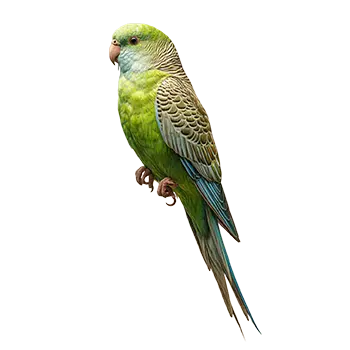

Origins & Discovery

The Lineolated Parakeet, known scientifically as Bolborhynchus lineola, is native to the highland forests of southern Mexico and Central America, extending through portions of western South America including Colombia, Venezuela, Ecuador, and Peru. The species was first formally described by the French ornithologist Prince Charles Lucien Bonaparte in 1853, though indigenous peoples of the region had long been familiar with these small, unassuming green parrots that moved quietly through the misty mountain canopy.

Unlike many tropical parrots that inhabit lowland rainforests, the Lineolated Parakeet is a bird of the cloud forests and mountain slopes, typically found at elevations between 1,500 and 3,000 meters. This preference for cooler, higher-altitude habitats set the species apart from its more flamboyant parrot relatives and contributed to its relatively late arrival in the European and North American pet trade. Early naturalists who encountered Lineolated Parakeets in the wild noted their unusual behavior of walking along branches rather than climbing, a trait that remains distinctive today.

The species belongs to the small genus Bolborhynchus, which includes only a handful of other diminutive South American parakeets. This taxonomic placement reflects the bird's evolutionary divergence from larger parrot lineages, and its adaptation to a montane ecological niche. The barred or "lineolated" plumage pattern that gives the bird its common name served as effective camouflage among the mosses and epiphytes of its native cloud forest home, making it one of the more cryptic members of the parrot family.

Wild populations of Lineolated Parakeets are social and typically travel in flocks ranging from a dozen to over fifty individuals. Their quiet vocalizations and preference for dense vegetation meant that early ornithological records of the species were sparse compared to those of louder, more conspicuous parrots. It was not until dedicated field studies in the mid-twentieth century that a clearer picture of the bird's range, habitat preferences, and behavior in the wild began to emerge.

Introduction to Aviculture

Lineolated Parakeets first appeared in European aviculture during the late nineteenth century, but they remained uncommon and poorly understood for decades. Early imports were sporadic, and breeders found the birds challenging to establish in captivity compared to the already well-known Budgerigar. The species' need for cooler temperatures and its sensitivity to heat set it apart from most other small parrots being kept at the time, and many initial breeding attempts ended in failure.

It was not until the 1960s and 1970s that dedicated European aviculturists, particularly in Germany and the Netherlands, began to achieve consistent breeding success with Lineolated Parakeets. These breeders recognized that the species thrived in conditions that mimicked its highland origins — moderate temperatures, lower humidity than tropical species required, and ample opportunity for quiet social interaction within pairs and small groups. The establishment of reliable captive breeding lines during this period laid the groundwork for the species' broader availability in the decades that followed.

North American aviculturists became seriously interested in Lineolated Parakeets during the 1980s and 1990s, a period that coincided with growing restrictions on wild-caught parrot imports. The species' calm temperament, manageable size, and relatively quiet voice made it an appealing alternative to larger, noisier parrots for apartment dwellers and those seeking a companionable but undemanding pet bird. By the turn of the twenty-first century, Lineolated Parakeets had moved from being an obscure avicultural curiosity to a species with a devoted and growing following.

The development of captive color mutations further fueled interest in the species. Beginning with the first lutino and turquoise mutations documented in European breeding programs, the range of available color varieties expanded rapidly. Today, breeders work with dozens of established mutations including cobalt, mauve, creamino, and various combinations, making the Lineolated Parakeet a subject of considerable interest for aviculturists drawn to color genetics.

Cultural Connections in Range Countries

In the countries where Lineolated Parakeets occur naturally, the species has a quieter cultural profile than the large macaws and amazons that dominate the popular imagination of Latin American parrots. Nevertheless, indigenous and rural communities within the bird's range have long recognized the species and incorporated it into local knowledge systems. In parts of the Colombian and Venezuelan Andes, small parrots including Lineolated Parakeets were historically noted for their seasonal movements and were sometimes kept as household companions in mountain villages.

The species does not appear prominently in the pre-Columbian art and mythology that features larger parrot species so extensively. The bold reds, blues, and yellows of macaws made them powerful symbols in Maya, Aztec, and Inca cultural traditions, while the small, predominantly green Lineolated Parakeet blended into the background both literally and figuratively. This relative cultural invisibility may have worked in the species' favor historically, as it was less targeted by the feather trade and ceremonial capture that affected more conspicuous parrot species.

In modern Central and South American communities, conservation awareness programs have increasingly included the Lineolated Parakeet alongside other native parrot species. Environmental education initiatives in countries like Costa Rica and Panama highlight the ecological importance of cloud forest parrots, and the Lineolated Parakeet sometimes serves as a representative species for the fragile highland ecosystems it inhabits. These programs have helped shift cultural attitudes away from the capture of wild parrots and toward appreciation of native bird diversity in its natural context.

Ecotourism operations in several range countries now include cloud forest birding excursions where Lineolated Parakeets may be encountered, contributing to local economies and reinforcing the economic value of living wild populations. While the species is not typically a primary draw for birding tourists, its presence on species lists adds to the overall appeal of highland birding destinations.

Breed Societies & Avicultural Standards

As the Lineolated Parakeet gained popularity in captivity, dedicated breed societies and working groups emerged to promote responsible husbandry, establish color standards, and coordinate breeding efforts. In Europe, German and Dutch avicultural societies were among the first to develop formal standards for the species' color mutations, creating judging criteria for exhibition birds and maintaining registries of established bloodlines. These organizations played a critical role in ensuring the genetic diversity and long-term viability of captive populations.

The Lineolated Parakeet Society, active in several countries under various national affiliations, serves as a hub for breeders and enthusiasts to share knowledge, publish breeding records, and organize exhibitions. Annual shows in Europe and North America feature classes for Lineolated Parakeets in both normal and mutation colors, and competition among exhibitors has driven steady improvements in the quality and variety of captive-bred birds. These societies also publish care guides and breed standards that help newcomers establish healthy breeding programs.

Color mutation classification has been a particularly active area for Lineolated Parakeet societies. Because the species carries a complex array of mutations that can interact in sometimes unpredictable ways, breeders have invested considerable effort in mapping the genetics of each established color variety. Societies maintain nomenclature standards to prevent confusion between similar-looking mutations and to ensure that breeding records accurately reflect the genetic background of individual birds.

Beyond exhibition and color genetics, breed societies have also played an advocacy role for the species. Some organizations fund or support field research on wild Lineolated Parakeet populations, and others participate in coordinated conservation breeding programs designed to maintain genetically robust captive populations as a hedge against potential declines in wild numbers. This intersection of aviculture and conservation has become an increasingly important aspect of breed society activity.

The Species Today

The Lineolated Parakeet occupies a distinctive niche in the modern pet bird world. While it lacks the name recognition of Budgerigars, Cockatiels, or the larger parrot species, it has earned a reputation among experienced bird keepers as one of the best companion parrots for those who value a calm, quiet, and affectionate pet. Online communities dedicated to the species have grown substantially since the early 2010s, with forums, social media groups, and dedicated websites providing a wealth of care information and breeding resources.

In the wild, the Lineolated Parakeet is currently classified as Least Concern by the International Union for Conservation of Nature, though this status reflects the species' broad range rather than an absence of threats. Habitat loss due to deforestation and agricultural expansion in cloud forest regions continues to erode the bird's natural habitat, and some local populations have experienced noticeable declines. Conservation biologists have noted that the species' dependence on a specific elevational band of forest makes it potentially vulnerable to climate change, as warming temperatures could shift or shrink suitable habitat.

The captive population of Lineolated Parakeets has become largely self-sustaining in most countries where the species is kept, with little or no reliance on wild-caught imports. This is a positive development from a conservation standpoint, and it reflects the maturity of breeding programs that have operated continuously for several decades. The wide availability of captive-bred birds has also helped reduce any residual demand for wild-caught specimens.

Looking ahead, the Lineolated Parakeet seems well positioned to continue its gradual rise in popularity as a companion species. Its suitability for smaller living spaces, its gentle disposition, and its growing reputation as an engaging and trainable pet bird all work in its favor. At the same time, ongoing attention to the conservation status of wild populations will be essential to ensure that the species continues to thrive in both its natural habitat and in the care of the avicultural community.

Notable Lineolated Parakeets

Unlike dog breeds or some larger parrot species, the Lineolated Parakeet does not have a long roster of individually famous animals associated with historical events or celebrity ownership. However, within the avicultural community, certain birds have achieved a degree of recognition for their contributions to breeding programs, their exhibition records, or their roles in popularizing the species with a broader audience.

Several European-bred Lineolated Parakeets gained attention in the avicultural press during the late twentieth century as the founders of new color mutations. Birds that first displayed the turquoise, lutino, and cobalt mutations were carefully documented and their offspring tracked across multiple generations, making them foundational figures in the species' captive history. These individual birds, though known primarily by breeder designations and ring numbers rather than pet names, represent important milestones in the development of the domestic Lineolated Parakeet.

In the age of social media, a number of pet Lineolated Parakeets have gained substantial followings on platforms like Instagram and YouTube. These birds, often showcased performing tricks, mimicking sounds, or simply demonstrating the species' characteristically calm and curious demeanor, have played a meaningful role in introducing the Lineolated Parakeet to people who might otherwise never have encountered the species. Some of these social media birds have followings numbering in the tens of thousands, making them effective ambassadors for the species.

Within the exhibition world, individual Lineolated Parakeets that have won best-in-show or best-in-class honors at major avicultural exhibitions are well known among serious breeders. These birds represent the pinnacle of selective breeding for type, color, and condition, and their bloodlines are often sought after by breeders seeking to improve the quality of their own flocks. While such birds may not be household names outside the avicultural community, they hold a place of significance within it.

Always consult a qualified professional before making any health-related decisions. This content is provided for informational reference only and should not replace professional guidance specific to your animal.