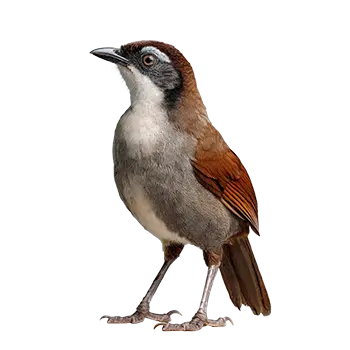

The international trade in laughing thrushes is governed primarily by the Convention on International Trade in Endangered Species of Wild Fauna and Flora (CITES), the multilateral treaty that regulates cross-border movement of wildlife and wildlife products. Several laughing thrush species appear on CITES appendices, with the specific listing depending on the species' conservation status and the degree of trade pressure it faces. Species listed on CITES Appendix II, which includes the majority of internationally traded laughing thrushes, may be exported only with a permit issued by the exporting country's CITES Management Authority, which must determine that the export will not be detrimental to the survival of the species in the wild.
The CITES framework imposes distinct obligations on both exporting and importing countries. An exporting nation must issue an export permit that certifies the specimens were legally obtained and that trade will not threaten wild populations. The importing country must present a valid export permit at the point of entry, and some importing nations additionally require their own import permits. For laughing thrush species not listed on any CITES appendix, international trade may still be subject to national-level wildlife trade laws in either the exporting or importing country, meaning that the absence of a CITES listing does not automatically confer legal tradability.
The European Union implements CITES through its own Wildlife Trade Regulations, which in some cases impose stricter controls than CITES itself requires. Under the EU system, species are classified into Annexes A through D, with Annex A providing the highest level of protection (equivalent to or exceeding CITES Appendix I) and prohibiting commercial trade within the EU except under narrowly defined circumstances. Several laughing thrush species that are listed on CITES Appendix II are placed on EU Annex B, which requires import permits and proof of legal acquisition for any specimens entering the EU. Prospective keepers and breeders within EU member states must be aware of these additional requirements, as violations can result in confiscation and criminal prosecution.
The practical enforcement of CITES provisions varies considerably across signatory nations. Countries with well-resourced customs and wildlife enforcement agencies, such as the United States, the United Kingdom, and Australia, maintain rigorous inspection protocols for live bird shipments and apply significant penalties for non-compliance. In parts of Southeast Asia, where the volume of the domestic and cross-border songbird trade is enormous and enforcement resources are more limited, CITES compliance can be inconsistent. This enforcement gap has been identified by conservation organizations as a critical weakness in the international regulatory framework governing laughing thrush trade.