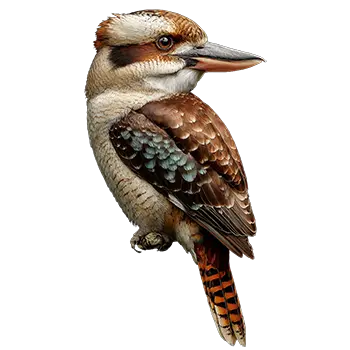

Where to See Kookaburras in the Wild

The Laughing Kookaburra is found across eastern and southeastern Australia, from the tropical rainforests and wet sclerophyll forests of far north Queensland south through New South Wales, the Australian Capital Territory, Victoria, and into the wetter portions of South Australia. Introduced populations also exist in southwestern Western Australia, Tasmania, and Kangaroo Island. For travelers specifically seeking kookaburra encounters, the bird's broad distribution means that sightings are possible in an enormous range of settings, from dense national park bushland to the gardens and parklands of major cities including Sydney, Melbourne, Brisbane, and Canberra.

The Blue-winged Kookaburra occupies the tropical and subtropical belt of northern Australia, from the Kimberley region of Western Australia across the Top End of the Northern Territory and through coastal and subcoastal Queensland. This species is less commonly encountered by international visitors, whose itineraries often focus on southeastern Australia, but it is a regular sight in and around Darwin, Cairns, and Townsville. Travelers who venture into the tropical savannas and open woodlands of northern Australia will find the Blue-winged Kookaburra's range overlapping with the Laughing Kookaburra's in parts of central and eastern Queensland, offering the opportunity to compare the two species in the field.

Urban and suburban environments in eastern Australia offer some of the easiest kookaburra viewing opportunities. Parks, botanical gardens, golf courses, and leafy residential streets with mature eucalyptus and fig trees are all reliable locations. In Sydney, kookaburras are commonly seen and heard in the Royal Botanic Garden, Ku-ring-gai Chase National Park, Lane Cove National Park, and suburban backyards throughout the greater metropolitan area. In Melbourne, the Dandenong Ranges, the Royal Botanic Gardens, and the outer eastern suburbs are productive areas. The birds' willingness to perch in the open and their conspicuous dawn and dusk calling bouts make them among the easiest Australian birds to locate.

For those interested in seeing kookaburras in more remote or pristine settings, the eucalypt forests of the Great Dividing Range provide excellent habitat throughout the bird's range. National parks along this mountain chain, from Lamington and Springbrook in southern Queensland through the Blue Mountains and Barren Grounds in New South Wales to Wilsons Promontory in Victoria, support healthy kookaburra populations in landscapes that also offer rich birding more generally. Visiting these parks early in the morning, when kookaburra family groups are most vocally active, maximizes the chances of both hearing and seeing the birds.

Wildlife Sanctuaries & Zoos

For travelers who want a guaranteed kookaburra encounter, or who wish to see the bird at close range in a controlled setting, Australia's network of wildlife sanctuaries, zoos, and nature parks offers numerous options. Many of these facilities keep Laughing Kookaburras in free-flight aviaries or open-range exhibits where the birds can be observed hunting, vocalizing, and interacting with conspecifics in conditions that approximate their natural behavior. Some facilities also keep Blue-winged Kookaburras, allowing visitors to compare the two species side by side.

Taronga Zoo in Sydney, Healesville Sanctuary near Melbourne, Lone Pine Koala Sanctuary in Brisbane, and Currumbin Wildlife Sanctuary on the Gold Coast are among the most visited facilities that feature kookaburras as part of their Australian native bird collections. Several of these institutions offer keeper talks, feeding demonstrations, and behind-the-scenes encounters that provide visitors with information about kookaburra biology, behavior, and conservation status. These educational programs are particularly valuable for international visitors who may not have the time or mobility to seek out wild kookaburras in bushland settings.

Outside Australia, kookaburras are held in zoos and aviaries on every inhabited continent. Major zoological institutions in North America, Europe, and Asia have included kookaburras in their collections for decades, and the birds' hardiness, longevity, and engaging behavior make them popular exhibit animals. The San Diego Zoo, Smithsonian's National Zoo, London Zoo, and Berlin Zoological Garden are among the internationally prominent facilities that have maintained kookaburra exhibits, though the specific species on display and the exhibit design vary by institution and may change over time.

Wildlife rehabilitation centers in Australia occasionally receive injured or orphaned kookaburras and may offer public viewing or volunteer opportunities. These facilities operate under strict wildlife licensing conditions and are focused on the treatment and release of wild birds, so the visitor experience is typically less polished than at commercial zoos or sanctuaries. However, rehabilitation centers offer an authentic window into the challenges that kookaburras face in the wild and the work required to return injured birds to their natural habitat. Travelers interested in supporting kookaburra conservation through their visit may find these centers particularly rewarding.

Seasonal Timing & Best Practices for Viewing

Kookaburras are non-migratory, sedentary birds that maintain year-round territories, which means they can be found in the same locations throughout the year. There is no seasonal migration to plan around, and no narrow window during which the birds are present or absent from a given area. However, seasonal variations in behavior and detectability can influence the quality of a viewing experience, and planning a visit with these factors in mind can make the difference between a distant glimpse and a prolonged, close encounter.

The breeding season, which typically runs from September through January in southeastern Australia, is often the best time for kookaburra viewing. During this period, territorial calling intensifies as breeding pairs and their helpers from previous seasons reinforce their group boundaries. The dawn chorus is louder, longer, and more frequently initiated, making it easier to locate family groups by sound. Breeding-season birds are also more active and visible during the day as they hunt to provision incubating females and growing nestlings, increasing the chances of observing hunting behavior and food delivery to the nest.

Early morning is universally the best time of day to encounter kookaburras. The dawn chorus, which typically begins in the dim light before sunrise and continues for fifteen to thirty minutes, is the most reliable and dramatic kookaburra behavior available to observers. Arriving at a known territory before first light and waiting quietly will almost always result in hearing the full chorus, and the birds' elevated calling perches make them easy to spot once the light improves. A second, less intense calling period often occurs at dusk, providing a second daily window for viewing.

Photographers and serious birders should be aware that kookaburras are relatively tolerant of human presence but will flush if approached too closely or too quickly. A slow, quiet approach and the use of optical equipment — binoculars for birders, telephoto lenses for photographers — allow observation from a comfortable distance without disturbing the birds. In suburban settings, where kookaburras are habituated to human activity, approach distances can be remarkably short, and birds may perch within a few meters of a patient observer. In wilder settings, maintaining a buffer of ten to fifteen meters is advisable to avoid triggering flight behavior.

Ethical Wildlife Tourism

Encountering kookaburras in the wild is one of the most accessible and rewarding wildlife experiences available to visitors to Australia, but it carries responsibilities that conscientious travelers should take seriously. The most significant ethical concern is feeding. Kookaburras are bold birds that quickly learn to associate humans with food, and in popular picnic areas, campgrounds, and outdoor dining venues, they will readily approach tables and swoop on unattended meals. While this behavior can be entertaining, deliberately feeding wild kookaburras — particularly with processed human food, bread, or raw meat — can cause nutritional deficiencies, foster dependency, alter natural foraging behavior, and increase the risk of aggression toward humans.

Australian wildlife authorities and conservation organizations consistently advise against feeding wild kookaburras and other native birds. Some local councils have enacted bylaws that prohibit the feeding of wildlife in public spaces, and visitors to national parks and reserves will typically encounter signage reinforcing this message. Travelers who wish to observe kookaburras feeding naturally should visit wooded areas where the birds hunt insects, lizards, and small vertebrates from elevated perches — a behavior that is far more impressive and ecologically informative than watching a bird take a sausage from a barbecue.

The use of call playback — playing recorded kookaburra calls on a mobile device to attract birds — is a practice that warrants caution. While commonly employed by birders worldwide, playback can disrupt territorial dynamics, provoke unnecessary stress responses, and interfere with breeding behavior if used during the nesting season. In some Australian national parks and reserves, the use of playback to attract wildlife is discouraged or prohibited. Travelers should check local regulations before using playback and should limit its use to brief, infrequent bursts in areas where the practice is permitted.

Choosing ethical wildlife tourism operators is another consideration for travelers who book guided birding or wildlife tours. Reputable operators follow codes of conduct that prioritize the welfare of the animals being observed, maintain appropriate distances, limit group sizes to reduce disturbance, and provide educational content that promotes conservation awareness. Travelers should be wary of operators who guarantee hand-feeding opportunities with wild birds, encourage close approach to nesting sites, or use excessive playback. Supporting operators who model responsible wildlife interaction helps ensure that kookaburra populations remain healthy and that the birds' natural behavior continues to be the primary attraction.

Transporting Captive Kookaburras

For licensed keepers, breeders, veterinary professionals, and wildlife rehabilitators who need to transport kookaburras, the regulatory and practical requirements are substantial. In Australia, the transport of native wildlife across state and territory boundaries requires permits from both the originating and receiving jurisdictions, and the conditions attached to these permits can be detailed and specific. Transport containers must meet specifications established by the relevant wildlife authority, and documentation — including proof of legal possession, license numbers, and health certificates — must accompany the bird at all times during transit.

The physical requirements for safe kookaburra transport center on the use of an appropriately sized, secure, and well-ventilated transport container. Kookaburras are powerful birds with strong bills, and a transport container must be constructed of materials that the bird cannot damage or escape from during the journey. The container should be large enough for the bird to stand and turn around but not so large that the bird is thrown about during movement. Padding on the interior ceiling and walls helps prevent injury from impact, and a non-slip floor substrate reduces the risk of leg and foot injuries during transit.

Temperature management during transport is critical. Kookaburras are adapted to the temperate and subtropical climates of eastern Australia and can become stressed or endangered by exposure to extreme heat or cold during transit. Vehicles used for transport should be temperature-controlled, and the transport container should never be left in a parked vehicle in direct sunlight. In hot weather, transport should be scheduled during the cooler hours of early morning or late evening. In cold weather, insulation or supplemental warmth may be necessary, particularly for long-distance journeys. Adequate ventilation must be maintained at all times, balancing airflow with temperature control.

For international transport of captive-bred kookaburras, the regulatory burden increases significantly. Export from Australia requires Commonwealth authorization and compliance with the conditions described in the legal section of this content area. Import into a foreign country requires compliance with that country's quarantine, customs, and wildlife regulations, which may include pre-import health testing, quarantine periods upon arrival, and specific container and labeling requirements mandated by the International Air Transport Association (IATA) Live Animals Regulations. Airline policies on the acceptance of live birds vary, and not all carriers will transport exotic species. Anyone contemplating the international transport of a kookaburra should begin the permit and logistics process months in advance of the intended travel date, as the approvals required can be lengthy and the consequences of noncompliance are severe.

Planning a Birding Trip Around Kookaburras

For international visitors whose primary travel motivation is wildlife, building a trip around kookaburra viewing offers the advantage of targeting a species that is abundant, widespread, and easy to find — qualities that make the kookaburra an ideal anchor species around which to plan a broader Australian birding itinerary. The Laughing Kookaburra's range overlaps with hundreds of other native bird species, including many that are far harder to locate, and a trip designed to visit kookaburra habitat will inevitably produce encounters with a wide variety of Australian avifauna.

A productive eastern Australia birding itinerary might begin in Sydney, where the city's parks and surrounding national parks offer easy access to Laughing Kookaburras alongside superb fairy-wrens, rainbow lorikeets, sulphur-crested cockatoos, and a rich assemblage of honeyeaters and waterbirds. From Sydney, travel south to the Shoalhaven region or north to the Hunter Valley opens up additional woodland and rainforest habitats. A visit to the Blue Mountains, within two hours of the city center, provides reliable kookaburra viewing in spectacular scenery that also supports lyrebirds, king parrots, and crimson rosellas.

Travelers with more time can extend their itinerary northward into Queensland, where the transition from temperate to tropical habitats introduces the Blue-winged Kookaburra alongside species such as the palm cockatoo, eclectus parrot, and southern cassowary. The Atherton Tablelands and Daintree Rainforest in far north Queensland are internationally recognized birding destinations that support extraordinary species diversity, and a kookaburra-focused traveler who reaches this region will find their target species sharing the landscape with birds found nowhere else on Earth.

Practical considerations for a kookaburra-focused birding trip include the choice between self-guided travel with a rental car and hiring a professional birding guide. Self-guided travel offers flexibility and cost savings, and kookaburras are straightforward enough to find that a guide is not strictly necessary for this species alone. However, a professional guide familiar with local bird populations can dramatically increase the total species count and can locate difficult species that a visiting birder might miss. Multiple Australian birding tour operators offer trips ranging from single-day outings near major cities to multi-week expeditions covering the continent's major bioregions, and most will happily incorporate kookaburra viewing into a broader itinerary.

Accommodation options along the major birding routes range from campgrounds in national parks to eco-lodges and rural retreats. For kookaburra viewing specifically, accommodation near woodland edges or in properties with mature native trees is ideal, as birds often call from the trees immediately surrounding guesthouses and campgrounds, providing a wake-up call that no alarm clock can rival. Many eco-lodges in kookaburra country feature outdoor dining areas where the birds are regular uninvited guests, offering close encounters that require nothing more than sitting still with a cup of coffee at dawn.

Always consult a qualified professional before making any health-related decisions. This content is provided for informational reference only and should not replace professional guidance specific to your animal.