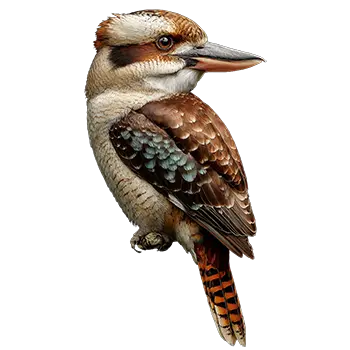

In Australia, all native bird species, including the four recognized species of kookaburra, are protected under the Environment Protection and Biodiversity Conservation Act 1999 (EPBC Act), the primary piece of Commonwealth legislation governing wildlife conservation. The EPBC Act establishes a framework for the identification, listing, and protection of native species and their habitats, and it prohibits the killing, injuring, taking, trading, keeping, or moving of protected wildlife without appropriate authorization. While the Laughing Kookaburra is not classified as threatened under the Act — its populations remain stable across most of its native range — it nevertheless receives the baseline protections that apply to all native fauna.
The EPBC Act operates in conjunction with state and territory wildlife legislation, creating a layered regulatory system in which the Commonwealth government sets overarching conservation policy while the states and territories administer day-to-day wildlife management, including licensing, compliance, and enforcement. For kookaburras, this means that the specific rules governing possession, breeding, rehabilitation, and interaction vary significantly depending on jurisdiction. A person who is legally permitted to keep a kookaburra under one state's licensing scheme may be in violation of the law if they transport the bird across a state border without the receiving jurisdiction's authorization.
The EPBC Act also governs the export of native wildlife from Australia, including kookaburras. Under the Act and its associated regulations, the commercial export of live native birds is heavily restricted, and any export requires a permit issued by the Commonwealth Department of Climate Change, Energy, the Environment and Water. These export controls are a critical component of Australia's compliance with international wildlife trade agreements and reflect a long-standing national policy of protecting native fauna from exploitation by the international pet trade.
It is worth noting that the EPBC Act's protections extend not only to individual birds but also to their habitats. Activities that are likely to have a significant impact on the habitat of a listed species, or on a listed ecological community, may trigger the Act's environmental assessment provisions. While this mechanism is more commonly invoked for threatened species, it applies in principle to any action that could substantially affect native wildlife, and development proposals in areas with significant kookaburra populations may be subject to scrutiny under these provisions.