
Film & Television

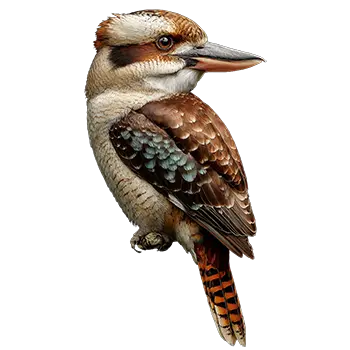
The kookaburra's call is arguably the most geographically misused animal sound effect in cinema history. Since at least the 1930s, Hollywood sound designers have reached for the Laughing Kookaburra's distinctive vocalization whenever a scene requires a generic "jungle" or "exotic wilderness" atmosphere, regardless of whether the setting has any connection to Australia. The call has been layered into the soundscapes of films set in African rainforests, South American jungles, Southeast Asian landscapes, and even fictional alien planets. This persistent misplacement has made the kookaburra one of the most frequently heard birds in global cinema — and almost never in its actual geographic context.

The practice can be traced to the early days of sound libraries in Hollywood's golden age. Studio sound departments assembled collections of animal recordings that were reused across productions, and a clean, high-quality recording of a kookaburra's laugh became a stock element that was too distinctive and evocative to leave on the shelf. Once established in the sonic vocabulary of adventure and jungle films, the convention became self-reinforcing: audiences came to associate the kookaburra call with tropical wilderness in general, and sound designers continued to deploy it to meet that expectation. The result is a curious paradox in which millions of moviegoers worldwide can recognize the kookaburra's call without having any idea what bird produces it or where that bird actually lives.

In Australian film and television, the kookaburra has naturally played a more geographically accurate role. The bird appears as an ambient presence in countless Australian productions, from period dramas to contemporary series, where its dawn call serves as an auditory shorthand for the Australian bush. Australian children's television has featured kookaburra characters in both animated and live-action formats, typically portrayed as cheerful, mischievous, or wise figures. The bird's visual distinctiveness — the oversized head, heavy bill, and compact, stocky body — translates well to animation and character design, making it a natural choice for productions aimed at young audiences.

The kookaburra's status as a cinematic sound cliche has itself become a subject of commentary and humor. Film critics, sound design professionals, and nature enthusiasts have compiled lists and video essays documenting the bird's appearances in geographically impossible contexts, turning the phenomenon into a minor genre of media criticism. Several documentaries about sound design and foley artistry have used the kookaburra example to illustrate how deeply embedded and culturally invisible stock sounds can become, making the bird a case study in the ways that media shapes and distorts public understanding of the natural world.

Music & the Famous Song

No discussion of the kookaburra in popular culture can avoid the song "Kookaburra Sits in the Old Gum Tree," written by Marion Sinclair in 1932 for a Girl Guides jamboree in Melbourne. The round, with its simple melody and playful lyrics about a kookaburra laughing at the world, became one of the most widely known Australian songs of the 20th century. It was taught in schools across Australia and in many other English-speaking countries, embedding the kookaburra in the musical consciousness of generations of children who may never have seen or heard the actual bird.

The song gained unexpected international attention in the late 2000s when the estate of Marion Sinclair, administered by Larrikin Music, filed a copyright infringement claim against the band Men at Work. The lawsuit alleged that a flute riff in the band's 1981 hit "Down Under" — itself one of the most iconic Australian pop songs ever recorded — copied a melodic phrase from "Kookaburra Sits in the Old Gum Tree." The case went to the Federal Court of Australia, which ruled in 2010 that the flute riff did indeed reproduce a substantial part of Sinclair's melody. The decision generated significant public debate about copyright law, the boundaries of musical borrowing, and the cultural ownership of folk-like material. The case was widely covered in international media and remains one of the most discussed music copyright disputes in Australian legal history.

Beyond the Sinclair composition and its legal aftermath, the kookaburra's call has influenced musicians and composers in less direct ways. Australian folk and country artists have referenced the bird in song lyrics as a marker of landscape and identity, using its laugh as a symbol of the bush, of dawn, or of home. Composers of orchestral and ambient works have incorporated kookaburra call recordings or stylized imitations into pieces intended to evoke the Australian environment, particularly in film scoring and theatrical soundscapes.

The kookaburra's presence in music extends to the realm of sound sampling and electronic production. Field recordings of kookaburra calls are among the most commonly shared and downloaded Australian wildlife samples in online sound libraries, used by producers across genres ranging from world music to ambient electronica to novelty tracks. The call's rhythmic structure, rising intensity, and natural crescendo give it a musical quality that lends itself to creative recontextualization, making it a versatile element in contemporary sound design and music production.

Literature & Children's Books

The kookaburra has been a fixture of Australian children's literature for well over a century, occupying a role that reflects its familiarity and appeal to young audiences. Early 20th-century Australian picture books and story collections frequently featured kookaburras as characters, typically cast in roles that emphasized their boldness, humor, and sociability. The bird's prominent place in the landscape of Australian childhood reading helped establish it as one of the first native animals that Australian children learn to identify and name, alongside the kangaroo, koala, and platypus.

May Gibbs, one of Australia's most celebrated children's authors and illustrators, included kookaburras among the native animals that populated her iconic works about the gumnut babies, Snugglepot and Cuddlepie. In Gibbs's illustrations, kookaburras serve as characters in a richly imagined bush world where native flora and fauna interact with whimsical humanoid figures. The enduring popularity of Gibbs's work ensured that the kookaburra remained visible in Australian literary culture throughout the 20th century and into the 21st, with reprints and adaptations continuing to introduce new generations to her vision of the Australian bush.

Beyond the specifically Australian literary tradition, the kookaburra appears in natural history writing, field guides, and popular science books aimed at international audiences. The bird's unusual hunting behavior, cooperative breeding system, and famous call make it a compelling subject for writers seeking to engage general readers with the peculiarities of Australian wildlife. Travel writers and essayists who visit Australia frequently devote passages to their first encounter with the kookaburra's laugh, treating it as a defining sensory experience of the Australian landscape — a literary convention that has its own long history.

In the realm of adult fiction, the kookaburra surfaces less frequently but no less meaningfully. Australian novelists and poets have used the bird's call as a device for establishing setting, evoking memory, or signaling emotional transitions. The laugh's capacity to sound simultaneously joyful and unsettling gives it a tonal ambiguity that literary writers find useful, and it appears in works ranging from pastoral realism to psychological suspense. The kookaburra's literary presence, taken as a whole, reveals a bird that has been written about not merely as an animal but as a cultural object whose meaning shifts depending on who is listening.

Advertising, Branding & Mascots

The kookaburra has proven to be one of Australia's most commercially versatile animal icons, appearing in advertising and branding campaigns that span industries from sportswear to processed food. Its visual distinctiveness — a bird that looks simultaneously serious and comical, with a disproportionately large head and an expression that seems to dare the viewer not to smile — makes it an effective mascot and brand mark. Unlike some Australian animals whose commercial use can veer into cliche, the kookaburra carries associations of warmth, humor, and approachability that translate well across markets and demographics.

One of the most prominent commercial uses of the kookaburra name is Kookaburra Sport, an Australian sporting goods company founded in 1890 that manufactures cricket equipment, hockey sticks, and related products. The company's kookaburra logo is recognized across the cricket-playing world, and Kookaburra-branded cricket balls are the standard match ball in international test cricket in Australia and several other countries. The brand's longevity and global reach have made it one of the most successful examples of an animal-derived brand name in the history of sporting goods, associating the kookaburra with athletic performance and Australian craftsmanship on a genuinely international stage.

In the food and beverage sector, the kookaburra has lent its name and image to products ranging from licorice candy to barbecue sauces. Kookaburra Licorice, for example, is an Australian brand that has achieved distribution in international markets, using the bird's cheerful image to convey a sense of fun and Australian authenticity. Other food brands have used kookaburra imagery on packaging and in advertising campaigns targeting both domestic consumers, for whom the bird is a familiar comfort, and international buyers, for whom it signals exotic provenance.

The kookaburra's role as a mascot extends to the institutional and civic realms. Australian schools, sports clubs, community organizations, and local councils have adopted kookaburra mascots, typically rendered in a cartoonish, approachable style that emphasizes the bird's cheerful demeanor. Tourism organizations at the local, state, and national levels have used kookaburra imagery in promotional materials aimed at international visitors, positioning the bird alongside the kangaroo and koala as part of the iconic trio of Australian wildlife. The sheer volume of kookaburra-branded products, institutions, and campaigns reflects a commercial ecosystem built around an animal whose appeal is broad enough to sell almost anything.

Video Games & Digital Media

The kookaburra's entry into the digital entertainment landscape has followed multiple paths, from explicit character representation in video games to its continued role as a stock sound effect in interactive media. In games set in Australian environments or featuring Australian wildlife, kookaburras have appeared as ambient creatures, collectible species, or named characters. Titles in the simulation and management genres, including various entries in the zoo and wildlife park management category, typically include the kookaburra as one of the Australian species available for exhibition, requiring players to manage habitat, enrichment, and breeding parameters that reflect the bird's real-world biology.

The mobile gaming market has produced several titles featuring stylized kookaburra characters, ranging from casual puzzle games to educational apps designed to teach children about Australian wildlife. These games tend to leverage the kookaburra's visual appeal and recognizability, using its distinctive silhouette and colorful plumage as design anchors for characters that need to be immediately identifiable on small screens. The bird's fame as a laughing animal also lends itself to gameplay mechanics involving sound, rhythm, or humor, areas that game designers have explored with varying degrees of creativity.

Beyond dedicated game appearances, the kookaburra's call continues its Hollywood tradition of geographic misplacement in the interactive medium. Open-world games, survival titles, and adventure games set in tropical or jungle environments frequently include the kookaburra's laugh in their ambient soundscapes, regardless of whether the game world has any connection to Australasia. The convention is so deeply embedded in the culture of game audio production that many sound designers include it reflexively, drawing from the same stock libraries that have served the film industry for decades.

On social media platforms and user-generated content sites, the kookaburra has found a new kind of celebrity. Videos of kookaburras laughing, stealing food from outdoor diners, or interacting with household objects have accumulated millions of views on platforms like YouTube, TikTok, and Instagram. The bird's bold temperament and seemingly expressive face make it a reliable source of shareable content, and viral kookaburra videos have introduced the species to global audiences who encounter it not through traditional media channels but through algorithmically curated feeds. This digital-native exposure has created a new generation of kookaburra enthusiasts whose primary relationship with the bird exists entirely online.

Photography & Fine Art

The kookaburra has been a subject of artistic fascination since the earliest European depictions of Australian wildlife. Colonial-era natural history illustrators, including artists attached to exploratory expeditions and survey missions, produced detailed watercolor and engraved portraits of the Laughing Kookaburra that were published in scientific atlases and popular natural history volumes. These early works, which balanced scientific accuracy with aesthetic composition, established a visual tradition of depicting the kookaburra as a dignified, slightly imposing figure — an image that persists in wildlife illustration to this day.

John Gould, the English ornithologist and artist whose monumental work "The Birds of Australia" (1840-1848) remains one of the most celebrated ornithological publications ever produced, included a striking plate of the Laughing Kookaburra that has been widely reproduced. Gould's depiction, rendered with the meticulous detail and dramatic staging that characterize his best work, helped define the kookaburra's visual identity for European and international audiences. The original Gould prints are highly valued by collectors, and reproductions appear in books, posters, and institutional collections around the world.

In contemporary wildlife photography, the kookaburra is among the most frequently photographed Australian birds, owing to its abundance, approachability, and photogenic qualities. The bird's habit of perching motionlessly on exposed branches while scanning for prey offers photographers extended opportunities to compose and capture images, and its dramatic strike — a rapid downward swoop followed by the dispatching of prey against a perch — is a prized action shot. Australian wildlife photography competitions regularly feature kookaburra images among their finalists, and the bird's distinctive profile has graced the covers of nature magazines, calendars, and coffee-table books too numerous to catalogue.

Beyond photography and traditional illustration, the kookaburra has inspired work in a range of fine art disciplines. Australian painters, sculptors, and printmakers have used the bird as a subject or motif in works that range from hyperrealistic wildlife portraiture to abstract interpretations of the Australian landscape. Indigenous Australian artists have incorporated the kookaburra into contemporary works that bridge traditional cultural knowledge and modern artistic practice. The bird's compact, sculptural form and its rich coloration — the interplay of brown, cream, blue, and rust in its plumage — make it a rewarding subject for artists working in any medium, and its cultural associations add layers of meaning that elevate it beyond simple nature study.

Always consult a qualified professional before making any health-related decisions. This content is provided for informational reference only and should not replace professional guidance specific to your animal.