
Origins & Natural Habitat

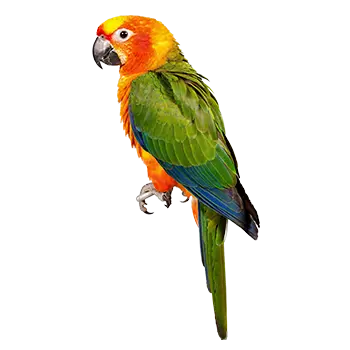
The Jenday Conure (Aratinga jandaya) is endemic to northeastern Brazil, where it inhabits a mosaic of dry deciduous woodland, palm groves, forest edges, and the transitional scrublands between the cerrado savanna and the caatinga biome. Its core range extends across the states of Maranhao, Piaui, Goias, Tocantins, and parts of Para, a region characterized by seasonal drought, sparse canopy cover, and a patchwork of agricultural clearings interspersed with remnant native vegetation. Unlike many neotropical parrots that depend on dense humid forest, the Jenday has evolved to exploit semi-open landscapes where fruiting trees and seeding grasses appear in predictable seasonal cycles.

In the wild, Jenday Conures are highly social birds that forage and roost in flocks ranging from a dozen to several hundred individuals. Their diet centers on seeds, nuts, berries, and seasonal fruits, supplemented by flowers and the occasional insect larva. Flocks move through the landscape following the availability of food, descending noisily on fruiting palms and croplands alike. This adaptability to disturbed and edge habitats has allowed the species to persist in areas where more forest-dependent parrots have declined, though it has also brought the Jenday into frequent conflict with farmers whose corn, mango, and cashew crops attract large feeding parties.

The species nests in tree cavities, typically selecting hollows in dead or dying limbs at moderate heights. Breeding pairs are monogamous and often reuse the same cavity across successive seasons, a behavior that makes them vulnerable when suitable nesting trees are removed by logging or land clearing. Clutches generally contain three to five eggs, and both parents share incubation and chick-rearing duties. Fledging occurs at roughly eight weeks, after which juveniles remain with the family group for several months before dispersing into the wider flock.

Ecologically, the Jenday Conure occupies a niche that is both resilient and precarious. Its tolerance of degraded habitats has buffered it against the worst effects of deforestation in northeastern Brazil, but the ongoing conversion of native woodland to soybean and cattle pasture continues to fragment its range. The species is currently classified as Least Concern by the International Union for Conservation of Nature, though regional population trends warrant close monitoring as land-use pressures intensify across the Brazilian interior.

Early History with Humans

The Jenday Conure's relationship with humans almost certainly predates European contact in Brazil. Indigenous communities across northeastern Brazil, including the Tupi and Ge-speaking peoples, have long interacted with parrots as sources of feathers, food, and companionship. Brilliantly colored feathers from species like the Jenday were prized materials for ceremonial headdresses, body adornments, and ritual objects. In some indigenous cosmologies, parrots served as intermediaries between the human and spirit worlds, their raucous calls interpreted as messages from ancestors or nature spirits. The Jenday's vivid yellow, orange, and green plumage made it a particularly desirable species for decorative and ceremonial use.

The species entered European scientific awareness in the early 19th century. German naturalist Georg Marcgraf, working in Dutch-controlled Pernambuco during the 1640s, documented several Brazilian parrot species, though the Jenday was not formally described until later. The binomial name Aratinga jandaya, assigned in the taxonomic literature of the period, derives from the Tupi word "jandaia," itself an onomatopoeic rendering of the bird's shrill flight call. This linguistic root underscores the depth of indigenous familiarity with the species long before European naturalists arrived to catalog it.

During the colonial period and into the 19th century, small numbers of Jenday Conures were exported to Europe as curiosities and cage birds, though they never achieved the celebrity status of larger parrots like macaws and Amazons. Their relatively modest size and less developed mimicry abilities meant they were overshadowed in the European parlor trade by species that could reproduce human speech more convincingly. Nevertheless, the Jenday's striking appearance attracted the attention of aviculturists and collectors who appreciated its beauty even in an era when talking ability was the primary metric by which parrots were valued.

By the mid-20th century, growing international interest in aviculture brought renewed attention to smaller parrot species, including conures. The Jenday began appearing more frequently in bird collections across Europe and North America, and breeders recognized its potential as a hardy, personable companion bird. This shift in avicultural fashion, from prizing only the largest and most talkative parrots to appreciating a broader range of species, set the stage for the Jenday Conure's emergence as a mainstream pet bird in the decades that followed.

Cultural Symbolism & Folklore

In the cultural traditions of northeastern Brazil, the Jenday Conure and its close relatives carry symbolic weight that extends well beyond their ecological role. The Tupi word "jandaia" appears in place names, folk songs, and oral literature across the region, reflecting the bird's deep integration into local identity. Several municipalities and geographic features in the states of Ceara and Piaui bear names derived from "jandaia," testifying to the species' visibility in the landscape and its resonance in the cultural imagination of rural communities.

In Brazilian folklore, parrots in general are often cast as clever, talkative characters whose forthrightness sometimes leads to comic or cautionary outcomes. The Jenday and its relatives appear in regional stories where their loud calls and bold behavior serve as metaphors for honesty, indiscretion, or the inability to keep a secret. These tales, passed down orally across generations, position the parrot as a figure that is simultaneously admired for its beauty and gently mocked for its noisiness, a duality that resonates with the experience of anyone who has shared a home with a conure.

The species also holds a place in the broader symbolic vocabulary of Brazilian national identity. Brazil's rich avifauna has long been a source of national pride, and colorful parrots are among the most recognizable emblems of the country's tropical biodiversity. The Jenday's vivid plumage, echoing the yellow and green of the Brazilian flag, has made it an informal mascot of the northeastern sertao, the semi-arid interior region whose culture and ecology are often overshadowed by the more internationally visible Amazon and Atlantic Forest biomes.

In contemporary Brazilian culture, the Jenday Conure has found new symbolic footing as a representative of the country's endemic wildlife. Conservation organizations and ecotourism operators in the northeast have adopted the species as a flagship for habitat protection campaigns, leveraging its charisma and visual appeal to build public support for preserving the threatened caatinga and cerrado ecosystems. This modern symbolic role connects the bird's deep cultural roots to present-day environmental advocacy in a way that honors both its natural history and its place in human storytelling.

Scientific Study & Taxonomic History

The Jenday Conure's taxonomic journey reflects the broader complexities of neotropical parrot classification. The species was formally described in the early 19th century under the genus Psittacus before being transferred to Aratinga, a large genus that once served as a catchall for medium-sized New World parakeets and conures. For most of the 20th century, the Jenday was classified as Aratinga jandaya, a designation that placed it alongside the Sun Conure, Golden-capped Conure, and Sulphur-breasted Conure in a closely related species complex sometimes informally called the "jandaya group."

Molecular phylogenetic studies conducted in the early 21st century prompted a major reorganization of the Aratinga genus. Researchers demonstrated that the traditional Aratinga was polyphyletic, meaning it contained species that were not each other's closest relatives. As a result, the genus was split, and the jandaya group was reassigned to the resurrected genus Aratinga in a narrower sense by some authorities, while others placed them in the genus Eupsittula or retained them provisionally pending further study. This taxonomic instability has created some confusion in the avicultural and scientific literature, though most contemporary references continue to use Aratinga jandaya.

The close genetic relationship among the jandaya group species has practical implications for aviculture and conservation alike. Jenday Conures hybridize readily with Sun Conures in captivity, producing fertile offspring sometimes marketed under names like "Sunday Conure" or "Jenday-Sun hybrid." While these hybrids are popular among some pet owners for their intensified coloration, they pose a concern for breeders committed to maintaining genetically pure captive populations. The ease of hybridization also raises questions about species boundaries within the group and has fueled ongoing taxonomic debate.

Field research on wild Jenday Conure populations has been relatively limited compared to studies of more charismatic or endangered Brazilian parrots such as Spix's Macaw or the Hyacinth Macaw. However, surveys conducted by Brazilian ornithologists in the cerrado and caatinga regions have contributed valuable data on population density, habitat use, and breeding ecology. These studies have confirmed that the Jenday remains reasonably common within its range but have also highlighted localized declines linked to habitat conversion and trapping for the domestic pet trade. As molecular tools and remote sensing technologies become more accessible to researchers working in northeastern Brazil, a more detailed picture of the species' population genetics and landscape-level ecology is expected to emerge.

Rise as a Companion Bird

The Jenday Conure's ascent to popularity as a companion bird accelerated dramatically in the 1970s and 1980s, a period that saw a broader surge of interest in parrot keeping across North America and Europe. During this era, large numbers of wild-caught Jenday Conures were exported from Brazil to supply the growing pet trade, a practice that was legal at the time but drew increasing criticism from conservation advocates. The birds' vivid coloration, manageable size, and outgoing personalities made them immediately appealing to a market that had previously focused on larger psittacines like macaws and cockatoos.

The passage of the Wild Bird Conservation Act in the United States in 1992 effectively ended the importation of wild-caught parrots, including Jenday Conures, into the American market. This legislative milestone forced the avicultural community to establish self-sustaining captive breeding programs, a transition that ultimately benefited the species by reducing collection pressure on wild populations and producing birds that were better adapted to life in human households. Captive-bred Jenday Conures, hand-raised from a young age, proved to be remarkably affectionate and sociable companions, further boosting the species' reputation among pet owners.

By the turn of the 21st century, the Jenday Conure had established itself as one of the most popular conure species in the pet trade, rivaling the Sun Conure and Green-cheeked Conure in market presence. Breeders refined their husbandry techniques, improving hatch rates, nutrition protocols, and weaning practices. The species became a regular fixture at avian expos, bird fairs, and specialty pet stores, and a growing body of care literature, both in print and online, made information about Jenday husbandry widely accessible to first-time owners.

Today, the Jenday Conure occupies a distinctive niche in the companion bird world. It is large enough to feel substantial and interactive, yet small enough to be housed comfortably in a typical household setting. Its playful temperament, strong pair-bonding instincts, and willingness to engage with human family members have earned it a loyal following among bird enthusiasts who value personality and companionship over talking ability. Online communities dedicated to conure keeping have further strengthened the species' cultural footprint, with Jenday owners sharing photographs, behavioral observations, and husbandry advice across social media platforms and specialized forums.

The Jenday Conure Today

In the contemporary avicultural landscape, the Jenday Conure is widely regarded as a rewarding but demanding companion that thrives in households prepared to meet its social, dietary, and environmental needs. Experienced keepers emphasize the importance of daily interaction, varied enrichment, and a diet built around high-quality pellets supplemented with fresh fruits, vegetables, and occasional nuts. The species' intelligence and curiosity mean that boredom and social isolation can lead to behavioral issues such as excessive screaming, feather picking, and cage aggression, underscoring the need for engaged, informed ownership.

The veterinary community has developed increasingly sophisticated approaches to conure health care, with avian practitioners now able to diagnose and treat conditions that would have gone unrecognized a generation ago. Common health concerns for Jenday Conures include Proventricular Dilatation Disease, psittacine beak and feather disease, and aspergillosis, all of which benefit from early detection through regular veterinary checkups. Advances in avian diagnostic imaging, blood chemistry analysis, and infectious disease testing have significantly improved outcomes for companion conures when illness does occur.

Conservation awareness has also shaped the modern Jenday Conure community. Many breeders and owners actively support habitat preservation initiatives in northeastern Brazil, recognizing that the long-term viability of wild populations underpins the genetic health of captive lines. Organizations focused on neotropical parrot conservation have highlighted the Jenday as an example of a species whose wild and captive stories are deeply intertwined, and educational outreach efforts within the pet-keeping community increasingly emphasize the ecological context from which these birds originate.

Looking ahead, the Jenday Conure's future as both a wild species and a companion animal appears cautiously optimistic. Captive breeding programs are well established and genetically diverse, reducing the likelihood of a return to wild-capture practices. In Brazil, expanding networks of protected areas and growing public interest in endemic wildlife offer some buffer against the habitat loss that remains the most significant long-term threat to wild populations. For the millions of households around the world that share their lives with a Jenday Conure, the species represents not just a pet but a living connection to the biodiversity and cultural heritage of one of South America's most distinctive ecological regions.

Always consult a qualified professional before making any health-related decisions. This content is provided for informational reference only and should not replace professional guidance specific to your animal.