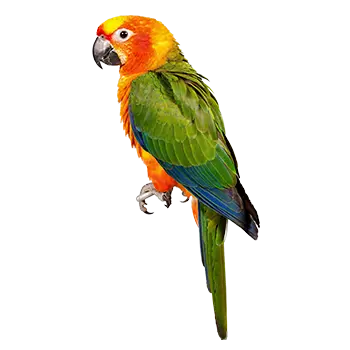

The legal framework governing Jenday Conure ownership begins at the international level with the Convention on International Trade in Endangered Species of Wild Fauna and Flora, commonly known as CITES. The Jenday Conure is listed under CITES Appendix II, a designation that applies to species not necessarily threatened with extinction but for which trade must be controlled to prevent utilization incompatible with their survival. This listing means that any international shipment of a Jenday Conure, whether a live bird, a preserved specimen, or even recognizable parts and derivatives, requires export permits from the country of origin and, in many cases, import permits from the receiving country.
The practical effect of the CITES Appendix II listing is that legal international trade in Jenday Conures is tightly documented and monitored. Exporting countries must demonstrate that any birds being shipped were legally acquired and that the export will not be detrimental to wild populations. For Brazil, the Jenday's country of origin, the regulatory environment is particularly strict. Brazilian environmental law prohibits the commercial export of native wildlife, meaning that all Jenday Conures legally available in the international pet trade descend from birds that were exported before current restrictions took effect or from captive-bred stock established outside Brazil.
The CITES framework is implemented domestically by each signatory nation through its own legislative and regulatory apparatus. In the United States, the U.S. Fish and Wildlife Service oversees CITES implementation and enforces compliance at ports of entry. In the European Union, the EU Wildlife Trade Regulation transposes CITES requirements into binding Community law, with additional provisions that in some cases impose stricter conditions than the convention itself requires. Prospective owners and breeders who intend to move Jenday Conures across international borders must familiarize themselves with the specific CITES implementation rules of both the originating and destination countries.
Violations of CITES regulations can result in severe penalties, including substantial fines, confiscation of birds, and criminal prosecution. Enforcement agencies in major importing countries have become increasingly sophisticated in detecting illegal wildlife trade, using forensic techniques such as DNA analysis and isotope profiling to determine whether birds offered for sale were genuinely captive-bred or illegally wild-caught. For Jenday Conure owners and breeders, maintaining thorough documentation of each bird's provenance, including closed leg band numbers, hatch certificates, and breeder records, is both a legal obligation and a practical safeguard against inadvertent involvement in illicit trade.