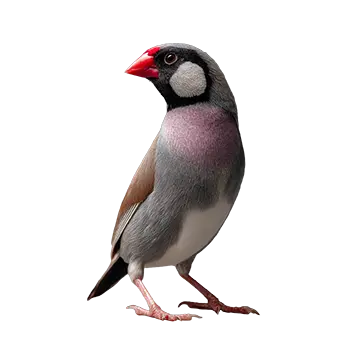

The Java Sparrow (Lonchura oryzivora), also known as the Java Finch or Java Rice Bird, is a robust estrildid finch native to the Indonesian islands of Java and Bali. The species evolved in the tropical lowland grasslands and cultivated rice paddies of Southeast Asia, where warm temperatures, abundant seed sources, and open terrain provided ideal conditions for large flocks to thrive. Its close association with rice agriculture earned the bird its scientific species name, oryzivora, which translates to "rice eater."
Historically, Java Sparrows occupied a wide ecological niche across the volcanic landscapes of Java, nesting in tree cavities, cliff crevices, and the eaves of human structures. Their natural habitat overlapped heavily with human agricultural settlements, and this proximity shaped the species' trajectory in profound ways. Farmers viewed them as both a familiar presence and a significant pest, as large flocks could descend upon ripening rice fields and consume substantial portions of a harvest.
The bird's striking appearance — a bold black head, bright white cheeks, stout pink bill, and soft grey plumage — distinguished it from other small seed-eating birds in the region. This visual appeal, combined with its manageable size and relatively calm disposition, made the Java Sparrow one of the earliest Southeast Asian bird species to be kept as a companion animal. Archaeological and historical evidence suggests that the practice of keeping Java Sparrows in captivity dates back several centuries on the island of Java itself.