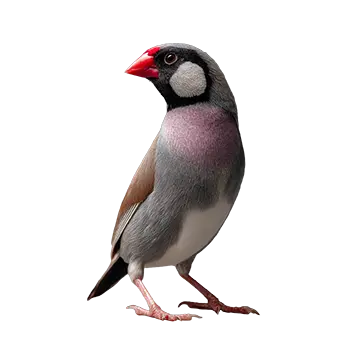

The Java Sparrow has made occasional but memorable appearances in film and television, most prominently in Japanese media where the bird holds deep cultural significance. Japanese television dramas and variety shows have featured bunchou as beloved household pets, reflecting the species' genuine popularity in Japanese homes. These portrayals typically emphasize the bird's gentle temperament and its close bond with its owner, reinforcing the cultural image of the Java Sparrow as an ideal companion bird.
In animated film and television, the Java Sparrow's distinctive appearance — the bold black head, bright white cheeks, and pink bill — makes it an appealing subject for character design. Japanese anime and animated shorts have incorporated Java Sparrow characters in both supporting and starring roles, often drawing on the bird's reputation for quiet loyalty and understated charm. The visual simplicity and recognizability of the species lends itself well to animation, where its round silhouette and high-contrast markings translate effectively to drawn or digital formats.
Outside of Japan, the Java Sparrow's presence in mainstream Western film and television has been more limited. When the species does appear, it is usually in the context of nature documentaries or educational programming about Southeast Asian wildlife and the cage-bird trade. Documentaries addressing the illegal bird trade in Indonesia have featured the Java Sparrow prominently, drawing attention to the tension between the species' cultural importance and its declining wild population.
The bird has also appeared in independent and art-house films, particularly those exploring themes of captivity, freedom, and the human relationship with nature. Filmmakers have used the Java Sparrow's status as both a cherished pet and an endangered wild species as a metaphor for broader environmental and ethical questions.