
Origins & Natural Habitat

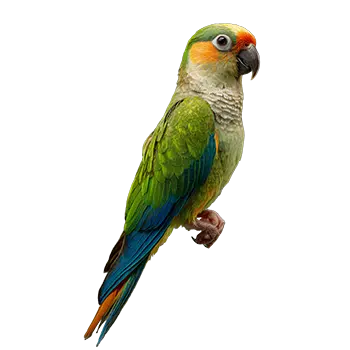
The Half-Moon Conure (Eupsittula canicularis), also widely known as the Orange-fronted Conure or Orange-fronted Parakeet, is native to the Pacific slope of Central America. Its range extends from the western lowlands of Mexico, particularly the states of Sinaloa and Colima, southward through Guatemala, El Salvador, Honduras, Nicaragua, and into the Guanacaste province of northwestern Costa Rica. Throughout this corridor, the species inhabits deciduous and semi-deciduous dry forests, thorn scrub, and the edges of agricultural land, showing a preference for open woodland and savanna-like environments rather than dense tropical rainforest.

Within these habitats, Half-Moon Conures are highly social birds that typically congregate in flocks ranging from a dozen to several hundred individuals. They roost communally in tree cavities and termite mounds, the latter being a particularly distinctive nesting behavior among New World parrots. The species feeds primarily on seeds, fruits, flowers, and occasionally cultivated crops such as corn and sorghum, which has at times brought it into conflict with agricultural communities across its range.

The dry forests of the Pacific lowlands represent one of the most threatened tropical ecosystems in the Americas. Centuries of clearing for cattle ranching, agriculture, and urban expansion have reduced these forests to a fraction of their original extent, particularly in Mexico and El Salvador. Despite this habitat pressure, the Half-Moon Conure has demonstrated notable adaptability, persisting in fragmented landscapes, secondary growth, and even suburban areas where suitable nesting sites and food sources remain available.

Taxonomically, the species was long classified within the genus Aratinga before molecular phylogenetic studies led to the reclassification of several smaller conure species into the genus Eupsittula in 2013. This reclassification reflected a more refined understanding of evolutionary relationships within the broader conure group, distinguishing the Half-Moon and its close relatives from larger Aratinga species such as the Sun Conure and Jenday Conure.

Early History with Humans

The Half-Moon Conure's relationship with humans in Mesoamerica predates European contact by many centuries. Archaeological evidence and ethnohistorical accounts indicate that indigenous peoples of western Mexico and Central America kept parrots and parakeets as companions, trade goods, and sources of feathers for ceremonial use. While the Scarlet Macaw and Military Macaw received the greatest attention in pre-Columbian art and ritual, smaller parrots including conures were also captured and kept in villages throughout the Pacific lowlands.

Spanish colonial records from the 16th and 17th centuries mention the abundance of small green parrots along the Pacific coast of New Spain, and the Half-Moon Conure was almost certainly among the species observed. Colonial naturalists and administrators occasionally described the flocks that descended on cornfields, and some accounts reference the local practice of raising young parrots taken from nests as household pets. The species' tameness when hand-raised was noted even in these early descriptions, foreshadowing its later popularity in the avicultural trade.

During the 18th and 19th centuries, as European naturalists undertook more systematic surveys of Central American fauna, the Half-Moon Conure was formally described and cataloged. The species was scientifically described by Carl Linnaeus in 1758 under the name Psittacus canicularis, and subsequent ornithologists refined its placement within the broader parrot taxonomy. Natural history specimens were shipped to museums in Europe, and the bird gradually entered the awareness of the international scientific community.

The modern avicultural trade in Half-Moon Conures began to develop in earnest during the mid-20th century, when growing demand for pet parrots in the United States and Europe drove large-scale trapping operations across Mexico and Central America. Tens of thousands of wild-caught birds were exported during the 1970s and 1980s, a period that raised serious conservation concerns and ultimately contributed to stricter trade regulations. This era marked the transition of the Half-Moon Conure from a regional curiosity to a globally recognized companion parrot.

Cultural Symbolism & Folklore

In the indigenous cultures of western Mexico and Central America, parrots have long served as symbols of color, vitality, and the tropical natural world. The Nahuatl-speaking peoples of pre-Columbian Mexico used the general term toznene to refer to various small green parrots, and these birds appeared in codices and oral traditions as messengers, companions of deities, and markers of the fertile lowlands. While specific folklore centered exclusively on the Half-Moon Conure is difficult to isolate from broader parrot symbolism, the species' abundance along the Pacific coast ensured its presence in the daily life and cultural imagination of local communities.

Feathers from parrots and parakeets, including species matching the description of the Half-Moon Conure, were important trade items in Mesoamerican commerce. Green feathers held particular value in the elaborate featherwork traditions of the Aztec and other Nahua peoples, where they were incorporated into headdresses, shields, and ritual garments. The trade routes that carried parrot feathers from the Pacific lowlands to highland centers like Tenochtitlan reflected the economic and symbolic significance of these birds in pre-Columbian society.

In modern rural communities across its range, the Half-Moon Conure remains a familiar and often fondly regarded presence. In parts of western Mexico, hand-raised conures are still kept as household companions in a tradition that stretches back generations, and the sight of noisy flocks wheeling over fields at dawn and dusk is considered a characteristic feature of the regional landscape. Local names for the species vary by region, with terms like perico frentinaranja used alongside more colloquial designations.

The species' cultural significance has also been shaped by its role in contemporary conservation discourse. As awareness of habitat loss and the impacts of the wild-caught bird trade has grown, the Half-Moon Conure has become something of an emblem for the broader challenges facing Central American dry forest ecosystems. Conservation organizations working in Mexico and Costa Rica have used the species' charisma and familiarity to engage local communities in reforestation and sustainable land management efforts.

Rise in Aviculture

The Half-Moon Conure first gained significant traction in the international avicultural community during the 1960s and 1970s, when imports of wild-caught parrots from Mexico and Central America surged to meet growing pet market demand in the United States. The species' relatively small size, gentle temperament, and willingness to bond closely with human handlers made it an appealing alternative to larger, more demanding parrot species. During this period, the Half-Moon Conure was among the most commonly imported conure species in North America.

The passage of the United States Wild Bird Conservation Act of 1992 marked a turning point for the species in American aviculture. By effectively ending the importation of wild-caught parrots, the legislation shifted the supply of Half-Moon Conures almost entirely to domestic captive breeding programs. Breeders who had maintained breeding pairs through the 1980s found themselves in a position of increased importance, and the captive population stabilized as aviculturists refined their husbandry techniques for the species.

Compared to more flamboyant conure species such as the Sun Conure or Green-Cheeked Conure, the Half-Moon Conure has occupied a quieter niche in the pet market. Its plumage, while attractive, is predominantly green and lacks the vivid oranges and yellows that drive demand for some of its relatives. However, enthusiasts of the species consistently praise its personality, noting a playful curiosity, a capacity for affection, and a relatively calm disposition that makes it well suited to households seeking a companion parrot without the noise levels associated with many other conure species.

Breeding the Half-Moon Conure in captivity presents some challenges that have limited its availability relative to more prolific species. Clutch sizes tend to be modest, typically three to five eggs, and the species can be selective about mates and nesting conditions. Some breeders report that pairs prefer natural wood nest boxes or even simulated termite mound structures, reflecting the species' unusual wild nesting habits. Despite these challenges, dedicated aviculturists have maintained healthy captive populations, ensuring that the Half-Moon Conure remains accessible to knowledgeable keepers.

Conservation History

The conservation trajectory of the Half-Moon Conure has been shaped by two primary pressures: habitat destruction and capture for the pet trade. The dry forests of the Pacific lowlands, which constitute the species' primary habitat, have been among the most heavily impacted ecosystems in the Neotropics. In Mexico alone, estimates suggest that more than 70 percent of the original tropical dry forest cover has been lost to agriculture, ranching, and development. Similar patterns of deforestation have occurred across much of the species' range in Central America.

During the peak decades of the international wild bird trade, from the 1970s through the early 1990s, the Half-Moon Conure was one of the most heavily traded parrot species in the Western Hemisphere. Mexico was a primary source country, and export figures from this period indicate that hundreds of thousands of individuals were removed from the wild. While the species' large population and relatively high reproductive rate provided some buffer against this extraction, the combined effects of trapping and habitat loss raised legitimate concerns about long-term population viability in some parts of its range.

International trade protections have played a significant role in stabilizing the species' conservation outlook. The Half-Moon Conure is listed on Appendix II of the Convention on International Trade in Endangered Species (CITES), which requires export permits and monitoring to ensure that trade does not threaten wild populations. Mexico enacted additional domestic protections during the 1990s and 2000s, including stricter enforcement against illegal trapping and export. These measures, combined with the shift toward captive breeding in consumer countries, have substantially reduced the pressure of the pet trade on wild populations.

The International Union for Conservation of Nature (IUCN) currently classifies the Half-Moon Conure as a species of Least Concern, reflecting its still-broad range and apparently stable overall population trend. However, this classification masks significant regional variation, with some local populations in heavily deforested areas of Mexico and El Salvador having declined noticeably. Ongoing conservation efforts focused on dry forest restoration, nest-box programs, and community-based habitat management are working to address these localized declines and ensure the species' long-term persistence across its historical range.

The Species Today

Today the Half-Moon Conure occupies a distinctive position in the companion bird world as a species valued more by experienced aviculturists and dedicated parrot enthusiasts than by the casual pet-buying public. Its understated green plumage and moderate talking ability mean that it is often overlooked in favor of more colorful or verbally gifted species, but those who keep Half-Moon Conures consistently describe them as among the most endearing and rewarding conures available. Their calm temperament, affectionate nature, and manageable noise levels make them particularly well suited to apartment living and multi-bird households.

In the wild, the Half-Moon Conure continues to maintain viable populations across much of its historical range, though the quality and extent of its habitat remain subjects of ongoing concern. In Costa Rica, where significant tracts of dry forest have been set aside in protected areas such as Santa Rosa National Park, the species thrives and is readily observed by birders and ecotourists. In Mexico, populations persist in both protected and unprotected landscapes, with the species demonstrating a capacity to adapt to human-modified environments as long as suitable nesting sites are available.

The avicultural community supporting the Half-Moon Conure, while smaller than those devoted to species like the Cockatiel or Budgerigar, is active and knowledgeable. Online forums, social media groups, and regional bird clubs provide platforms for keepers to exchange information about diet, enrichment, breeding, and veterinary care specific to the species. Rescue and rehoming organizations also play an important role, as Half-Moon Conures occasionally enter the secondhand market when owners are unprepared for the multi-decade commitment that parrot ownership entails.

Looking ahead, the future of the Half-Moon Conure depends on the continued conservation of Central American dry forests and the maintenance of healthy captive breeding populations outside the species' native range. The bird's adaptability and resilience offer grounds for cautious optimism, but sustained attention to habitat protection, trade regulation, and responsible ownership practices will be essential to ensuring that this spirited conure remains a familiar presence in both the forests of its homeland and the homes of those who appreciate its unique character.

Always consult a qualified professional before making any health-related decisions. This content is provided for informational reference only and should not replace professional guidance specific to your animal.