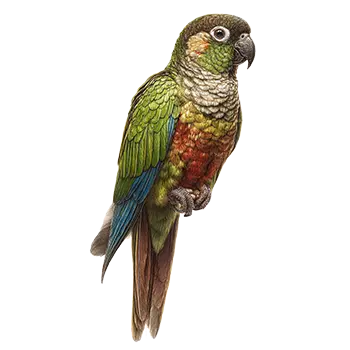

Preparing Your Bird for Travel

Successful travel with a Green-Cheeked Conure begins well before departure day, with a preparation process that addresses the bird's physical health, behavioral readiness, and the logistical requirements of the journey. The first step for any planned trip is a veterinary wellness examination, ideally scheduled two to four weeks before travel. This appointment serves multiple purposes: it confirms that the bird is in good health and fit to endure the stresses of transport, it provides an opportunity to update any necessary vaccinations or parasite treatments, and it generates the health documentation that may be required by airlines, state authorities, or international customs offices.

Carrier acclimation is one of the most important and frequently overlooked aspects of travel preparation. Green-Cheeked Conures that are introduced to a travel carrier for the first time on the day of departure are far more likely to experience stress, panic, and injury than birds that have been gradually familiarized with the carrier over a period of days or weeks. The acclimation process should begin by placing the open carrier in the bird's usual living area, allowing the conure to explore it voluntarily. Over successive sessions, the bird can be encouraged to enter the carrier for increasing periods, with treats and positive reinforcement building a favorable association.

Dietary management in the days leading up to travel also merits attention. Birds that are well hydrated and well nourished before departure are better equipped to handle the inevitable disruptions to their normal feeding routine that travel entails. Owners should ensure that their Green-Cheeked Conure has access to fresh water and familiar foods in the hours before the journey begins, while avoiding the introduction of novel foods that might cause digestive upset at an inopportune moment. For longer trips, packing sufficient quantities of the bird's regular pellets, along with easily transportable fresh foods such as sliced vegetables and small fruits, helps maintain nutritional continuity.

Assembling a travel kit that anticipates the needs of both routine and emergency situations is the final element of preparation. This kit should include the bird's health records and any required permits, a supply of food and water dishes that fit securely in the carrier, absorbent liner material for the carrier floor, a small first aid kit appropriate for avian use, and contact information for avian veterinarians along the route or at the destination. Owners who travel frequently with their Green-Cheeked Conures often develop standardized packing lists that streamline this process and reduce the risk of forgetting essential items.

Road Travel & Ground Transport

Road travel is the most common form of transport for Green-Cheeked Conures, encompassing everything from short veterinary visits to multi-day relocations across state lines. The species' compact size makes it well suited to car travel, as an appropriately sized carrier can be secured on a vehicle seat or floor without occupying an impractical amount of space. The carrier should be positioned where it is protected from direct sunlight and extreme temperature fluctuations, and it must be secured with a seatbelt or other restraint to prevent sliding or tipping in the event of sudden stops or turns.

Temperature regulation inside the vehicle is critical for the safety of a traveling Green-Cheeked Conure. These birds are comfortable within a temperature range of approximately 65 to 80 degrees Fahrenheit, and exposure to temperatures outside this range can cause stress, overheating, or hypothermia. During summer travel, air conditioning should be set to maintain a comfortable cabin temperature, and the bird should never be left unattended in a parked vehicle, where interior temperatures can reach dangerous levels within minutes. Winter travel requires similar vigilance, with the vehicle's heating system maintaining a stable temperature and the carrier positioned away from cold drafts near windows and doors.

Regular rest stops during long drives provide opportunities to check on the bird's condition, offer water, and allow fresh air circulation. Green-Cheeked Conures should not be removed from their carriers during stops unless the environment is secure and fully enclosed, as even a well-bonded bird can be startled into flight by unfamiliar surroundings, traffic noise, or the sudden appearance of a predator. Many experienced traveling bird owners carry a lightweight, collapsible secondary enclosure that can be set up in hotel rooms or rest areas to give the bird a brief respite from the confines of the travel carrier.

Noise management during road travel is an additional consideration specific to parrot species. Green-Cheeked Conures are not excessively loud birds by parrot standards, but the stress of travel can trigger vocalizations that range from contact calls to alarm screams. Maintaining a calm environment in the vehicle, avoiding loud music or sudden noises, and speaking to the bird in a reassuring tone can help minimize stress-related vocalizations. Some owners find that partially covering the carrier with a light cloth reduces visual stimulation and helps the bird settle, though airflow must never be restricted.

Air Travel Policies & Procedures

Air travel with a Green-Cheeked Conure is feasible but requires careful research and advance planning, as airline policies regarding the transport of birds vary widely and change frequently. Most major airlines in the United States and Europe permit small birds to travel in the cabin as carry-on pets, provided they are housed in an airline-approved carrier that fits under the seat in front of the passenger. The Green-Cheeked Conure's small size is an advantage in this context, as the bird and an appropriate carrier can typically meet the dimensional requirements imposed by most carriers. However, airline pet policies are not uniform, and some carriers restrict or prohibit birds entirely, while others limit the number of pets allowed in the cabin on any given flight.

Reservation of a cabin pet slot is typically required well in advance of the flight date, and fees for in-cabin pet transport range from modest to substantial depending on the airline and route. Owners should confirm the airline's specific requirements for pet carrier dimensions, ventilation standards, and acceptable carrier materials before purchasing a carrier, as specifications can differ by airline and even by aircraft type. Some airlines require that the carrier remain zipped or latched throughout the flight with no openings that would allow the bird to escape, while others may have additional requirements regarding carrier labeling or placement.

Health documentation requirements for domestic air travel within the United States generally include a current veterinary health certificate, typically issued within 10 days of travel, though some airlines may impose stricter timelines or require additional certifications. International air travel introduces substantially more complex documentation requirements, including CITES permits for Appendix II species, import permits from the destination country, and potentially quarantine protocols upon arrival. These requirements vary by country and are subject to change, making early and thorough research essential for any international journey.

The physical experience of air travel presents specific challenges for Green-Cheeked Conures. Cabin pressure, temperature fluctuations, noise levels, and the inability to move freely for extended periods all contribute to stress that must be managed through careful preparation and carrier design. Ensuring that the carrier contains a secure water source, familiar comfort items, and adequate ventilation helps mitigate the impact of these stressors. Owners should also be prepared for the possibility that the bird may vocalize during the flight, which, while generally tolerated, can occasionally draw attention from cabin crew or fellow passengers.

International Relocation Requirements

Relocating internationally with a Green-Cheeked Conure is among the most complex logistical and regulatory undertakings a bird owner can face. Each destination country maintains its own importation requirements for live birds, and these requirements can include health testing, quarantine periods, specific veterinary certifications, CITES export and import permits, and in some cases, pre-arrival notification to government biosecurity or agricultural agencies. The specifics vary dramatically by country and can change with limited notice in response to disease outbreaks, policy reviews, or shifts in conservation priorities.

The CITES documentation process for international transport of a Green-Cheeked Conure, an Appendix II species, requires an export permit from the country of origin certifying that the bird is captive-bred and that its removal will not be detrimental to the wild population. The importing country may also require its own import permit, and some nations require both a CITES import permit and a separate veterinary import permit issued by a different government agency. Processing times for these permits can range from several weeks to several months, and applications must be submitted well in advance of the planned travel date.

Quarantine requirements represent one of the most significant practical considerations for international relocation with a bird. Countries including Australia, New Zealand, and several island nations impose mandatory quarantine periods for imported birds that can last 30 days or longer. During quarantine, the bird is housed in a government-approved facility at the owner's expense, with limited or no visitation permitted. These quarantine periods serve a legitimate biosecurity function, protecting domestic bird populations from the introduction of avian diseases, but they add substantial cost and emotional difficulty to the relocation process.

Many owners who face international relocation choose to engage the services of professional pet relocation companies that specialize in the transport of exotic animals. These firms bring expertise in navigating the regulatory requirements of specific countries, managing the logistics of multimodal transport, and ensuring that all documentation is in order before departure. While their services add to the overall cost of relocation, the complexity and high stakes of international bird transport make professional assistance a worthwhile investment for many owners. Errors in documentation or non-compliance with destination country requirements can result in the bird being refused entry, placed in extended quarantine, or in worst-case scenarios, confiscated or euthanized.

Choosing the Right Travel Carrier

The selection of an appropriate travel carrier is a decision that directly affects the safety, comfort, and legal compliance of any journey with a Green-Cheeked Conure. For ground travel, carriers designed specifically for small birds offer the best combination of security, ventilation, and visibility. These carriers typically feature a solid base to prevent spills and contain droppings, ventilated sides that allow airflow without creating openings large enough for escape, and a secure latch or zipper mechanism that the bird cannot manipulate. The carrier should be large enough for the bird to turn around and adjust its position comfortably but not so large that the bird is thrown about during vehicle movement.

For air travel, the carrier must meet the specific dimensional and construction requirements of the airline being used. Most airlines require soft-sided carriers for cabin transport that fit within the under-seat space, which typically measures approximately 17 by 12 by 8 inches, though dimensions vary by aircraft. Soft-sided carriers designed for small pets can work well for Green-Cheeked Conures, provided they have adequate ventilation mesh, a secure closure system, and a rigid bottom panel that prevents the carrier from collapsing. Some airlines also accept hard-sided carriers that meet their size specifications, which offer greater structural protection but may be heavier and less flexible in tight spaces.

The interior setup of the carrier contributes significantly to the bird's comfort and safety during travel. A low perch secured at a height that prevents the bird from being tossed during turbulence or sudden stops provides a familiar resting position. Absorbent liner material on the carrier floor manages droppings and spilled water, keeping the bird clean and dry throughout the journey. A small, spill-resistant water dish or a water-soaked piece of fruit offers hydration without the risk of a full water container tipping and soaking the carrier interior.

Owners should also consider the visibility and light management features of their chosen carrier. Some Green-Cheeked Conures travel more calmly when visual stimulation is reduced by a partial cover over the carrier, while others become more agitated when they cannot see their surroundings. Experimenting with different levels of visual access during the acclimation period at home helps determine the individual bird's preference. Carriers that offer removable or adjustable covers provide flexibility to adapt to the bird's needs as conditions change during the journey.

Emergency Planning & Safety Precautions

Travel with a Green-Cheeked Conure requires contingency planning that addresses the specific vulnerabilities of a small exotic bird in unfamiliar environments. The most critical safety precaution is the prevention of escape, which represents the single greatest risk to a traveling bird's survival. Green-Cheeked Conures that escape during travel are in immediate danger from predators, traffic, exposure to weather, and the inability to find food and water in unfamiliar territory. Every carrier interaction, from loading and unloading the bird to opening the carrier for feeding or cleaning, should be conducted in a fully enclosed space with windows and doors secured.

Identification and recovery planning provide an additional layer of security in the event that an escape does occur. Microchipping, which involves the implantation of a small transponder under the bird's skin, provides a permanent identification method that can be read by veterinarians and animal shelters equipped with universal scanners. Closed leg bands, applied when the bird is a chick, provide a visible identification marker that can help confirm ownership. Maintaining current, clear photographs of the bird, including close-ups that show any distinctive markings or color patterns, supports lost-bird postings and identification efforts.

Health emergencies during travel require access to veterinary care that may not be readily available in all locations. Before departing, owners should research avian veterinarians along the route and at the destination, noting clinic addresses, phone numbers, and emergency after-hours contact information. The Association of Avian Veterinarians maintains a directory of member practitioners that can assist in locating qualified care providers in unfamiliar areas. Carrying a basic avian first aid kit that includes styptic powder, gauze, and antiseptic solution allows owners to manage minor injuries until professional care can be obtained.

Environmental hazards specific to travel environments also warrant attention. Hotel rooms and temporary accommodations may contain toxins such as scented candles, aerosol air fresheners, non-stick cookware coatings, and cleaning chemicals that are dangerous to birds. Owners should request rooms that have not been recently treated with strong chemicals and should ventilate the space before allowing the bird out of its carrier. Awareness of these risks, combined with a systematic approach to safety planning, enables Green-Cheeked Conure owners to travel with confidence while protecting the well-being of their companion.

Always consult a qualified professional before making any health-related decisions. This content is provided for informational reference only and should not replace professional guidance specific to your animal.