
Social Media Stardom

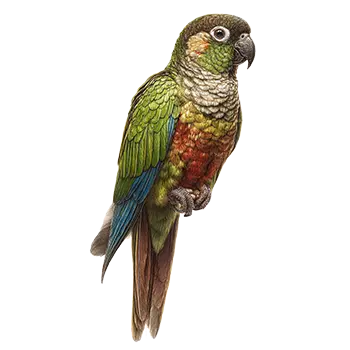
The Green-Cheeked Conure has become one of the most frequently featured parrot species on social media platforms, a distinction driven by the bird's photogenic color mutations, compact size that translates well to close-up video, and a repertoire of behaviors that seem tailor-made for short-form content. On platforms such as TikTok, Instagram, and YouTube, Green-Cheeked Conure content spans a wide spectrum from carefully edited trick demonstrations to candid clips of birds stealing food, burrowing under blankets, or engaging in what their owners describe as conversations. The species' expressiveness and willingness to interact with cameras and phones have made it a natural subject for the kind of spontaneous, personality-driven content that performs well in algorithm-driven feeds.

Individual Green-Cheeked Conures have amassed follower counts that rival those of more traditionally popular pet species. Accounts dedicated to single birds routinely attract tens of thousands of followers, and viral clips of Green-Cheeked Conures performing tricks, cuddling with their owners, or reacting to household events have accumulated millions of views. The Pineapple and Turquoise color mutations are particularly prominent in this content ecosystem, their unusual coloring providing visual distinctiveness that helps individual birds stand out in crowded feeds.

The social media presence of Green-Cheeked Conures has had tangible effects on the species' popularity as a pet. Breeders and avian retailers consistently report that prospective buyers cite social media exposure as a primary factor in their decision to seek out the species. This dynamic creates a feedback loop in which the visibility of Green-Cheeked Conures online drives demand, which in turn produces more owners who create more content. Avian welfare advocates have raised concerns about the potential downsides of this cycle, noting that the curated, highlight-reel nature of social media can obscure the challenges of parrot ownership and lead to impulse acquisitions by underprepared buyers.

Despite these concerns, the social media ecosystem has also served as a powerful educational platform for Green-Cheeked Conure owners. Experienced keepers use their followings to share information about diet, enrichment, body language interpretation, and behavioral problem-solving, creating informal but widely accessible knowledge networks. The comment sections and community features of these platforms facilitate real-time advice exchanges that complement the more structured guidance available from avian veterinarians and published care guides.

Representation in Film & Television

The Green-Cheeked Conure's presence in mainstream film and television has been limited compared to larger, more visually dramatic parrot species such as macaws, cockatoos, and African Greys, which have historically dominated avian roles in Hollywood productions. The practical considerations of filmmaking tend to favor birds whose size and vocal volume make them readable on screen and whose bright plumage registers clearly on camera. The Green-Cheeked Conure's relatively compact frame and subtler coloring have made it a less frequent casting choice for productions seeking a single, immediately recognizable parrot character.

Nevertheless, the species has appeared in supporting roles and background shots across various productions, often as part of pet store scenes, veterinary clinic settings, or domestic interiors where a realistic household environment is being depicted. Television programs focused on animal care, wildlife rehabilitation, and pet ownership have featured Green-Cheeked Conures more prominently, showcasing the species in educational segments that highlight its personality, care requirements, and suitability as a companion animal. These appearances, while less glamorous than starring roles, have contributed to the species' general public recognition.

Documentary and nature programming has provided another avenue for the Green-Cheeked Conure's screen presence, though typically as part of broader explorations of Neotropical avifauna rather than as a featured subject. Programs covering the biodiversity of the Bolivian Yungas, the Atlantic Forest of Brazil, or the parrot family as a whole have included footage of Pyrrhura species in their wild habitats, offering viewers a glimpse of the ecological context from which the companion bird has been drawn. These documentary treatments tend to emphasize the conservation and ecological dimensions of the species rather than its pet appeal.

The rise of streaming platforms and user-generated content has begun to shift the landscape in ways that favor smaller, personality-driven species like the Green-Cheeked Conure. Web series, podcasts, and YouTube channels dedicated to aviculture and pet care have given the species a degree of screen time and narrative attention that traditional broadcast media never provided. In this evolving media environment, the Green-Cheeked Conure's charisma and accessibility are proving to be advantages that translate more effectively to intimate, digitally distributed formats than to the large-scale productions of conventional film and television.

Literature & Published Media

The Green-Cheeked Conure appears across a growing body of published literature that reflects both the species' popularity as a companion bird and its place within the broader field of aviculture. General parrot care manuals have long included the species in their coverage of small conures, but the Green-Cheeked Conure's rise to prominence has generated a market for species-specific guides that address its particular dietary, behavioral, and veterinary needs in greater depth. These dedicated volumes typically cover housing and cage setup, nutrition, socialization, training, common health concerns, and the management of behavioral issues such as biting and screaming, providing a comprehensive resource for new and experienced owners alike.

Beyond practical care guides, the Green-Cheeked Conure has found its way into broader works on avian behavior and cognition. Popular science books exploring the intelligence of parrots frequently reference the Pyrrhura genus as an example of how cognitive sophistication is not limited to the largest-brained parrot species. The Green-Cheeked Conure's problem-solving abilities, social learning, and play behaviors have been cited in discussions that challenge the assumption that brain size is the sole determinant of behavioral complexity in birds.

Avicultural periodicals and club newsletters have provided a longstanding platform for detailed articles on Green-Cheeked Conure breeding, mutation genetics, and husbandry innovations. Publications such as the American Federation of Aviculture's AFA Watchbird and various international parrot society journals have featured articles by breeders documenting the inheritance patterns of color mutations, the management of breeding pairs, and the hand-rearing of chicks. These contributions, while aimed at a specialized audience, constitute an important body of practical knowledge that has shaped the standards of Green-Cheeked Conure care worldwide.

Children's literature and educational materials have also incorporated the Green-Cheeked Conure, typically in the context of books about pets, exotic animals, or South American wildlife. These publications serve an introductory function, familiarizing younger readers with the species and its characteristics in age-appropriate terms. While not as frequently featured as dogs, cats, or more iconic wildlife species, the Green-Cheeked Conure's inclusion in educational publishing reflects its growing recognition as a mainstream companion animal.

Online Communities & Forums

The internet has been instrumental in building and sustaining the Green-Cheeked Conure's community of keepers, breeders, and admirers. Online forums dedicated to parrot care were among the earliest digital gathering places for conure enthusiasts, and platforms such as Avian Avenue, Parrot Forums, and various regional bird-keeping boards have hosted decades of accumulated discussion threads covering every conceivable aspect of Green-Cheeked Conure ownership. These forums function as searchable archives of collective experience, where new owners can find detailed answers to questions about molting, diet transitions, behavioral quirks, and veterinary concerns drawn from thousands of firsthand accounts.

The migration of online community activity toward social media platforms has reshaped but not diminished the vibrancy of the Green-Cheeked Conure community. Facebook groups dedicated to the species number in the dozens, with the largest attracting tens of thousands of members who post daily about their birds' health, behavior, and daily lives. Reddit's parrot and conure communities serve a similar function, with the added benefit of upvoting mechanisms that surface the most helpful responses. These platforms have made it easier than ever for Green-Cheeked Conure owners to connect with others who share their specific interests and challenges.

The community dynamics within Green-Cheeked Conure circles reflect broader patterns in pet-keeping culture. Debates over best practices in diet, cage size, wing clipping, and breeding ethics are perennial topics that can generate passionate disagreement. The mutation breeding community, in particular, navigates ongoing discussions about the ethics of breeding for extreme color variants, the potential health implications of certain genetic combinations, and the responsibility of breeders to prioritize the welfare of their birds over market demand for novel appearances. These conversations, while sometimes contentious, represent a community engaged in active reflection about its own practices.

The educational impact of these online communities is difficult to overstate. For many Green-Cheeked Conure owners, particularly those in geographic areas without access to avian veterinarians or local bird clubs, online forums and social media groups serve as the primary source of species-specific care information. The quality of advice varies, and misinformation does circulate, but the presence of experienced breeders and avian professionals within these communities provides a degree of self-correction that helps maintain overall standards. The Green-Cheeked Conure's online community is, in many respects, as much a part of the species' cultural identity as the bird itself.

Merchandise & Commercial Culture

The Green-Cheeked Conure has generated a recognizable commercial presence that extends well beyond the sale of live birds and basic care supplies. The species' distinctive appearance, particularly in its more colorful mutations, has inspired a niche market in parrot-themed merchandise including apparel, accessories, stationery, home decor, and custom artwork. Independent artists and small businesses operating through platforms such as Etsy, Redbubble, and Society6 offer products featuring Green-Cheeked Conure illustrations, caricatures, and photographic prints, catering to an enthusiast market that values species-specific representation over generic bird imagery.

The toy and enrichment industry has responded to the Green-Cheeked Conure's popularity with products specifically designed for small conures. Foraging toys, shredding materials, swings, and climbing structures sized for birds in the 60-to-80-gram range have proliferated, reflecting manufacturers' recognition that the Green-Cheeked Conure represents a significant and growing segment of the companion bird market. Specialty retailers and subscription box services catering to bird owners frequently highlight the species in their marketing, positioning it as a bird that benefits from regular enrichment rotation and interactive play.

The mutation breeding market itself constitutes a substantial commercial ecosystem. Rare or newly established color mutations can command premium prices, and breeders who specialize in sought-after combinations have built reputations and customer bases that operate with a level of sophistication comparable to specialty dog or cat breeding. Online classifieds, breeder directories, and auction-style sales platforms facilitate transactions that connect breeders with buyers across national and international boundaries, creating a market that is both highly specialized and geographically dispersed.

The commercial culture surrounding the Green-Cheeked Conure is not without its critics. Animal welfare advocates have expressed concern that the commodification of rare mutations can incentivize overbreeding, prioritize appearance over health, and contribute to a market culture that treats living animals as collectible objects. These criticisms have prompted some breeders and community organizations to develop and promote ethical breeding standards, including health testing protocols, transparent genetic record-keeping, and commitments to rehoming support. The tension between commercial interest and animal welfare remains an active area of discussion within the Green-Cheeked Conure community.

Cultural Impact & Legacy

The Green-Cheeked Conure's cultural footprint, while less storied than those of parrots with centuries of documented human interaction, is distinguished by its modernity and its deep entanglement with digital culture. The species' ascent to popularity coincided almost exactly with the rise of social media and the democratization of content creation, meaning that its cultural identity has been shaped as much by ordinary pet owners with smartphone cameras as by breeders, scientists, or media producers. This grassroots quality gives the Green-Cheeked Conure a cultural presence that feels participatory and authentic in ways that older, more top-down narratives about famous parrot species do not.

The species has also contributed to shifting perceptions of what a companion bird can be. For decades, the popular imagination associated pet parrots primarily with large, loud, long-lived species whose demands often exceeded the capacity of the average household. The Green-Cheeked Conure, along with other small conure species, has helped demonstrate that meaningful companionship with a parrot is possible at a scale that fits more comfortably into typical domestic life. This shift has broadened the appeal of parrot keeping and introduced the joys and responsibilities of avian companionship to a wider demographic.

In educational contexts, the Green-Cheeked Conure has become a common ambassador species for programs that introduce the public to avian biology, conservation, and responsible pet ownership. Bird clubs, nature centers, and educational outreach programs frequently feature Green-Cheeked Conures in their programming because the birds' manageable size, sociable temperament, and tolerance of handling make them well suited to interactive demonstrations. These appearances help bridge the gap between the abstract concept of parrot conservation and the tangible experience of interacting with a living bird.

The long-term cultural legacy of the Green-Cheeked Conure will likely be defined by the communities that have formed around it. The networks of breeders, rescuers, veterinarians, and everyday owners who share knowledge, advocate for welfare standards, and celebrate their birds constitute a living cultural ecosystem that evolves with each generation of keepers. As the species continues to grow in popularity and as the tools for community building and knowledge sharing continue to advance, the Green-Cheeked Conure's place in the cultural landscape of companion animals appears not only secure but poised for continued expansion.

Always consult a qualified professional before making any health-related decisions. This content is provided for informational reference only and should not replace professional guidance specific to your animal.