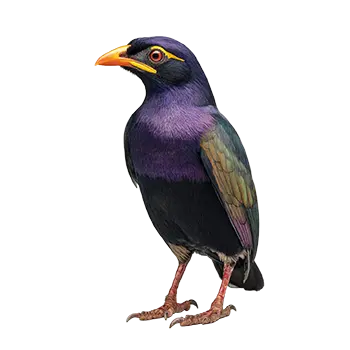

The Greater Hill Mynah (Gracula religiosa) is listed under Appendix II of the Convention on International Trade in Endangered Species of Wild Fauna and Flora (CITES), a multilateral treaty that regulates the cross-border movement of wildlife to ensure that international trade does not threaten wild populations. Appendix II listing means that commercial trade in the species is permitted but must be authorized by the exporting country's CITES Management Authority, which must determine that the export will not be detrimental to the survival of the species in the wild. This non-detriment finding requirement is the cornerstone of CITES regulation and places the burden of proof on the exporting nation.
The practical effect of the CITES listing is that any international shipment of a Greater Hill Mynah, whether wild-caught or captive-bred, must be accompanied by a valid CITES export permit from the country of origin and, in many cases, a corresponding import permit from the receiving country. These permits require documentation of the bird's legal provenance, including evidence of captive breeding where applicable. Captive-bred specimens registered with a CITES-recognized breeding facility may qualify for streamlined permitting procedures, but the documentation requirements remain substantial and vary by jurisdiction.
Several range states have sought or implemented stricter protections beyond the baseline Appendix II listing. India, for instance, has effectively banned the commercial export of Greater Hill Mynahs, and some Southeast Asian countries have imposed seasonal or regional restrictions on capture and trade. The European Union has at various points implemented stricter import measures for certain bird species, including the hill mynah, through its Wildlife Trade Regulations, which can impose import suspensions when there is evidence that trade levels are unsustainable.
For prospective owners in countries that are CITES signatories, which includes virtually all nations with significant avicultural communities, the treaty framework means that purchasing a Greater Hill Mynah requires attention to the bird's documented provenance. Birds offered without CITES documentation, or with documentation that appears incomplete or inconsistent, should be treated with suspicion, as the illegal trade in hill mynahs remains a significant conservation concern. Working with reputable breeders who maintain transparent records and comply with CITES requirements is essential for any keeper who wishes to own a hill mynah legally and ethically.