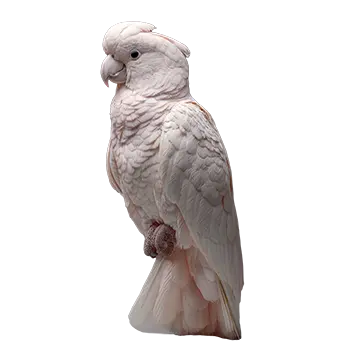

CITES Protection & International Trade Law

The Goffin's Cockatoo is listed under Appendix I of the Convention on International Trade in Endangered Species of Wild Fauna and Flora (CITES), the highest level of protection available under the treaty. This listing, which took effect in 1992, prohibits all commercial international trade in wild-caught specimens and imposes strict permit requirements on any cross-border movement of the species, including captive-bred individuals. The Appendix I designation was driven by evidence that extensive trapping for the pet trade during the 1970s and 1980s had caused serious declines in the wild population across the Tanimbar Islands.

Under CITES, any international transfer of a Goffin's Cockatoo requires both an export permit from the country of origin and an import permit from the receiving country. For captive-bred birds, the exporting country's CITES Management Authority must confirm that the specimen was indeed bred in captivity under conditions that meet the convention's definitions, a process that typically requires documentation of the breeding facility, parentage records, and verification that the breeding stock was legally acquired. These requirements apply regardless of whether the transfer is a commercial sale, a gift, or a loan for breeding or research purposes.

The CITES framework is implemented through national legislation in each of the convention's signatory nations, which means that the practical requirements for compliance can vary significantly from one country to another. In the European Union, the CITES regulations are implemented through the EU Wildlife Trade Regulations, which in some respects impose even stricter standards than the convention itself. In the United States, CITES obligations are enforced through the Endangered Species Act and the Lacey Act, both of which carry significant civil and criminal penalties for violations.

Prospective owners and breeders should understand that CITES compliance is not merely a bureaucratic formality. Enforcement agencies in major importing countries actively investigate suspected violations, and convictions can result in substantial fines, imprisonment, and permanent confiscation of birds. The documentation trail for a legally held Goffin's Cockatoo should extend back to the point of captive breeding or, in the case of older birds acquired before trade restrictions took effect, to verifiable records establishing legal provenance.

Federal & National Regulations

In the United States, the legal framework governing Goffin's Cockatoo ownership operates at multiple levels, beginning with federal law. The Wild Bird Conservation Act of 1992 effectively banned the importation of most CITES-listed parrot species for the pet trade, including the Goffin's Cockatoo. Under this statute, importation is permitted only for approved breeding programs, scientific research, or zoological exhibition, and each importation requires a specific permit issued by the U.S. Fish and Wildlife Service. The practical effect of the Act has been to make domestically bred birds the only legal source of Goffin's Cockatoos for private ownership in the United States.

The Lacey Act provides additional federal enforcement authority by making it a federal crime to trade in wildlife that has been taken, transported, or sold in violation of any federal, state, tribal, or foreign law. This means that a Goffin's Cockatoo acquired through illegal channels, whether smuggled across international borders or obtained in violation of a state permit requirement, can trigger federal prosecution even if the immediate transaction occurred entirely within the United States. The Lacey Act's broad scope makes it a powerful tool for wildlife enforcement agencies.

In Australia, where cockatoos are native wildlife, the regulatory framework is shaped by the Environment Protection and Biodiversity Conservation Act 1999, which governs trade in native and exotic species. The Goffin's Cockatoo, as a non-native species in Australia, is subject to import restrictions and biosecurity requirements that can make legal acquisition more complex than for domestically available Australian cockatoo species. State and territory governments within Australia may impose additional requirements.

The European Union's approach combines CITES implementation with its own Wildlife Trade Regulations, which require that keepers of Appendix I species obtain certificates of legal acquisition from their national CITES authority. In practice, this means that anyone purchasing a Goffin's Cockatoo within the EU should receive documentation confirming the bird's captive-bred status and legal provenance. Failure to possess these documents can result in confiscation of the bird and legal penalties for the keeper.

State, Provincial & Municipal Laws

Beyond federal legislation, Goffin's Cockatoo ownership is subject to a patchwork of state, provincial, and municipal regulations that vary enormously across jurisdictions. In the United States, most states permit the keeping of captive-bred cockatoos without a special permit, but notable exceptions exist. States including Hawaii impose broad restrictions on exotic bird species to protect native ecosystems, and others may require registration, banding, or veterinary certification for certain parrot species. Prospective owners should verify the specific requirements of their state wildlife agency before acquiring a bird.

At the municipal level, regulations can be even more varied and sometimes more restrictive than state law. Some cities and counties have enacted exotic animal ordinances that prohibit or restrict the keeping of parrots above a certain size, impose noise-related restrictions that can affect cockatoo owners, or require special permits for any exotic bird species. Homeowners' association rules and rental agreements may add yet another layer of restriction. A Goffin's Cockatoo that is perfectly legal under federal and state law may still be prohibited by a local ordinance or private covenant.

In Canada, provincial regulations govern exotic animal ownership and can differ substantially from one province to another. Some provinces require permits for the keeping of exotic birds, while others impose no special requirements beyond basic animal welfare standards. Municipal bylaws in major Canadian cities may impose additional restrictions. The regulatory landscape in the United Kingdom is similarly layered, with national wildlife legislation supplemented by local council regulations that can affect where and how exotic birds are kept.

The complexity of this multi-layered regulatory environment means that responsible Goffin's Cockatoo ownership begins with thorough legal research specific to the owner's jurisdiction. Assumptions based on the rules in one city, state, or country can lead to inadvertent violations in another. Avicultural societies and breed-specific clubs often maintain up-to-date summaries of relevant regulations and can be valuable resources for navigating this landscape.

Permits, Licensing & Documentation

The documentation requirements for legal Goffin's Cockatoo ownership begin at the point of acquisition and extend throughout the bird's life. Captive-bred Goffin's Cockatoos sold by reputable breeders should come with a hatch certificate, a closed leg band or microchip number, and, in jurisdictions that require it, a CITES certificate or equivalent document confirming the bird's legal status. Buyers should insist on receiving these documents at the time of purchase and should retain them permanently, as they may be required for veterinary visits, interstate transport, sale or transfer, or in the event of an inspection by wildlife authorities.

In the European Union, keepers of Appendix I species are generally required to possess an Article 10 certificate, which confirms that the bird was legally acquired and may be used for commercial activities. The issuance of these certificates varies by member state, with some countries requiring in-person inspections and others accepting documentary evidence. Without this certificate, the sale or public exhibition of a Goffin's Cockatoo within the EU is illegal, and possession of a bird without documentation can result in confiscation.

Breeders face additional documentation obligations. In many jurisdictions, anyone breeding CITES Appendix I species must maintain detailed records of their breeding stock, including parentage, hatch dates, band numbers, and disposition of offspring. Some countries require breeders to register with their national CITES authority and to report breeding activity on an annual basis. These record-keeping requirements serve both conservation and enforcement purposes, creating a paper trail that helps authorities distinguish legitimately bred birds from those that have entered the market through illegal channels.

The long lifespan of Goffin's Cockatoos adds a dimension to documentation that owners of shorter-lived pets do not typically face. A bird acquired at age two may still be alive and in need of legal documentation 35 years later, potentially outliving its original owner. Estate planning for cockatoo ownership should include provisions for the transfer of all relevant legal documents along with the bird itself, and owners should ensure that their designated caregivers understand the documentation requirements that accompany custody of a CITES-listed species.

Rescue, Rehoming & Legal Transfer

The rehoming of Goffin's Cockatoos raises specific legal considerations that distinguish it from the transfer of non-regulated pet species. Because the Goffin's Cockatoo is a CITES Appendix I species, any change of ownership must comply with applicable national and local regulations, which may include notification of wildlife authorities, transfer of documentation, and in some jurisdictions, a formal permit or certificate for the new owner. Informal transfers that might be routine for a dog or cat can create legal exposure when the animal in question is a regulated exotic species.

Parrot rescue organizations and sanctuaries play an increasingly important role in the rehoming of Goffin's Cockatoos, particularly as birds outlive their original owners or as keepers find themselves unable to meet the species' demanding social and enrichment needs. Reputable rescue operations maintain proper documentation for each bird in their care and ensure that adopters understand and comply with all legal requirements. Many rescues also conduct home checks and require adopters to demonstrate knowledge of the species' care requirements before approving a placement.

The sale of Goffin's Cockatoos through online marketplaces and classified advertisements presents particular regulatory challenges. While many such transactions involve legitimately bred and documented birds, the anonymous nature of online sales creates opportunities for birds of uncertain or illegal provenance to enter the market. Buyers should exercise caution and insist on verifiable documentation, including band or microchip numbers that can be checked against breeder records. Wildlife enforcement agencies in several countries have used online marketplace monitoring as a tool for identifying suspected illegal trade.

Cross-border rehoming adds another layer of complexity, as any international transfer of a Goffin's Cockatoo requires CITES permits from both the exporting and importing countries. Even moves that might seem routine, such as relocating with a pet bird from one country to another, require advance planning and paperwork that can take weeks or months to process. Owners contemplating an international move should contact their national CITES authority well in advance to understand the requirements and timeline for obtaining the necessary permits.

Enforcement, Compliance & Owner Responsibilities

Enforcement of wildlife trade and exotic animal ownership laws varies significantly across jurisdictions, but the trend in recent decades has been toward greater scrutiny and more consistent prosecution of violations. In the United States, the Fish and Wildlife Service's Office of Law Enforcement and its network of special agents actively investigate suspected violations of the Wild Bird Conservation Act, the Lacey Act, and CITES regulations. Similar enforcement bodies operate in the European Union, the United Kingdom, Australia, and other major markets for companion parrots.

The consequences of non-compliance can be severe. In the United States, violations of the Lacey Act can result in criminal penalties including fines of up to $250,000 and imprisonment, in addition to civil penalties and forfeiture of the animals involved. European enforcement actions have resulted in comparable penalties, and in some cases, convicted traffickers have received multi-year prison sentences. Even where enforcement is less aggressive, the confiscation of a beloved companion bird can be a devastating consequence of regulatory non-compliance.

Responsible Goffin's Cockatoo ownership requires an ongoing commitment to legal compliance that extends beyond the initial acquisition of the bird. Owners should maintain current documentation, stay informed about changes in relevant regulations, and be prepared to demonstrate the legal provenance of their bird if asked by authorities. This is particularly important for owners who travel with their birds, exhibit them publicly, or breed them, as these activities tend to attract greater regulatory attention.

The broader context for these regulations is the conservation of wild Goffin's Cockatoo populations and the prevention of illegal wildlife trafficking, a global problem that threatens biodiversity and undermines the rule of law. By complying with the legal requirements that govern their hobby or profession, Goffin's Cockatoo owners contribute to a system that protects wild populations while ensuring that captive birds are bred, kept, and transferred under conditions that promote both animal welfare and species conservation. This sense of shared responsibility is a cornerstone of ethical exotic animal ownership.

Always consult a qualified professional before making any health-related decisions. This content is provided for informational reference only and should not replace professional guidance specific to your animal.