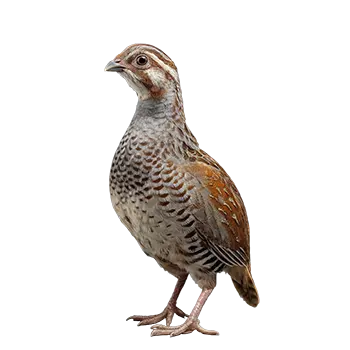

Carrier Selection & Setup

Choosing the right carrier is the single most important decision in preparing to transport Coturnix Quail safely. The species' small size and strong startle reflex create unique challenges that distinguish quail transport from the movement of larger poultry. Coturnix Quail are prone to explosive vertical flight when startled, a behavior known as flushing, and birds that flush inside a hard-topped carrier can strike the ceiling with enough force to cause serious head and neck injuries. For this reason, carriers used for quail transport should have soft or padded tops, or the interior ceiling should be lined with foam, cloth, or another cushioning material.

Small animal carriers, ventilated cardboard boxes, and purpose-built poultry transport crates can all serve effectively for short- to medium-distance road trips. Ventilated cardboard boxes with a layer of absorbent bedding on the floor are widely used by breeders shipping birds via postal services and work well for car transport as well. For longer journeys or repeated use, plastic pet carriers with soft-top modifications offer durability and ease of cleaning. Wire cages are generally poor choices for quail transport, as they provide no visual barrier to external stimuli and amplify the stress of unfamiliar environments.

The interior of the carrier should be fitted with a layer of absorbent bedding such as pine shavings, paper towels, or shredded paper to manage waste and provide traction. Coturnix Quail do not perch and will spend the entire journey on the carrier floor, so a secure, non-slip surface is essential to prevent splayed-leg injuries during acceleration, braking, and turns. Carriers should be sized to allow the birds to stand and turn comfortably but not so spacious that they slide or tumble during movement. A carrier that is slightly snug encourages the birds to settle rather than attempt flight.

Ventilation is critical in any enclosed carrier, particularly during warm-weather transport. Carriers should have ventilation openings on at least two sides to allow cross-airflow, and the openings should be small enough to prevent escape or injury. During cold-weather transport, ventilation can be partially reduced by draping a light cloth over portions of the carrier, but complete sealing should be avoided to prevent carbon dioxide buildup. Preparing the carrier in advance and allowing the birds a brief acclimation period inside it before the journey begins can help reduce initial stress.

Road Transport Best Practices

Transporting Coturnix Quail by car is the most common scenario for hobbyist keepers and breeders, whether the destination is a poultry show, a veterinary appointment, a buyer's location, or a new home after a move. The primary concerns during road transport are temperature regulation, minimizing vibration and noise stress, and ensuring that the birds remain hydrated and secure throughout the journey.

Temperature management begins with vehicle climate control. Coturnix Quail are comfortable in the same temperature range as most humans, roughly 60 to 80 degrees Fahrenheit, and the vehicle's heating or air conditioning should be used to maintain this range. Direct sunlight on the carrier can raise internal temperatures dangerously fast, so carriers should be positioned out of direct sun, ideally on the floor of the back seat or in a shaded cargo area. During summer transport, a frozen water bottle placed outside but adjacent to the carrier can serve as a passive heat sink, and during winter, a chemical hand warmer wrapped in cloth and placed near but not inside the carrier can provide supplemental warmth.

Noise and vibration are significant stressors for quail, and steps to minimize both will result in calmer birds and a safer journey. Placing the carrier on a folded towel or foam pad dampens road vibration, and keeping the radio off or at low volume reduces auditory stimulation. Smooth, predictable driving is more important for quail transport than speed; sudden acceleration, hard braking, and sharp turns can cause birds to tumble and may trigger panic flushing. Experienced quail transporters recommend driving as though the carrier contains an uncovered bowl of water, favoring gentle, gradual inputs over abrupt maneuvers.

For journeys exceeding two to three hours, hydration becomes an important consideration. Open water containers inside a moving carrier are impractical, as they will spill and soak the bedding. Instead, keepers can offer water during rest stops by briefly opening the carrier in a secure, enclosed space such as the interior of the parked car with windows closed. Alternatively, moisture-rich foods such as cucumber slices, watermelon, or dampened feed can be placed in the carrier before departure to provide hydration without the risk of spillage. For very long journeys, planning rest stops every three to four hours to offer water and check on the birds' condition is advisable.

Shipping Live Birds & Hatching Eggs

The sale and exchange of Coturnix Quail across distances too great for personal delivery has created a well-established practice of shipping live birds and hatching eggs through postal and courier services. In the United States, the United States Postal Service is the primary carrier for live poultry shipments, as private carriers such as UPS and FedEx generally do not accept live birds. USPS permits the shipment of live, day-old poultry and adult birds under specific conditions, including the use of approved shipping containers, Express Mail service for adult birds, and compliance with any state or federal health documentation requirements.

Shipping containers for live Coturnix Quail must meet USPS specifications for ventilation, structural integrity, and labeling. Commercially available poultry shipping boxes are designed to meet these requirements and are the recommended option. Boxes should be clearly labeled with "Live Birds" markings on all sides and top, and the sender's and recipient's contact information should be prominently displayed. Bedding material should be placed in the bottom of the box, and a heat or cold pack may be included depending on the season, positioned so that the birds cannot come into direct contact with the temperature-control element.

Hatching eggs are shipped far more frequently than live adult birds, as they are lighter, less fragile in transit when properly packed, and do not require the same urgency of delivery. Quail hatching eggs are typically wrapped individually in soft material such as bubble wrap or foam, placed upright in egg cartons or custom foam inserts, and packed inside a sturdy outer box with additional cushioning material to prevent shifting. The package should be labeled as fragile and shipped via a service that minimizes transit time, as prolonged shipping reduces hatch rates. Most experienced shippers recommend Priority Mail or Express Mail and avoid scheduling shipments that would result in packages sitting in postal facilities over weekends.

Both live-bird and hatching-egg shipments require attention to seasonal timing. Extreme heat and extreme cold can be lethal to live birds in transit and can destroy the viability of hatching eggs. Experienced shippers monitor weather forecasts along the shipping route and avoid sending birds or eggs when temperatures at any point along the way are expected to exceed 95 degrees Fahrenheit or drop below 20 degrees Fahrenheit. Communication between sender and recipient is essential to ensure that someone is available to receive the shipment promptly upon arrival, minimizing the time the birds or eggs spend in uncontrolled environments.

Air Travel & Long-Distance Relocation

Air travel with Coturnix Quail is uncommon among hobbyist keepers but may become necessary in the context of a long-distance household relocation or when transporting valuable breeding stock to a buyer or breeding partner in a distant region. Commercial airlines vary widely in their policies regarding the transport of live poultry, and most do not permit birds of any kind in the passenger cabin. Keepers planning to fly with quail should contact the airline well in advance to determine whether the airline accepts live poultry as checked baggage or air cargo and what container, documentation, and advance-booking requirements apply.

When air transport is available, the airline will typically require an IATA-compliant shipping container that provides adequate ventilation, security, and protection from temperature extremes. The container must be appropriately sized for the number of birds, with sufficient space for each bird to stand and turn but not so much room that the birds are thrown about during turbulence. Food and water provisions must be included for any journey exceeding a few hours, and the container must be clearly labeled with live-animal markings and orientation indicators.

Documentation requirements for air transport are generally more extensive than those for road transport. A health certificate issued by an accredited veterinarian within a specified window before the flight, often ten days or less, is typically required. The certificate must attest that the birds are free of visible signs of disease and may need to include specific test results depending on the destination state or country. For international air transport, additional documentation including import permits, CITES certification if applicable, and quarantine arrangements at the destination may be required. The administrative burden of international air transport is substantial, and keepers should begin the documentation process well in advance of the planned travel date.

An increasingly popular alternative to air travel for long-distance quail relocation is the use of specialized live-animal transport services. These companies operate climate-controlled vehicles and employ trained handlers experienced in the movement of poultry and other small animals. While more expensive than postal shipping, professional transport services offer door-to-door delivery, real-time tracking, and a level of environmental control that is difficult to achieve through postal or airline channels. For high-value breeding stock or large flocks, the cost of professional transport may be justified by the reduced risk of loss and the convenience of a managed, end-to-end service.

Stress Management & Health During Transport

Transport-related stress is a significant concern for Coturnix Quail, a species that is inherently reactive to novel environments, unfamiliar sounds, and sudden movements. Physiological stress responses in quail include elevated corticosterone levels, increased heart rate, suppressed immune function, and behavioral changes such as feather fluffing, panting, lethargy, or panic flushing. Minimizing stress during transport is not merely a welfare consideration; stressed birds are more susceptible to illness in the days following a move, and high-stress transport can trigger a cascade of health problems that may not become apparent until well after the journey is complete.

Pre-transport preparation can significantly reduce the stress response. Handling the birds regularly in the days leading up to transport helps acclimate them to human contact and reduces the novelty of being picked up and placed in a carrier. Withholding food for two to three hours before loading minimizes the risk of motion-related digestive upset and reduces waste output during the journey, keeping the carrier cleaner and drier. Water should remain available until loading time, and a small amount of electrolyte supplement added to the water in the days before travel can help support the birds' physiological resilience.

During transport, visual isolation from external stimuli is one of the most effective stress-reduction strategies available. Covering the carrier with a light, breathable cloth blocks the visual input that triggers startle responses and encourages the birds to settle into a resting posture. Darkness or dim lighting has a well-documented calming effect on gallinaceous birds, and experienced quail transporters routinely use carrier covers as a standard practice. The cloth should not impede ventilation, and periodic checks should be made to ensure adequate airflow and appropriate internal temperature.

Post-transport care is as important as the transport itself. Upon arrival at the destination, birds should be placed in a quiet, dimly lit holding area with access to fresh water supplemented with electrolytes and a familiar feed. Introducing transported birds to a new flock or a new environment immediately upon arrival compounds the stress of the journey and should be avoided. A quarantine period of at least two weeks is recommended both for biosecurity purposes and to allow the transported birds to recover physiologically and behaviorally before being integrated into an existing group. Monitoring for signs of respiratory distress, diarrhea, or lethargy in the days following transport allows early intervention if stress-related illness develops.

Documentation & Interstate/International Requirements

The documentation required for transporting Coturnix Quail varies depending on whether the movement occurs within a single state, across state lines, or internationally. Within a single state, documentation requirements are minimal for personal transport; most states do not require health certificates or permits for moving domestic quail within state borders for non-commercial purposes. However, keepers transporting birds to shows or sales events may be required to present evidence of flock health, particularly in states that mandate testing for pullorum-typhoid or avian influenza as a condition of entry to poultry exhibitions.

Interstate transport introduces additional requirements that keepers must address before shipping or driving birds across state lines. Most states require a Certificate of Veterinary Inspection, commonly known as a health certificate, for live poultry entering the state. The certificate must be issued by a USDA-accredited veterinarian, typically within 30 days of the movement, and must certify that the birds have been examined and found free of signs of communicable disease. Some states impose additional testing requirements, such as negative pullorum-typhoid test results, and NPIP certification of the originating flock may be required or may serve as a substitute for individual bird testing.

International transport of Coturnix Quail involves a substantially more complex documentation process. Export from the United States requires an export permit from APHIS, a health certificate endorsed by a federal veterinarian, and compliance with the import requirements of the destination country. These requirements may include specific disease tests, quarantine protocols, and restrictions on the geographic origin of the birds. Import into the United States is similarly regulated, with APHIS requiring an import permit, a veterinary health certificate from the country of origin, and in most cases a period of quarantine at a USDA-approved facility upon arrival.

Keepers who regularly ship birds or eggs across state lines benefit from obtaining NPIP certification for their flock, as this certification streamlines the documentation process and demonstrates compliance with a nationally recognized disease-prevention standard. The certification process involves testing the flock for specified diseases, registering the premises with the state NPIP official, and maintaining records of bird movements and test results. While the initial setup requires some administrative effort, the ongoing burden is modest, and NPIP certification significantly simplifies the legal and logistical aspects of interstate quail commerce.

Always consult a qualified professional before making any health-related decisions. This content is provided for informational reference only and should not replace professional guidance specific to your animal.