
Origins & Natural Habitat

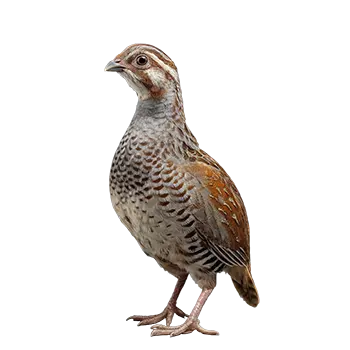
The Coturnix Quail (Coturnix japonica), commonly known as the Japanese Quail, belongs to the family Phasianidae and is closely related to the Common Quail (Coturnix coturnix) of Europe and Africa. Its wild range historically spanned a vast corridor across East Asia, including eastern Siberia, Manchuria, the Korean Peninsula, and the Japanese archipelago. The species favors open grasslands, agricultural margins, and scrubby meadows at low to moderate elevations, where it feeds on a mixed diet of seeds, grains, insects, and leafy vegetation.

Wild Coturnix Quail are migratory in the northern portions of their range, traveling southward in autumn to overwinter in warmer latitudes across Southeast Asia and the Indian subcontinent. This migratory behavior historically brought the birds into regular contact with human agricultural settlements, where harvested grain fields provided abundant foraging opportunities. The predictable seasonal arrival of quail flocks made them a familiar and welcome presence in rural communities, a relationship that would eventually lead to deliberate captive management.

The species thrives in habitats characterized by dense ground cover, which provides concealment from aerial predators. Coturnix Quail are ground nesters, laying clutches of eight to twelve eggs in shallow scrapes lined with dried grass. Their preference for low, dense vegetation ties them closely to grassland and savanna ecosystems, habitats that have been profoundly shaped by centuries of human agriculture. In many respects, the Coturnix Quail's ecological preferences predisposed it to a close association with human land use long before formal domestication began.

Genetic studies have confirmed that the domestic Japanese Quail descends primarily from wild populations in East Asia, though the precise geographic origin of the founding stock remains a subject of scholarly discussion. Molecular evidence suggests a relatively recent divergence between the Japanese Quail and the Common Quail, with the two species sharing a common ancestor that likely inhabited the grasslands of central Asia several million years ago.

Early History with Humans

The Coturnix Quail holds a distinctive place in the history of avian domestication. Japanese historical records indicate that wild quail were being captured and kept in cages as early as the 12th century, initially valued not for their eggs or meat but for their distinctive calls. Japanese aristocrats of the Heian and Kamakura periods kept male quail as songbirds, prizing the melodic crowing that the birds produced during the breeding season. Quail-song competitions became a refined pastime among the Japanese nobility, with individual birds evaluated on the purity, duration, and tonal quality of their calls.

By the 15th and 16th centuries, the practice of keeping Coturnix Quail had expanded beyond aristocratic circles and begun to incorporate more practical motivations. Japanese farmers recognized the birds' prolific egg-laying capacity and started selecting breeding stock for increased production. This gradual shift from ornamental songbird to agricultural producer marks one of the earliest documented examples of selective breeding in avian species and laid the groundwork for the modern egg-production strains that would emerge centuries later.

The Coturnix Quail's relationship with humans extends well beyond Japan. In the broader East Asian context, quail appear in Chinese art and literature dating back to the Han Dynasty, where they were associated with courage and martial valor. Quail fighting was a popular entertainment in parts of China, with specially conditioned birds matched against one another in organized bouts. While the Chinese tradition involved both Coturnix japonica and the closely related Coturnix coturnix, the cultural significance of quail in the region underscores the deep historical entanglement between these small birds and human societies across the continent.

In the Middle East and Mediterranean basin, the Common Quail rather than the Japanese Quail dominated early human interactions with the genus. Biblical accounts describe vast flocks of quail descending upon the Israelites during the Exodus, and ancient Egyptian art depicts quail in contexts suggesting both hunting and symbolic meaning. While these references concern a different species, they illustrate the broader cultural importance of Coturnix quail across civilizations and help explain why the genus attracted sustained human interest across such a wide geographic range.

Cultural Symbolism & Folklore

In Japanese culture, the Coturnix Quail occupies a symbolic position far more prominent than its modest size might suggest. The bird appears frequently in classical Japanese art, particularly in the nature-focused compositions of the Edo period, where quail are depicted amid autumn grasses and wild chrysanthemums. These images evoke a poetic sensibility tied to the changing seasons, solitude, and the beauty of humble, overlooked things. The quail's association with autumn became a fixed element in the seasonal vocabulary of Japanese poetry, and references to quail calls appear throughout the haiku tradition.

Beyond aesthetics, the Coturnix Quail carried deeper symbolic weight in Japanese folklore. The bird was sometimes associated with resilience and perseverance, qualities attributed to its ability to survive in harsh grassland environments and its determined, rapid ground movements. In certain folk traditions, the quail's habit of freezing motionless when threatened was interpreted as a form of quiet courage, a willingness to hold firm rather than flee. This symbolism resonated with samurai culture, and quail motifs occasionally appeared on armor and heraldic crests.

In Chinese tradition, the quail carried a different but equally rich set of associations. The Chinese word for quail, anchun, contains a phonetic element that links it to the concept of peace and contentment, making the bird a symbol of domestic harmony. Paired quail appeared on ceramics, textiles, and paintings as emblems of a settled, prosperous household. At the same time, the quail's combative nature when confined with rivals gave rise to the opposing association with bravery and fighting spirit, a duality that reflects the complexity of the bird's cultural identity.

In European folklore, quail were more commonly associated with abundance and providence. Their sudden, dramatic arrivals during migration, when enormous flocks would descend upon coastal areas and agricultural fields, were often interpreted as gifts from nature or divine provision. This association with unexpected bounty persisted in rural European traditions well into the modern era and contributed to the quail's reputation as a bird of good fortune.

Scientific Study & Recognition

The formal scientific classification of the Coturnix Quail began with Linnaeus, who described the Common Quail as Tetrao coturnix in 1758. The Japanese Quail was subsequently described as a distinct species, Coturnix japonica, by Temminck and Schlegel in 1849, based on specimens collected in Japan. The taxonomic relationship between C. japonica and C. coturnix has been a subject of sustained scientific interest, with hybridization studies and molecular analyses contributing to an understanding of speciation within the genus.

The Coturnix Quail's ascent as a laboratory animal in the 20th century transformed it from a regional agricultural curiosity into one of the most important avian models in biomedical and developmental research. Beginning in the 1910s and 1920s, Japanese researchers recognized the species' suitability for laboratory work, citing its small size, rapid maturation, high reproductive rate, and tolerance of confined housing. By mid-century, the Japanese Quail had become a standard model organism in embryology, genetics, endocrinology, and toxicology laboratories worldwide.

One of the most significant scientific contributions of the Coturnix Quail emerged from the work of Nicole Le Douarin in France during the 1960s and 1970s. Le Douarin developed the quail-chick chimera system, a technique that exploited the visible difference between quail and chicken cell nuclei to trace cell migration during embryonic development. This method revolutionized developmental biology, enabling researchers to map the origins and movements of neural crest cells and other migratory cell populations with unprecedented precision.

Beyond developmental biology, the Japanese Quail has contributed to research in areas ranging from behavioral neuroendocrinology to stress physiology and reproductive biology. Its rapid generation time, with birds reaching sexual maturity at approximately six weeks of age, allows researchers to conduct multigenerational studies on timescales impractical with larger avian species. The species' prominence in scientific research has, in turn, generated a detailed body of knowledge about its genetics, physiology, and behavior that far exceeds what is available for most other gallinaceous birds.

The Breed Today

The modern Coturnix Quail occupies a remarkably diverse set of roles that reflect its long and varied history with humans. In commercial agriculture, particularly in Japan, China, South Korea, and parts of Europe and South America, the species is farmed intensively for egg and meat production. Japanese quail eggs are a familiar sight in Asian supermarkets and convenience stores, consumed boiled, pickled, or as a topping for street food. Annual global production of quail eggs runs into the billions, sustained by commercial strains bred for maximum output under controlled housing conditions.

Alongside its commercial significance, the Coturnix Quail has experienced a dramatic surge in popularity among small-scale homesteaders and urban agriculturalists, particularly in North America and Europe. The bird's compact size, modest housing requirements, and prolific egg production make it an attractive option for keepers who lack the space or zoning permissions for chickens. Online communities dedicated to backyard quail keeping have grown substantially, with forums, social media groups, and video channels offering guidance on housing, nutrition, incubation, and breed selection.

The hobby breeding community has developed an impressive array of color varieties and feather mutations within the domestic Coturnix Quail. Standard wild-type plumage, characterized by warm brown tones with dark barring, has been joined by Tuxedo, Golden, Silver, Tibetan, Rosetta, and numerous other named color morphs. Breeders exchange hatching eggs and breeding stock through online marketplaces and at poultry shows, and the development of new color lines has become a creative pursuit in its own right, blending aesthetics with an understanding of avian genetics.

The species also continues to serve as a research model in laboratories around the world and has found a niche in educational settings, where its rapid life cycle and manageable size make it an effective tool for teaching concepts in biology, genetics, and animal husbandry. Few avian species can claim such a broad and simultaneous presence across commercial agriculture, scientific research, hobbyist communities, and educational institutions, a testament to the Coturnix Quail's extraordinary adaptability and enduring appeal.

Notable Individuals & Landmark Moments

Unlike companion parrots or raptors used in falconry, individual Coturnix Quail rarely achieve public fame by name. The species' significance in human culture has been expressed more through collective milestones and institutional achievements than through the celebrity of particular birds. Nevertheless, several landmark moments stand out in the Coturnix Quail's modern history and deserve recognition for the impact they have had on the species' trajectory.

The establishment of standardized laboratory strains in Japan during the early 20th century represents one such landmark. Researchers at institutions including the University of Tokyo and Nagoya University developed inbred lines that became foundational stocks for quail research programs worldwide. These strains, some of which have been maintained for dozens of generations, enabled the reproducibility and comparability that are essential to rigorous scientific investigation and helped cement the Coturnix Quail's status as a model organism.

In 1990, Coturnix Quail eggs were included in a biological experiment aboard the Soviet space station Mir, and a quail chick successfully hatched in microgravity, making it one of the first birds to be born in space. This event attracted considerable public and scientific attention, demonstrating the species' potential as a food source for long-duration spaceflight and sparking ongoing research into avian reproduction in altered gravitational environments. The space-hatched quail became a symbol of the species' adaptability under the most extreme conditions imaginable.

The early 21st century has seen the Coturnix Quail emerge as a cultural touchstone within the growing homesteading and self-sufficiency movement. Social media influencers and content creators focused on small-scale agriculture have introduced millions of viewers to Coturnix Quail keeping, transforming the species from a niche agricultural bird into a recognizable emblem of sustainable, small-footprint food production. This grassroots popularization has reshaped public perception of the Coturnix Quail and introduced it to demographics that would not have encountered the species a generation earlier.

Always consult a qualified professional before making any health-related decisions. This content is provided for informational reference only and should not replace professional guidance specific to your animal.