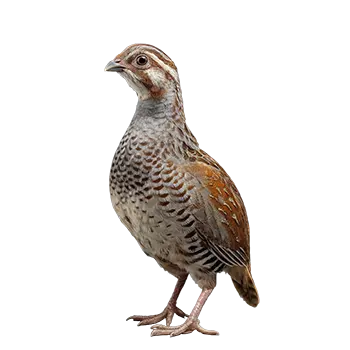

The Coturnix Quail has been a recurring subject in the visual arts of East Asia for centuries, most prominently in the painting traditions of Japan and China. In Japanese art, the quail became an established motif during the Muromachi and Edo periods, appearing in scroll paintings, screen compositions, and woodblock prints alongside autumn grasses, millet, and other seasonal elements. These compositions, often rendered in the restrained, evocative style of the Kano and Rimpa schools, used the quail as a poetic marker of the autumn season, evoking themes of transience, solitude, and the beauty of the natural world.
Chinese bird-and-flower painting likewise embraced the quail as a subject, with depictions appearing on scrolls, ceramics, and silk textiles dating back to the Song Dynasty. In these works, paired quail frequently symbolized domestic harmony and contentment, drawing on a linguistic association between the Chinese word for quail and concepts of peace. The birds were rendered with careful attention to plumage detail, posture, and habitat, reflecting the naturalistic ambitions of the genre and the deep observational tradition that characterized Chinese court painting.
European depictions of quail have been less prominent but nonetheless significant. The Common Quail, closely related to the Japanese species, appears in medieval illuminated manuscripts and in the still-life and hunting-scene traditions of Dutch and Flemish Baroque painting. These Western representations tended to frame the quail as a game bird, emphasizing its role as quarry rather than its aesthetic or symbolic qualities. The contrast with the contemplative, reverent treatment of the quail in East Asian art highlights the profoundly different cultural lenses through which the same genus of birds has been perceived.
In the contemporary era, the Coturnix Quail has become a popular subject for wildlife illustrators, nature photographers, and ceramic artists working in both traditional and modern styles. The bird's compact proportions, warm coloration, and endearing expression make it a visually appealing subject, and its growing popularity as a homestead animal has expanded the audience for quail-themed visual art beyond traditional fine-art contexts and into the world of craft, design, and illustration.