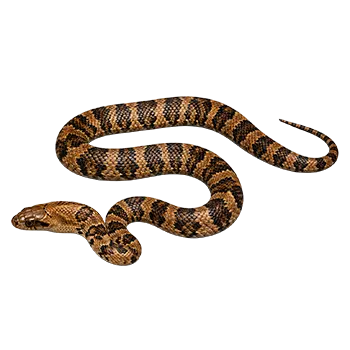

The water container is arguably the single most important accessory in any False Water Cobra enclosure, serving simultaneously as a hydration source, a soaking station, a thermoregulatory aid, and a significant contributor to ambient humidity. Selecting the right water container requires balancing the snake's need for a body of water large enough to submerge in against the practical demands of daily water changes and enclosure maintenance. For adult False Water Cobras in the five-to-seven-foot range, the water container should have a footprint large enough for the snake to coil its body fully inside with room to adjust its position, a depth of three to five inches to allow partial or near-full submersion, and walls sturdy enough to resist tipping when the snake enters and exits.
Heavy-duty plastic storage containers designed for household or industrial use make excellent water features for False Water Cobras. The black or dark-colored options are preferred because they provide visual security for the snake while soaking and are less likely to promote algae growth under the enclosure's lighting. The container should have smooth, rounded edges with no sharp seam lines that could abrade the snake's ventral scales during entry and exit. Some keepers cut a U-shaped notch in one wall of the container to create a low-profile entry ramp that allows the snake to enter and exit without having to climb over the full wall height, reducing the amount of water displaced by the snake's movement.
Ceramic and stoneware bowls marketed for reptile use are another option that offers the advantage of significant weight, making them virtually impossible for the snake to tip over. However, these bowls are typically available only in sizes suitable for smaller species, and finding a ceramic vessel large enough for an adult False Water Cobra can be difficult and expensive. Custom pottery pieces commissioned from local artisans who work with food-safe glazes and high-fire stoneware can fill this gap for keepers who prefer the aesthetics and stability of ceramic over plastic.
Water quality management is an ongoing commitment rather than a one-time setup decision. False Water Cobras frequently defecate in their water, and the warm enclosure environment accelerates bacterial proliferation in soiled water. Daily visual checks and immediate water changes upon detecting contamination are essential. Even when the water appears clean, dissolved waste products and bacterial colonies below the visible threshold warrant a complete water change every two to three days. The container itself should be scrubbed thoroughly with a reptile-safe disinfectant such as chlorhexidine solution or a diluted F10 veterinary disinfectant during every full water change, with special attention to the interior corners and the entry notch where biofilm tends to accumulate.