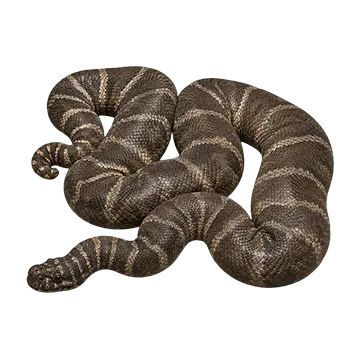

Enclosure Type and Size

Housing an Elephant Trunk Snake is fundamentally an aquarium-keeping endeavor rather than a traditional reptile enclosure project. Acrochordus javanicus is one of a small number of snake species that is entirely aquatic throughout its life, never voluntarily leaving the water and possessing no ventral scutes adapted for terrestrial movement. This means the enclosure must be a watertight aquarium or stock tank capable of holding a substantial volume of water at all times. Standard glass reptile terrariums with screen tops and shallow water dishes are wholly inappropriate for this species — the Elephant Trunk Snake requires a setup that more closely resembles a large freshwater fish aquarium than anything found in a typical snake room.

For juvenile Elephant Trunk Snakes under two feet in length, a twenty-gallon long aquarium provides adequate space for swimming, resting, and thermoregulation. As the snake grows, enclosure upgrades must keep pace. Sub-adults in the three-to-four-foot range require a minimum of fifty-five gallons, and full-grown adults — particularly females, which regularly exceed six feet — need seventy-five to one hundred twenty gallons or more. Water depth should be sufficient for the snake to fully submerge and rest comfortably on the bottom without being forced into cramped postures, typically eight to fourteen inches for adults. Length and width of the tank matter more than height, as the Elephant Trunk Snake is a benthic species that spends the vast majority of its time on or near the substrate rather than swimming in the upper water column.

Glass aquariums are the most popular choice due to their wide availability, optical clarity, and compatibility with standard aquarium equipment. However, they are heavy, fragile, and expensive at the larger sizes this species requires. Heavy-duty polyethylene stock tanks and food-grade plastic tubs offer a more affordable and lightweight alternative for keepers who prioritize function over display aesthetics. Stock tanks are particularly practical for breeding operations or quarantine setups where visual access is less important than volume, durability, and ease of cleaning. Custom-built acrylic aquariums represent the premium option, offering lighter weight than glass at comparable volumes, superior insulation properties, and seamless construction that eliminates silicone-joint failure risk.

Regardless of material, the enclosure must have a secure, tight-fitting lid. Elephant Trunk Snakes are not active escape artists in the way that colubrids or arboreal species are, but they will push against any opening at the water's surface, and a snake that exits the water will quickly become dehydrated and physically stressed due to its inability to support its own body weight effectively on land. Lids should be constructed of solid material rather than screen mesh to help retain humidity and reduce evaporative water loss, with ventilation openings small enough to prevent the snake from wedging through. Clips or latches rated for the lid's weight provide an additional safety margin.

Water Quality and Filtration

Water quality is the single most important environmental parameter in Elephant Trunk Snake husbandry, and inadequate filtration is the leading cause of health problems and premature death in captive acrochordids. Unlike terrestrial snakes that interact with water only briefly during drinking or soaking, the Elephant Trunk Snake is immersed in its water twenty-four hours a day. Every metabolic waste product the snake excretes — ammonia from protein metabolism, uric acid, shed skin particles, fecal matter — goes directly into the water it breathes through and absorbs across its permeable skin. Without robust biological and mechanical filtration, toxic compounds accumulate rapidly and cause chemical burns to the skin, respiratory infections, and organ damage.

A canister filter rated for at least twice the actual water volume of the enclosure is the minimum standard for this species. Canister filters offer superior biological filtration capacity compared to hang-on-back or internal power filters because they house larger volumes of biological media — ceramic rings, bio-balls, or sintered glass — where nitrifying bacteria colonies convert toxic ammonia to nitrite and then to relatively harmless nitrate. Mechanical filtration stages within the canister trap particulate waste, while an optional activated carbon or chemical filtration stage polishes the water and removes dissolved organic compounds that contribute to discoloration and odor. For enclosures over seventy-five gallons, running two canister filters in parallel or combining a large canister with a supplementary sponge filter provides redundancy and distributes biological filtration across multiple media beds.

The nitrogen cycle must be fully established before introducing an Elephant Trunk Snake into a new enclosure. Cycling an aquarium — the process of cultivating nitrifying bacteria populations capable of processing ammonia and nitrite to near-zero levels — typically takes four to six weeks when initiated with a bacterial starter culture and an ammonia source. Placing a snake into an uncycled tank exposes it to ammonia and nitrite spikes that can be lethal within days for a species this sensitive to water chemistry. Fishless cycling using pure ammonia solution is the safest and most controlled approach, monitored with a liquid-reagent test kit until both ammonia and nitrite consistently read zero parts per million and nitrate begins to accumulate.

Routine water changes are essential even with excellent filtration. A weekly partial water change of twenty-five to thirty percent removes accumulated nitrates, replenishes trace minerals, and dilutes dissolved organic compounds that filters cannot fully eliminate. Replacement water must be dechlorinated and temperature-matched before adding it to the enclosure, as chlorine and chloramine at municipal tap water concentrations are acutely toxic to the snake's skin and respiratory tissues. Using a high-quality dechlorinator that also neutralizes heavy metals provides comprehensive protection. Keepers who rely on well water should have it tested for iron, manganese, and hydrogen sulfide, all of which can cause problems at elevated concentrations.

Temperature and Heating

The Elephant Trunk Snake is a tropical species native to the warm rivers, swamps, and coastal waters of Indonesia, Malaysia, Thailand, Vietnam, Cambodia, and surrounding regions. Water temperature in captivity should be maintained between eighty and eighty-six degrees Fahrenheit, with a target of approximately eighty-two to eighty-four degrees for most individuals. Temperatures below seventy-eight degrees suppress appetite, slow digestion, and compromise immune function, while sustained temperatures above eighty-eight degrees cause thermal stress, increased metabolic demand, and accelerated oxygen depletion in the water. Maintaining stable water temperature within the appropriate range is essential to digestive health, immune competence, and overall longevity.

Submersible aquarium heaters are the standard heating tool for Elephant Trunk Snake enclosures. Titanium-element heaters are preferred over glass-element models because they are virtually indestructible, eliminating the risk of the snake cracking a glass heater tube against the tank wall or substrate and exposing itself to electrical current and shattered glass. The heater should be positioned horizontally near the bottom of the enclosure, close to the filter intake, so that circulating water distributes heat evenly throughout the tank. For enclosures over fifty-five gallons, using two heaters — each rated for half the total water volume — provides both more uniform heating and a safety net: if one heater fails, the second continues to maintain a livable temperature while the keeper arranges a replacement.

A heater guard or protective cage around the heating element is a mandatory safety accessory. Elephant Trunk Snakes spend extended periods resting motionless on the tank bottom, and direct contact with an unguarded heater can cause severe thermal burns that penetrate the snake's thin, scale-less skin within minutes. Commercially available stainless-steel or plastic heater guards designed for large aquarium fish work well for this purpose and are inexpensive relative to the veterinary cost of treating a burn wound on a fully aquatic snake that cannot be dry-docked for topical treatment.

Ambient room temperature significantly affects the stability of water temperature in the enclosure. Enclosures kept in rooms that experience wide temperature swings — such as uninsulated garages, basements near exterior walls, or rooms with direct sun exposure — require more powerful or more carefully controlled heating systems. Insulating the back and sides of a glass aquarium with foam board panels reduces heat loss and decreases the workload on submersible heaters, improving both temperature stability and energy efficiency. In climates with cold winters, a backup heating strategy — whether a battery-operated heater, a generator, or the ability to relocate the enclosure to a heated interior room — should be part of the keeper's emergency plan, since even a brief temperature crash below seventy degrees can be fatal to this strictly tropical species.

Substrate and Aquascaping

Substrate selection for an Elephant Trunk Snake enclosure must prioritize the snake's safety and the ease of maintaining clean water. A bare-bottom tank is the most hygienic option and is strongly favored by experienced keepers of this species. Without substrate, waste products are immediately visible and easily siphoned during water changes, and there is no medium for anaerobic bacteria to colonize and produce toxic hydrogen sulfide gas. A bare bottom also eliminates the risk of substrate ingestion during feeding, which can cause gastrointestinal impaction in species that feed underwater. The primary drawback of a bare-bottom setup is that the smooth glass or acrylic surface provides minimal traction for the snake, which can cause stress in some individuals that prefer to anchor themselves against textured surfaces.

For keepers who choose to use substrate for aesthetic or behavioral reasons, large-diameter river rocks and smooth cobblestones are the safest options. The individual stones must be too large for the snake to accidentally swallow — a minimum diameter of two to three inches for adult Elephant Trunk Snakes — and should be smooth and rounded to prevent abrasion injuries to the snake's delicate skin. Fine gravel, sand, and crushed coral are inappropriate substrates because they are easily ingested, difficult to clean, and trap detritus in interstitial spaces where it decomposes and degrades water quality. If using river rocks, arranging them in a single layer rather than piling them deeply simplifies cleaning and reduces the accumulation of waste beneath the substrate surface.

Aquascaping the enclosure with submerged structures provides essential environmental complexity. Driftwood pieces, particularly Malaysian driftwood and mopani wood that sink readily, serve as resting platforms, visual barriers, and textural surfaces that the snake can grip with its rough-scaled body. PVC pipe sections, terracotta pots laid on their sides, and commercially available aquarium caves offer secure hiding places where the snake can retreat from perceived threats. The Elephant Trunk Snake is a nocturnal, secretive species that experiences chronic stress when housed in open, featureless enclosures, so providing multiple hiding options distributed across the tank floor is a fundamental welfare requirement rather than a decorative choice.

Live aquatic plants can be incorporated into the enclosure and offer benefits beyond aesthetics, including minor water quality improvement through nitrate uptake and the creation of natural sight barriers that reduce the snake's stress. Hardy, low-light species such as Java fern, Anubias, and various Cryptocoryne species are the best candidates because they tolerate the warm, low-light conditions of a typical Elephant Trunk Snake setup and can be attached to driftwood or rocks rather than planted in substrate. Delicate stem plants and floating species are less practical, as the snake's movements tend to uproot or shred fragile vegetation. Any plants introduced should be quarantined and inspected for pesticide residue, snail eggs, and parasites before placement in the snake's enclosure.

Lighting Requirements

Lighting for the Elephant Trunk Snake enclosure serves the keeper's observational needs and the maintenance of a consistent photoperiod rather than the snake's metabolic requirements. Unlike many lizard species and some diurnal snakes that require ultraviolet-B radiation for vitamin D3 synthesis and calcium metabolism, the Elephant Trunk Snake is a nocturnal, fully aquatic species that does not bask and derives its vitamin D from dietary sources. There is no established physiological need for UVB lighting in this species, and the scientific literature on acrochordids does not support a UVB requirement. A simple photoperiod provided by ambient room light or a low-wattage aquarium LED is sufficient.

Maintaining a regular light-dark cycle of approximately twelve hours on and twelve hours off supports the snake's circadian rhythms and encourages natural behavioral patterns, including nocturnal activity periods during which the snake is most likely to feed, explore, and interact with enrichment items. Abrupt shifts in photoperiod — such as leaving lights on continuously or plunging the enclosure into darkness for extended periods — can disrupt feeding behavior and cause chronic low-level stress. Programmable aquarium light timers eliminate the inconsistency of manual switching and ensure that the photoperiod remains stable even when the keeper's schedule varies.

Light intensity should be kept subdued. The Elephant Trunk Snake inhabits murky, heavily shaded waterways in the wild and shows a clear behavioral preference for dim conditions in captivity. Bright overhead lighting causes the snake to retreat to hiding spots and remain inactive, reducing the keeper's opportunity to observe natural behavior and increasing the likelihood that the animal will refuse food offered during illuminated hours. Low-output LED strips in the cool-white to warm-white spectrum, positioned at one end of the enclosure rather than spanning its full length, create a gradient from brighter to dimmer zones that allows the snake to select its preferred light exposure.

If the enclosure contains live plants, lighting requirements must be balanced between the plants' photosynthetic needs and the snake's preference for low light. Fortunately, the hardy plant species recommended for Elephant Trunk Snake enclosures — Java fern, Anubias, and Cryptocoryne — are classified as low-light plants that thrive under modest illumination of fifteen to thirty micromoles of photosynthetically active radiation per square meter per second. A single low-to-medium output planted-aquarium LED fixture on a timer satisfies both the plants' needs and the snake's comfort, provided that ample shaded resting areas beneath driftwood or plant canopy remain available.

Maintenance and Cleaning

Routine maintenance of an Elephant Trunk Snake enclosure is more demanding than the upkeep required for most terrestrial snake setups, and keepers who are not prepared for the ongoing commitment of aquarium maintenance should reconsider keeping this species. The fully aquatic environment means that every biological process — excretion, digestion, skin shedding — happens in the water, and without consistent intervention, water quality degrades to dangerous levels within days rather than weeks. A structured maintenance schedule, practiced consistently, is the foundation of successful long-term husbandry.

Weekly partial water changes of twenty-five to thirty percent are the cornerstone of the maintenance routine. The process involves siphoning water from the bottom of the enclosure, where waste accumulates most heavily, and replacing it with dechlorinated, temperature-matched fresh water. Gravel vacuuming — or, in bare-bottom tanks, simply running the siphon across the floor to collect debris — should accompany every water change. Filter media should be rinsed in old tank water, never tap water, every two to four weeks to remove accumulated sludge without destroying the nitrifying bacteria colonies that drive biological filtration. Replacing all filter media at once is a common mistake that crashes the nitrogen cycle and creates a dangerous ammonia spike; instead, replace or rinse one media type at a time on a rotating schedule.

Water parameter testing should be performed at least weekly using a liquid-reagent test kit. The critical parameters are ammonia, nitrite, nitrate, and pH. Ammonia and nitrite must remain at zero parts per million at all times — any detectable reading indicates a filtration failure or an overfeeding problem that requires immediate corrective action. Nitrate should be kept below twenty parts per million through regular water changes. The pH for Elephant Trunk Snake enclosures should be maintained between 6.5 and 7.5, reflecting the slightly acidic to neutral conditions found in the species' natural habitats. Significant pH swings, even within the acceptable range, stress the snake and should be investigated for underlying causes such as decaying organic matter, depleted buffering capacity, or chemical contamination.

Deep cleaning the enclosure — removing the snake, draining all water, scrubbing surfaces, and resetting the tank — should be performed only when necessary, such as during disease treatment or after a severe water quality failure, because it destroys the established biological filtration and subjects the snake to handling stress and environmental disruption. Under normal circumstances, consistent partial water changes and filter maintenance keep the enclosure in excellent condition indefinitely without the need for teardown cleaning. When deep cleaning is unavoidable, the snake should be housed in a heated, filtered temporary container with familiar hiding spots, and the primary enclosure should be refilled and cycled for at least seventy-two hours with seeded filter media before the snake is returned.

Always consult a qualified professional before making any health-related decisions. This content is provided for informational reference only and should not replace professional guidance specific to your animal.