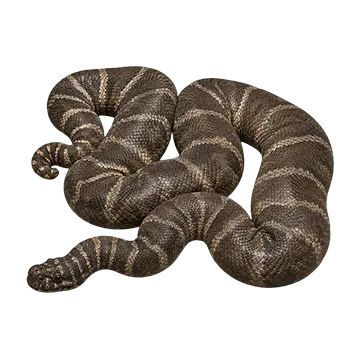

Accurate water quality testing is the most critical accessory category for Elephant Trunk Snake husbandry, and no keeper should acquire this species without investing in reliable testing equipment. Because Acrochordus javanicus lives fully submerged at all times, the water in its enclosure functions as the equivalent of the air a terrestrial animal breathes — every dissolved compound, waste product, and chemical fluctuation contacts the snake's skin, enters its respiratory passages, and influences its physiological processes directly. Testing for ammonia, nitrite, nitrate, and pH is not optional; it is the diagnostic foundation that prevents the cascade of health problems caused by invisible water quality degradation.
Liquid-reagent test kits are the gold standard for hobbyist-level water quality assessment and should be the primary testing tool for every Elephant Trunk Snake keeper. These kits use chemical reagents that react with water samples to produce color changes read against a reference card, providing quantitative measurements far more accurate than paper test strips. A master freshwater test kit that includes separate reagents for ammonia, nitrite, nitrate, and pH covers the essential parameters. The ammonia test is the most frequently used, as ammonia is the first nitrogenous waste compound produced by biological activity and the most immediately toxic to aquatic organisms. A reading above 0.25 parts per million warrants immediate corrective action — a large partial water change and investigation of the cause, whether overfeeding, filter failure, or an undetected dead organism in the enclosure.
Total dissolved solids meters and refractometers serve a supplementary role for keepers who maintain their Elephant Trunk Snake in brackish conditions, as some populations of Acrochordus javanicus inhabit coastal estuarine environments with measurable salinity. A digital TDS meter provides a quick reading of the total mineral and salt concentration in the water, useful for monitoring drift between water changes. A refractometer measures specific gravity with greater precision and is the appropriate tool if the keeper is maintaining a controlled brackish setup at a specific salinity target. For purely freshwater setups, a TDS meter is a convenient but not essential supplement to the core liquid-reagent test kit.
Keeping a testing logbook — whether a physical notebook or a digital spreadsheet — transforms individual test readings into a longitudinal dataset that reveals trends invisible in single measurements. A nitrate level of fifteen parts per million on any given day is unremarkable, but a steady upward trend in nitrate over several weeks indicates that the water change schedule or volume is insufficient relative to the bioload. Similarly, a gradual decline in pH over months suggests that the water's buffering capacity is being consumed, likely by the accumulation of organic acids from biological processes. Logging test results alongside notes on feeding dates, water changes, and behavioral observations creates a comprehensive care record that aids both routine management and veterinary consultations.