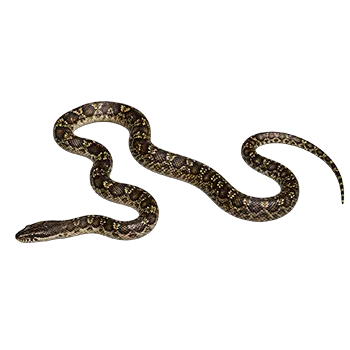

Enrichment for captive reptiles has historically received less attention than enrichment for mammals and birds, but the growing body of research into reptile cognition and behavioral complexity has made it clear that snakes, including the Egg-Eating Snake, benefit meaningfully from environments that stimulate exploration, problem-solving, and natural behavioral expression. Dasypeltis scabra in the wild navigates complex three-dimensional landscapes of branches, bark, rock faces, and dense vegetation while searching for bird nests — an activity that requires spatial memory, chemosensory investigation, and physical agility. A captive enclosure that offers nothing but a hide box, a water dish, and flat substrate deprives the snake of opportunities to engage these evolved capacities.
The concept of enrichment for snakes is not about toys in the mammalian sense — there is no snake equivalent of a ball or a chew toy. Instead, enrichment for Egg-Eating Snakes centers on environmental complexity, novelty, and opportunities to perform species-typical behaviors. A well-enriched enclosure provides vertical climbing options, multiple hiding opportunities at different temperature zones, textural variety in the substrate and furnishings, and periodic changes to the layout that encourage the snake to re-explore its territory and update its spatial map of the habitat.
The benefits of enrichment are both behavioral and physiological. Egg-Eating Snakes in enriched environments tend to be more active during their nocturnal foraging periods, display more confident and less defensive body language during handling, and maintain healthier muscle tone from regular climbing and movement. Conversely, snakes in barren enclosures often become sedentary, spending virtually all of their time wedged into a single hide and emerging only when food is detected or when maintenance activities force them out. This sedentary pattern can contribute to obesity, muscle atrophy, and a heightened stress response to any novel stimulus including routine handling.
Implementing enrichment does not require expensive specialized products. Many of the most effective enrichment strategies for Egg-Eating Snakes involve natural materials, household items repurposed for safe use, and simple habitat rearrangements that cost nothing but a few minutes of the keeper's time. The key is consistency and variety — enrichment is most effective when it is an ongoing part of husbandry practice rather than a one-time setup that remains static for the life of the animal.