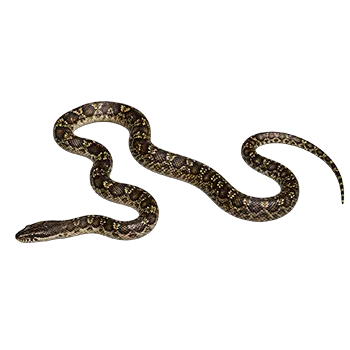

A reliable water source is one of the most fundamental accessories in any Egg-Eating Snake enclosure, and selecting the right water dish involves more consideration than the apparent simplicity of the task might suggest. Dasypeltis scabra requires constant access to clean, fresh water for drinking and, during pre-shed periods, for soaking to facilitate the separation of old skin from new growth. The dish must be heavy enough or shaped to resist tipping, shallow enough for the snake to enter and exit safely, and sized appropriately for the enclosure without dominating the floor space.
Ceramic water dishes are a popular and practical choice. Their weight makes them inherently tip-resistant, and the glazed interior surface is smooth, easy to clean, and resistant to bacterial biofilm accumulation. Reptile-specific ceramic dishes are available in a range of sizes and low-profile designs that allow the snake to access the water without climbing over a high rim. A dish with a diameter of roughly four to six inches suits most adult Egg-Eating Snakes, providing enough volume for drinking and partial soaking without creating an excessively large humid zone within the enclosure.
Resin water dishes molded to resemble natural rock formations offer an aesthetic alternative that blends into a naturalistic habitat design. These products typically feature textured ramps or low entry points that make it easy for the snake to slide in and out of the water. The textured surface, while visually appealing, does require more thorough scrubbing during cleaning to remove residue from crevices and rough patches. Some resin dishes are designed with built-in cascading sections or shallow spillover areas, though these features add complexity without significant functional benefit for a snake species that does not require running water.
Water quality matters as much as dish selection. Tap water treated with a reptile-safe water conditioner to neutralize chlorine and chloramine is adequate for daily use. Some keepers use filtered or spring water, which eliminates the need for chemical conditioning. The water should be changed at minimum every other day, and immediately if the snake has defecated in it, soaked extensively and left debris, or the water appears cloudy. Biofilm — a slippery microbial coating that develops on submerged surfaces — builds up rapidly on water dish interiors and must be scrubbed off during each water change to prevent bacterial proliferation.
A secondary soaking container outside the enclosure is a useful accessory during shed cycles. When the snake's eyes cloud over and its skin takes on the dull, milky appearance that signals an approaching shed, providing a shallow container of lukewarm water for supervised soaking sessions of fifteen to twenty minutes can help ensure a clean, complete shed. This container should be escape-proof, smooth-sided, and filled to a depth that covers the snake's body without submerging its head. Supervised soaking is preferable to simply increasing humidity within the entire enclosure, as it provides direct hydration to the skin surface where it is most needed without creating persistently damp conditions that promote mold growth in the substrate.