
Enclosure Size and Type

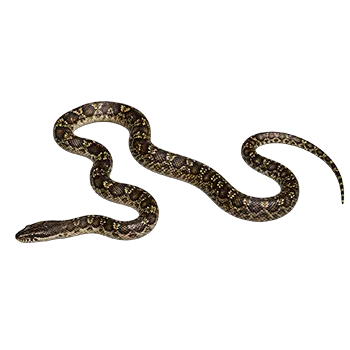
The Egg-Eating Snake's modest adult size makes it one of the more manageable species to house in a home environment, but selecting the right enclosure still requires careful consideration of the animal's behavioral tendencies and spatial needs. An adult Dasypeltis scabra averaging twenty-four to thirty inches in length does well in a glass or PVC terrarium with a footprint of approximately thirty-six inches long by eighteen inches deep by eighteen inches tall. This provides sufficient floor space for thermoregulation, exploration, and the placement of multiple hides while accommodating the moderate climbing activity that Egg-Eating Snakes engage in during their active nocturnal hours.

Glass terrariums with front-opening doors are a popular choice for Egg-Eating Snakes and offer several practical advantages. Front-opening access allows the keeper to approach the snake from the side rather than from above, which reduces the startle response in a species that is inherently alert to overhead threats from predatory birds. Glass enclosures also provide excellent visibility for observation and are widely available in appropriate sizes from major reptile product manufacturers. The primary drawback of glass is its relatively poor insulation, which can make maintaining stable temperature gradients more challenging in drafty rooms or homes with significant seasonal temperature swings.

PVC and molded plastic enclosures have gained substantial ground among experienced keepers for good reason. These enclosures retain heat and humidity far more effectively than glass, which simplifies environmental management and reduces energy costs associated with heating equipment. Many PVC enclosure systems are designed to stack, making them ideal for keepers who maintain multiple animals or who wish to dedicate rack space to a small collection. The trade-off is reduced visibility compared to glass, though many PVC enclosures now incorporate clear acrylic panels that offer a reasonable viewing window without sacrificing insulation performance.

For hatchling and juvenile Egg-Eating Snakes, a smaller enclosure is actually preferable to placing a tiny snake in a full-sized adult setup. A five-to-ten-gallon equivalent enclosure or a similarly sized plastic tub provides the security that young Dasypeltis need to settle in, feed confidently, and grow without the stress of navigating an excessively large space. Hatchlings in oversized enclosures often become reclusive and may refuse food due to the perceived exposure of an environment that lacks sufficient cover relative to its volume. Upgrading to a larger enclosure as the snake grows — typically at the twelve-to-sixteen-inch stage and again at adult size — is a sound and widely practiced husbandry approach.

Security is a paramount concern regardless of enclosure type. Egg-Eating Snakes are slender, flexible, and surprisingly persistent escape artists. Any gap larger than the diameter of the snake's head is a potential exit point. Screen-top enclosures are particularly risky because the mesh can develop gaps at the frame edges over time, and the lightweight lids are easily displaced if not secured with clips or locks. Front-opening terrariums with positive-latch mechanisms and PVC enclosures with sliding glass fronts that seat firmly against felt tracks are inherently more escape-resistant than any screen-top configuration.

Substrate Options

Substrate selection influences humidity retention, hygiene, burrowing opportunity, and the overall aesthetic of the Egg-Eating Snake's enclosure. Dasypeltis species in the wild occupy a range of habitats from open savanna to light woodland, typically dwelling in leaf litter, under bark, and within rock crevices where the ground surface is covered by loose organic material. A substrate that approximates this natural ground cover supports the snake's behavioral repertoire and contributes to a stable microclimate within the enclosure.

Coconut fiber, sold commercially in compressed brick form under several brand names, is among the most widely used substrates for Egg-Eating Snakes. It holds moisture effectively without becoming waterlogged, supports burrowing behavior, and is available at a reasonable cost from virtually every reptile supply retailer. When hydrated to the proper consistency — damp enough to hold its shape when squeezed but not dripping wet — coconut fiber maintains ambient humidity in the range that Dasypeltis species prefer. It also has a natural resistance to mold growth when maintained correctly, though saturated patches should be spot-cleaned promptly to prevent fungal issues.

Cypress mulch is another excellent option that combines moisture retention with natural aesthetics. Shredded cypress holds humidity well, resists decomposition more effectively than many hardwood mulches, and produces a visually appealing forest-floor appearance. It is lightweight enough for the snake to burrow through and does not produce the aromatic compounds that make cedar and pine substrates dangerous to reptiles. Keepers should verify that any cypress product purchased is free of added dyes, chemicals, or pesticide treatments, as some landscaping-grade mulches are treated with substances that are toxic to reptiles.

Aspen shavings offer a drier substrate option that works well in enclosures where humidity is maintained primarily through a large water dish and periodic misting rather than through substrate moisture. Aspen is absorbent, easy to spot-clean, and widely available at low cost. Its primary limitation for Egg-Eating Snakes is that it does not retain humidity as effectively as coconut fiber or cypress mulch, which may require the keeper to supplement with more frequent misting or a larger water source to keep ambient humidity in the appropriate range. Aspen also molds readily when wet, so spills and damp patches must be addressed immediately.

Substrates to avoid include cedar and pine shavings, which release volatile phenolic compounds that cause respiratory irritation and liver damage in reptiles. Sand is inappropriate for Egg-Eating Snakes because it provides no burrowing structure, does not retain humidity, and poses an ingestion risk if the snake contacts sand while consuming an egg. Paper towels and newspaper serve adequately as temporary substrates for quarantine setups or veterinary observation enclosures but are too utilitarian for a permanent habitat and offer none of the environmental enrichment that naturalistic substrates provide.

Temperature and Heating

Proper temperature management is foundational to the health of any ectothermic reptile, and the Egg-Eating Snake is no exception. Dasypeltis scabra originates from sub-Saharan Africa, where daytime ambient temperatures across its range typically fall between seventy-five and ninety degrees Fahrenheit depending on season and microhabitat. In captivity, the enclosure should provide a thermal gradient that allows the snake to thermoregulate by moving between warmer and cooler zones, a behavior that supports digestion, immune function, and general metabolic activity.

The warm end of the enclosure should maintain a surface temperature of approximately eighty-five degrees Fahrenheit, measured at the substrate level directly above or adjacent to the heat source. The cool end should sit in the mid-seventies, roughly seventy-two to seventy-six degrees Fahrenheit. This gradient gives the snake a meaningful temperature differential to exploit throughout the day. At night, temperatures can drop by five to eight degrees across the entire enclosure without causing stress, as this mirrors the natural diel temperature cycle that Dasypeltis experiences across most of its range.

Under-tank heat mats are the most commonly used primary heat source for Egg-Eating Snake enclosures. These adhesive pads attach to the exterior bottom of the enclosure and produce gentle, consistent warmth that radiates upward through the substrate. For glass enclosures, the heat mat should cover roughly one-third of the floor area on the designated warm end. A thermostat must always regulate the heat mat — unregulated mats can reach surface temperatures well above one hundred degrees Fahrenheit, which will cause fatal thermal burns in a burrowing snake that rests directly against the hot glass. Proportional or pulse-proportional thermostats provide the most stable regulation and are strongly preferred over simple on-off thermostats that allow wider temperature swings.

Overhead heating elements, including ceramic heat emitters and radiant heat panels, offer an alternative or supplemental heat source that warms the air column within the enclosure rather than just the substrate surface. Ceramic heat emitters produce infrared heat without visible light, making them suitable for twenty-four-hour operation without disrupting the snake's photoperiod. Radiant heat panels, which mount to the ceiling of the enclosure and emit gentle infrared radiation downward, are particularly well-suited to PVC enclosures and provide an even, diffuse warmth that many keepers consider superior to the point-source heat of a ceramic emitter. Both types require thermostat regulation and should be protected by a cage or guard if mounted inside the enclosure to prevent direct contact burns.

Heat lamps that produce visible light should be used with caution and only during daytime hours if employed at all. Egg-Eating Snakes are primarily crepuscular and nocturnal, and an enclosure illuminated by a bright basking lamp throughout the day may discourage the snake from emerging and utilizing the warm zone when it would otherwise be active. If a basking lamp is used to supplement ambient room temperatures during cold weather, selecting a low-wattage bulb and positioning it at one end of the enclosure ensures that the snake has ample retreat space away from the light source.

Humidity and Ventilation

Humidity management in the Egg-Eating Snake enclosure strikes a balance between providing the moisture levels the species needs for healthy respiration and shedding and preventing the stagnant, saturated conditions that promote bacterial and fungal growth. Dasypeltis scabra occupies habitats with moderate humidity, and the captive target range falls between forty and sixty percent relative humidity during normal maintenance periods, rising to sixty-five or seventy percent during active shed cycles when the snake's skin is loosening and requires additional moisture to separate cleanly from the body.

Maintaining baseline humidity in this range is straightforward with the right enclosure and substrate combination. PVC and plastic enclosures naturally retain more ambient moisture than glass terrariums, and a moisture-retentive substrate such as coconut fiber or cypress mulch acts as a humidity reservoir that gradually releases moisture into the air column throughout the day. The size and placement of the water dish also contribute — a larger dish positioned on the warm side of the enclosure will evaporate more rapidly and raise ambient humidity, while a smaller dish on the cool side will evaporate slowly and have less impact. Adjusting these variables allows the keeper to fine-tune humidity without relying exclusively on manual misting.

Misting the enclosure with a handheld spray bottle once or twice daily is an effective supplemental strategy for raising humidity during shed cycles or in particularly dry environments. Light misting of the substrate surface and enclosure walls provides transient moisture that boosts humidity for several hours. Automated misting systems are available but are generally unnecessary for a single Egg-Eating Snake enclosure given the species' moderate humidity requirements — they are more practical for keepers managing multiple tropical species enclosures simultaneously.

Ventilation is the counterbalance to humidity and must not be neglected. Stagnant air in a humid enclosure creates conditions favorable to respiratory infections, mold colonization, and bacterial proliferation on surfaces and in the substrate. Glass terrariums with screen tops provide passive ventilation through the mesh, though this also means humidity escapes more rapidly and requires more frequent replenishment. PVC enclosures typically incorporate small ventilation ports or strips that allow controlled air exchange without excessive moisture loss. The goal is gentle airflow that prevents condensation from accumulating on walls and surfaces while maintaining humidity within the target range.

Signs that humidity is mismanaged are visible in the snake's condition. Chronically low humidity produces rough, wrinkled skin texture and incomplete sheds where patches of retained skin cling to the body, particularly around the eye caps, tail tip, and along the ventral surface. Chronically high humidity manifests as visible moisture beading on the snake's scales, a perpetually saturated substrate surface, and potentially the onset of scale rot — a bacterial dermatitis that appears as discolored, soft, or necrotic patches on the ventral scales. Either extreme requires prompt correction through substrate adjustment, ventilation modification, or changes to the water dish configuration.

Lighting Requirements

The lighting needs of the Egg-Eating Snake are modest compared to many other reptile species, reflecting the animal's crepuscular and nocturnal activity pattern. In the wild, Dasypeltis scabra spends daylight hours concealed under bark, within rock crevices, or buried in leaf litter, emerging at dusk and during the night to forage for eggs in bird nests. This behavioral profile means the snake does not bask under direct sunlight and does not have the high UVB demands associated with diurnal, heliothermic species such as bearded dragons or green iguanas.

A consistent photoperiod — a regular cycle of light and dark that mimics the natural day-night rhythm — is more important for the Egg-Eating Snake than the type or intensity of the light source itself. A twelve-hours-on, twelve-hours-off light cycle provides a stable framework that supports the snake's circadian rhythm, hormonal regulation, and behavioral patterns including feeding activity. In rooms with adequate natural light from windows, no supplemental lighting may be needed during daytime hours, as ambient room lighting that filters through the enclosure walls provides a sufficient signal for the snake to distinguish day from night.

UVB lighting, while not strictly required for Egg-Eating Snakes, is a subject of evolving discussion among herpetologists and experienced keepers. Traditional husbandry guidance holds that nocturnal and crepuscular snakes obtain adequate vitamin D3 from their diet and do not require UVB exposure for cutaneous synthesis. More recent research suggests that low-level UVB exposure — replicating the incidental UV exposure a snake might receive during brief periods of twilight activity or through dappled canopy light — may confer subtle health benefits including improved calcium metabolism and immune function. A low-output UVB bulb positioned at one end of the enclosure, such as a shade-dweller or forest-canopy spectrum tube, provides this optional supplementation without flooding the enclosure with intense UV that would be unnatural and potentially stressful.

Colored bulbs marketed as nighttime viewing lights — red, blue, or purple spectrum lamps — were once widely recommended for observing nocturnal reptiles without disturbing their activity. Current understanding has largely moved away from this practice. Research indicates that many reptile species, including snakes, can perceive these wavelengths and may be disrupted by them, particularly if they are left on continuously throughout the night. If nighttime observation is desired, a low-intensity infrared emitter or simply a brief, dim flashlight check is preferable to leaving a colored bulb burning for hours.

Lighting equipment should be positioned securely and safely to prevent the snake from contacting hot surfaces. Any bulb mounted inside the enclosure must be protected by a wire cage guard rated for the bulb's wattage. External mounting, where the light sits on top of a screen lid or is clamped to a fixture above the enclosure, is inherently safer but reduces the light intensity reaching the enclosure interior, which may need to be compensated for by using a slightly higher-output bulb. Timer-controlled outlets or smart plugs that automate the photoperiod cycle eliminate the inconsistency of manual switching and ensure the snake receives a predictable light schedule every day.

Enclosure Maintenance

Routine enclosure maintenance preserves the health of the Egg-Eating Snake and the functional integrity of the habitat's environmental systems. A consistent maintenance schedule prevents the gradual accumulation of waste products, bacterial biofilms, and substrate degradation that can compromise air quality and promote disease within the enclosure. The modest size and relatively low waste output of the Egg-Eating Snake make maintenance less labor-intensive than for many other reptile species, but the tasks are no less important for being simple.

Daily maintenance consists of a brief visual inspection and spot cleaning. Check the water dish and replace its contents with fresh, dechlorinated water if soiled, cloudy, or depleted. Locate and remove any fecal deposits, urate masses, or regurgitated eggshell pellets from the substrate surface. Fecal matter from Egg-Eating Snakes is relatively small in volume but should be removed promptly to prevent bacterial growth and odor development. A quick scan of the substrate surface for damp, compacted, or soiled patches allows targeted removal and replacement of affected material without disturbing the entire substrate bed.

Weekly maintenance expands the scope to include a more thorough substrate inspection, wiping down the interior glass or acrylic panels with a damp cloth to remove water spots and residue, and verifying that all environmental control equipment is functioning correctly. Check the thermostat probe placement to confirm it has not shifted, verify that heating elements are operating at their set temperatures, and inspect the enclosure's seals, latches, and ventilation openings for signs of wear or damage. If the substrate has developed a noticeable odor or has become compacted in high-traffic areas, turn it over or replace the affected section to restore airflow and moisture distribution.

A full substrate change and deep enclosure cleaning should be performed every four to six weeks, or sooner if conditions warrant it. Remove the snake and place it in a secure, ventilated temporary container with a hide and water dish. Strip the enclosure completely — remove all substrate, decor, hides, and the water dish. Wash all hard surfaces with a reptile-safe disinfectant, rinse thoroughly with clean water, and allow everything to dry before reassembling. Decorative items and hides should be scrubbed, disinfected, and inspected for cracks or rough edges that could harbor bacteria or injure the snake. Replace the substrate entirely with fresh material rather than attempting to recycle the old substrate, which retains absorbed waste products even if it appears visually clean.

Seasonal assessment of the enclosure setup is a valuable practice that goes beyond routine cleaning. At least twice a year, evaluate whether the enclosure size remains appropriate for the snake's current body length, whether heating and humidity equipment is performing efficiently or showing signs of degradation, and whether the arrangement of hides, climbing structures, and the water dish optimally serves the snake's behavioral needs. Equipment such as heat mats, thermostats, and thermostat probes have functional lifespans and can fail gradually rather than catastrophically, so periodic testing against a calibrated reference thermometer catches drift before it becomes a husbandry problem.

Always consult a qualified professional before making any health-related decisions. This content is provided for informational reference only and should not replace professional guidance specific to your animal.