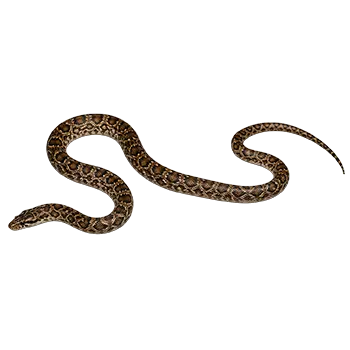

Understanding Snake Enrichment

Enrichment for captive snakes is a concept that has gained significant traction in herpetological husbandry over the past two decades, driven by a growing body of research demonstrating that reptiles are not the simple, stimulus-indifferent animals they were once assumed to be. The Eastern Small-Blotched Python is a particularly good candidate for enrichment because of its naturally inquisitive temperament and semi-arboreal habits. In the wild, Antaresia maculosa navigates a complex three-dimensional environment of rock crevices, tree branches, cave systems, and woodland debris, encountering varied textures, scents, temperatures, and spatial challenges throughout its active hours. A captive enclosure that reduces this rich sensory world to a flat box with two hides and a water dish deprives the snake of stimulation that supports cognitive engagement and physical fitness.

The term enrichment, when applied to snakes, does not mean the same thing as it does for dogs or parrots. Snakes do not play with toys in the mammalian sense — they do not fetch, chew, or manipulate objects for amusement. Instead, snake enrichment focuses on environmental complexity: providing opportunities for the animal to explore, navigate, choose between microhabitats, and engage with novel stimuli in ways that mimic the decision-making and problem-solving the animal would perform in nature. A branch placed at an angle is not a toy but an invitation to climb, balance, and survey the enclosure from a new vantage point. A new scent introduced on a piece of driftwood is not a game but a sensory stimulus that engages the snake's vomeronasal system and triggers investigatory tongue-flicking.

The benefits of well-designed enrichment are observable and measurable. Snakes housed in enriched environments tend to be more active, exhibit a wider range of natural behaviors, feed more reliably, and display calmer responses during handling compared to snakes kept in minimally furnished enclosures. Chronic stress in captive snakes manifests as persistent hiding, feeding refusal, excessive defensive behavior, and immune suppression that increases vulnerability to infections and parasitic disease. While enrichment alone does not eliminate stress — proper husbandry fundamentals must be in place first — it is a significant contributing factor to the overall welfare of any captive snake.

A critical principle of snake enrichment is that novelty must be introduced gradually and with sensitivity to the individual animal's temperament. Even a docile species like the Eastern Small-Blotched Python can be stressed by sudden, dramatic changes to its environment. Adding a large new object to the enclosure without allowing the snake to investigate it at its own pace, or rearranging the entire interior layout in a single session, can trigger a stress response that suppresses feeding and increases defensive behavior for days or weeks afterward. The most effective enrichment programs introduce changes incrementally, observe the snake's response, and adjust the pace accordingly.

Climbing Structures

Climbing structures are among the most valuable enrichment items for the Eastern Small-Blotched Python, reflecting the species' semi-arboreal nature and its wild habit of occupying elevated positions on rock faces, in tree canopies, and along the walls of cave entrances. In captivity, vertical and angled climbing opportunities encourage physical activity, expand the usable space within the enclosure, and allow the snake to access different thermal and humidity zones at various heights. A snake that uses climbing structures regularly tends to be more muscular, more alert, and more confident during handling than one confined to ground-level activity.

Natural branches are the most aesthetically pleasing and functionally effective climbing structures available. Hardwood branches from species such as grapevine, manzanita, oak, and mopani are durable, rot-resistant, and provide the rough bark texture that gives the snake secure purchase during climbing. The branch diameter should be roughly equal to or slightly smaller than the snake's body diameter at its thickest point, allowing the snake to wrap comfortably and grip securely. Branches that are too thin flex under the snake's weight and feel unstable, while branches that are too thick do not permit effective coiling and reduce the snake's sense of control.

Cork bark tubes and flats offer a dual-purpose enrichment item that serves as both climbing structure and hiding opportunity. A cork bark tube mounted at an angle between the enclosure floor and wall creates an inclined tunnel that the snake can traverse, rest inside, or perch atop. The natural texture of cork bark provides excellent grip, and its insulating properties create a microclimate within the tube that differs slightly from the surrounding enclosure air, adding another dimension of environmental choice for the snake. Cork bark is also lightweight, easy to sanitize by scrubbing with a reptile-safe disinfectant and allowing to dry thoroughly, and available in a wide range of sizes from specialty reptile suppliers.

Commercially produced reptile ledges, platforms, and magnetic rock walls designed for terrariums offer another category of climbing structure that is particularly useful in glass enclosures where natural branch mounting can be challenging. Suction-cup-mounted ledges allow the snake to rest at different heights and can be repositioned easily during habitat rotations. Resin and foam rock backgrounds with built-in ledges and crevices create a textured climbing wall that mimics a natural rock face. When selecting commercial climbing products, verify that all surfaces are smooth enough to prevent abrasion injuries but textured enough to provide grip, and ensure that no gaps exist where the snake could become wedged or trapped.

Tactile and Exploration Items

Tactile enrichment capitalizes on the Eastern Small-Blotched Python's highly developed sense of touch, which the snake uses to navigate its environment, assess surfaces for grip and safety, and detect vibrations that signal the presence of prey or predators. In the wild, this species encounters an enormous variety of surfaces in the course of a single night's activity: smooth river stones, rough sandstone, flaking bark, leaf litter, sandy soil, and damp moss. Replicating even a fraction of this textural diversity within the enclosure gives the snake a richer sensory experience and encourages exploratory behavior that would otherwise have no outlet.

Smooth river stones and slate tiles placed in the enclosure provide hard, cool surfaces that contrast with the softer substrate and warm hides. Many Eastern Small-Blotched Pythons will spend time resting on a flat stone, particularly one positioned on the cool side of the enclosure, and the contact with a hard surface can assist in the shedding process by giving the snake an abrasive edge to rub against when initiating a shed. Stones should be large enough that the snake cannot accidentally ingest them and heavy enough that they will not be dislodged and trap the snake beneath them. Rinsing stones thoroughly and baking them in an oven to sterilize before introduction eliminates any risk of introducing pathogens.

Leaf litter made from dried, pesticide-free leaves such as magnolia, oak, or Indian almond adds a naturalistic ground-cover layer that the snake can push through, hide beneath, and investigate. The rustling sound and shifting texture of leaf litter stimulate exploratory movement and create additional microhabitats within the enclosure where temperature and humidity vary slightly from the open substrate surface. Leaf litter should be replaced periodically as it breaks down, and any leaves showing signs of mold or fungal growth should be removed immediately.

Driftwood, grapevine root sections, and other irregularly shaped wood pieces create complex navigational challenges that engage the snake's spatial awareness. A piece of driftwood with multiple forks, hollows, and protrusions presents the snake with choices about which route to take, where to anchor its body, and how to maneuver through tight spaces. These are the same kinds of spatial problems the snake would solve nightly in the wild as it threads through rock crevices and branch tangles in pursuit of prey. Rotating wood pieces in and out of the enclosure every few weeks maintains novelty and prevents the snake from habituating to a static environment.

Sphagnum moss clumps placed in a shallow dish or tucked into a cork bark hide create a humid microhabitat that the snake can choose to occupy or avoid. The damp, fibrous texture of sphagnum moss is markedly different from the dry substrate surrounding it, and many Eastern Small-Blotched Pythons will burrow into or rest on moss clumps, particularly during pre-shed periods when elevated humidity supports the shedding process. Moss should be kept damp but not waterlogged, and it should be replaced weekly to prevent bacterial colonization.

Sensory Enrichment

Sensory enrichment extends beyond the tactile domain to engage the Eastern Small-Blotched Python's other highly developed senses, particularly its chemosensory system. Snakes perceive their world primarily through chemical signals detected by the vomeronasal organ, also known as the Jacobson's organ, which processes scent molecules collected by the flicking tongue. Introducing novel but safe scents into the enclosure stimulates investigatory behavior and provides cognitive engagement that mimics the constantly changing chemical landscape a wild snake encounters as other animals pass through its territory, prey items leave scent trails, and vegetation releases volatile compounds.

Scent enrichment can be achieved through simple, safe methods. Rubbing a piece of driftwood or cork bark with the shed skin of a different snake species — obtained from another keeper or a reptile rescue — introduces a foreign scent that triggers intense tongue-flicking and exploratory movement as the snake investigates the unfamiliar chemical signature. Placing a small amount of used rodent bedding from a feeder colony in a breathable fabric pouch and setting it in the enclosure provides a prey-scent stimulus that elicits hunting behavior without the presence of actual food. These scent items should be removed after a few hours to prevent habituation and to avoid confusion around actual feeding times.

Visual enrichment is less significant for snakes than for mammals or birds, but the Eastern Small-Blotched Python does possess functional vision and responds to changes in light, shadow, and movement in its surroundings. Allowing the snake to observe activity in the room from a secure perch — through the enclosure glass while the keeper performs routine tasks nearby, for example — provides mild visual stimulation. Positioning the enclosure in a location where the snake can see ambient movement without being startled by sudden close approaches offers a balance between stimulation and security. Direct tapping on the glass or pressing faces against the enclosure should always be avoided, as these actions are perceived as threatening.

Thermal enrichment, while primarily a husbandry function, has an enrichment dimension when implemented thoughtfully. Creating multiple thermal microclimates within the enclosure — a warm basking spot, a cooler shaded area, a slightly warmer zone beneath a heat-retaining rock, a cooler zone beneath elevated cork bark — gives the snake a range of thermoregulatory choices that go beyond the basic warm-end-to-cool-end gradient. Each microclimate represents a decision point for the snake, and the act of moving between zones in response to internal physiological cues constitutes a form of behavioral enrichment that keeps the animal actively engaged with its environment.

Habitat Rotation Strategies

Habitat rotation is one of the most effective and sustainable enrichment strategies for captive snakes because it leverages the animal's sensitivity to environmental change without requiring a constant supply of new objects. The principle is straightforward: periodically rearranging or swapping elements within the enclosure introduces novelty that stimulates exploration and prevents the behavioral stagnation that develops when a snake becomes completely habituated to a static environment. For the Eastern Small-Blotched Python, a rotation schedule of one meaningful change every two to four weeks is appropriate — frequent enough to maintain interest but not so frequent that the snake never establishes a sense of familiarity and security.

A practical rotation system involves maintaining a small inventory of enrichment items outside the enclosure and cycling them in and out on a schedule. For example, a keeper might have three different hide designs, two types of climbing branches, and several textural items such as cork flats, driftwood pieces, and stone slabs. At each rotation, one or two items are swapped: the cork bark hide on the warm end is replaced with a ceramic cave, or a grapevine branch is removed and a manzanita branch takes its place. The change is modest enough that the snake does not feel its entire territory has been disrupted, but significant enough that it spends the following days investigating the new configuration.

Timing rotations to coincide with routine enclosure maintenance minimizes stress. When the keeper is already performing a substrate change and cleaning hides, rearranging the layout or introducing a new item fits naturally into the process. The snake will be mildly disturbed by the maintenance activity regardless, so bundling the enrichment rotation with that existing disruption avoids creating an additional separate stress event. After a rotation, the snake should be left undisturbed for at least twenty-four hours before handling or feeding to allow it to settle into the revised layout and re-establish its sense of the enclosure's geography.

Documenting rotations in a simple log helps the keeper track which items are currently in the enclosure, when they were introduced, and how the snake responded. Over time, this log reveals the individual animal's preferences — some Eastern Small-Blotched Pythons show clear affinity for cork bark over resin hides, or for thick branches over thin ones — and allows the keeper to tailor future rotations to the items that elicit the most positive behavioral responses. A rotation log also prevents the unintentional repetition of configurations that the snake found stressful, as indicated by prolonged hiding, feeding refusal, or defensive behavior following a particular change.

Safety Considerations for Enrichment

Every enrichment item introduced into the Eastern Small-Blotched Python's enclosure must be evaluated for safety before installation. Snakes interact with their environment by pressing their bodies against surfaces, threading through tight spaces, and investigating objects with their mouths and tongues, which means that hazards undetectable by visual inspection alone — sharp edges concealed within textured surfaces, toxic residues on wood or stone, gaps that can trap a coiled body — become real risks the moment the item enters the enclosure.

All natural materials collected from outdoors require thorough sanitization before use. Branches should be scrubbed with a stiff brush to remove loose bark, insects, and surface debris, then baked in an oven at two hundred degrees Fahrenheit for thirty to forty-five minutes to kill parasites, mold spores, and bacteria embedded in the wood. Stones should be scrubbed and either baked or soaked in a dilute bleach solution for thirty minutes, then rinsed exhaustively and air-dried before placement. Leaves and moss collected from the wild should come from areas known to be free of pesticide and herbicide application, and even then, rinsing under running water and drying thoroughly is advisable.

Commercially produced enrichment items should be inspected for manufacturing defects that could injure the snake. Resin hides and decorative items sometimes have rough seams, sharp mold lines, or small holes that look harmless but can trap a snake's head or tail. Any rough edges should be sanded smooth before the item is placed in the enclosure. Adhesive-mounted items such as suction-cup ledges must be tested for holding strength before trusting them with the snake's weight — a ledge that detaches while the snake is resting on it can fall on the animal and cause injury, or it can create a gap between the fallen item and the enclosure wall where the snake becomes wedged.

Chemical safety is paramount. Never use items treated with paint, varnish, lacquer, or wood preservatives, as these products off-gas volatile compounds that are toxic to reptiles in the confined airspace of an enclosure. Pine and cedar products contain natural aromatic phenols that cause respiratory irritation and liver damage in snakes and must be avoided entirely. Cleaning products used on enrichment items during sanitization must be rinsed away completely before the items are returned to the enclosure — a residue of bleach, soap, or disinfectant that seems insignificant to a human can be harmful to a snake that presses its body and tongue against every surface.

Weight and stability deserve attention with every item. Branches must be secured so they cannot roll or shift. Stacked rocks must be stable enough that the snake cannot dislodge them by pushing from beneath, creating a collapse risk. Water dishes must be heavy or low-profile enough to resist tipping. The general principle is that every object in the enclosure should be either fixed in place or heavy enough that the snake's body weight and movement cannot displace it into a dangerous position.

Always consult a qualified professional before making any health-related decisions. This content is provided for informational reference only and should not replace professional guidance specific to your animal.