
Why Enrichment Matters

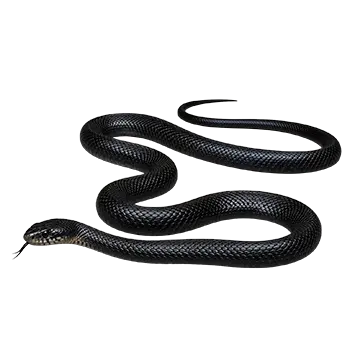
The Eastern Indigo Snake is among the most behaviorally complex and cognitively active snake species commonly kept in captivity. In the wild, Drymarchon couperi maintains home ranges that can span several hundred acres, patrolling daily through longleaf pine forests, sandhills, scrub, and wetland margins in search of prey. This species actively hunts other snakes — including venomous rattlesnakes — along with lizards, frogs, small mammals, and birds, using speed, visual acuity, and jaw strength rather than constriction. The behavioral repertoire demanded by this lifestyle far exceeds that of a sit-and-wait predator, and in captivity, this intelligence and drive must be channeled into enrichment opportunities or it manifests as restless pacing, glass-rubbing, escape attempts, and stress-related health issues.

Enrichment in reptile husbandry has historically lagged behind the enrichment programs developed for mammals and birds in zoological settings, but the science is catching up. Research into snake cognition over the past two decades has demonstrated that snakes are capable of spatial learning, habituation, exploration-driven behavior, and individual behavioral variation that correlates with environmental complexity. Eastern Indigo Snakes, with their large brain-to-body ratio relative to other colubrids and their visually oriented, diurnal hunting strategy, are particularly responsive to environmental enrichment. Keepers who invest in enrichment consistently report more active, more alert, and more confident animals.

The concept of enrichment for snakes extends well beyond the idea of a toy in the mammalian sense. Snakes do not play with objects the way a dog or parrot does. Instead, snake enrichment operates through environmental complexity, novelty, sensory stimulation, and behavioral opportunity. A branch to climb, a tunnel to explore, a novel scent introduced to the enclosure, or a rearranged furniture layout all qualify as enrichment because they engage the snake's sensory systems and decision-making processes. The goal is not to entertain the snake in a human sense but to provide a captive environment that approximates the cognitive demands of the wild habitat.

The Eastern Indigo Snake's diurnal activity pattern makes enrichment both more important and more rewarding to implement than it is for nocturnal species. Because the snake is active during the same hours the keeper is present and observing, the effects of enrichment are visible and measurable. A snake exploring a newly introduced branch, investigating a novel scent trail, or navigating a rearranged enclosure provides direct feedback to the keeper about what kinds of stimulation the individual animal responds to most strongly. This feedback loop allows enrichment programs to be refined over time, building an increasingly tailored environment for each individual snake.

Climbing and Physical Activity Structures

Physical activity structures form the backbone of any enrichment program for the Eastern Indigo Snake. While classified as primarily terrestrial, wild indigo snakes regularly traverse fallen logs, climb low shrubs and root tangles, and navigate complex three-dimensional terrain as they move through their extensive home ranges. In captivity, providing opportunities for climbing, traversing, and navigating obstacles encourages physical fitness, muscle tone, and the kind of full-body movement that prevents the lethargy and obesity associated with under-stimulated captive snakes.

Sturdy hardwood branches are the most versatile and natural climbing structures available. Grapevine branches, manzanita wood, and oak limbs provide excellent grip due to their rough bark texture and irregular shapes. Branches should be thick enough to support the snake's full weight without flexing — a branch diameter of at least one and a half to two inches is appropriate for adult indigo snakes. Securing branches with stainless steel screws through the enclosure walls or with silicone adhesive prevents shifting and collapse. Branches that rest on the substrate without being anchored will eventually be dislodged by a six-to-eight-foot snake pushing against them, creating a safety hazard.

Cork bark rounds and flats serve a dual purpose as both climbing surfaces and hiding structures. Large cork rounds positioned vertically or at an angle provide a textured climbing challenge that the snake can grip and ascend, while cork flats mounted against the back wall of the enclosure create a climbable surface with hiding pockets behind it. Cork bark is lightweight, naturally antimicrobial, and aesthetically appealing, making it one of the most popular furnishing materials in the reptile keeping hobby. It can be attached to enclosure walls with aquarium-safe silicone or mounted on stainless steel brackets.

Commercial reptile ledges and shelves designed for arboreal species can be adapted for Eastern Indigo Snake enclosures. These platforms, typically made from molded resin or suction-cup-mounted shelving, provide elevated resting surfaces that the snake can access via branches or cork bark pathways. An indigo snake that has access to multiple levels within its enclosure will use them throughout the day, basking on an elevated ledge during morning hours and retreating to a ground-level hide during the afternoon rest period. This vertical dimension adds significantly to the functional living space without increasing the enclosure's footprint.

Rotating climbing structures periodically — swapping branch positions, introducing a new piece of driftwood, or changing the angle of a cork bark panel — provides the novelty component that transforms a static environment into an enriching one. The snake must reassess its spatial map, explore new pathways, and adapt its movement patterns each time the layout changes. Monthly rearrangements are sufficient for most individuals, though some particularly active snakes benefit from more frequent changes.

Sensory Enrichment and Scent Trails

Sensory enrichment taps into the Eastern Indigo Snake's highly developed chemosensory system to provide stimulation that is invisible to the human eye but profoundly engaging for the snake. Snakes perceive their world primarily through chemoreception — the constant tongue-flicking that samples airborne and surface-deposited chemical molecules and delivers them to the vomeronasal organ in the roof of the mouth. For a species that hunts other snakes by following scent trails through complex terrain, olfactory enrichment is arguably the most biologically relevant form of stimulation available in captivity.

Scent trails can be created by dragging a thawed prey item across the substrate and furnishings before feeding, forcing the snake to track the scent to its source rather than having food presented directly in front of its face. This simple technique transforms a routine feeding event into a hunting exercise that engages the snake's tracking instincts and extends the duration of the feeding experience from seconds to minutes. The scent trail can be made progressively more complex over time — longer paths, more turns, elevated segments along branches — as the snake demonstrates proficiency.

Novel scents introduced to the enclosure between feedings provide stimulation without a food reward, encouraging exploratory behavior driven by curiosity rather than hunger. Shed skins from other snake species, a small amount of substrate from a different reptile's enclosure, or commercially available reptile-safe scent products can be placed on a piece of cork bark or a rock within the enclosure. The indigo snake will investigate the foreign scent intensively, tongue-flicking rapidly and following the scent source across every surface it contacts. These scent items should be removed after a few hours to prevent habituation and to maintain the novelty value of future introductions.

Textural variety on the substrate surface and furnishing surfaces provides tactile sensory enrichment. A mix of substrate textures — cypress mulch in one area, a patch of river stones in another, a section of leaf litter — gives the snake different sensory feedback as it moves across the enclosure floor. Rough bark, smooth river rock, and textured ceramic tiles placed in different zones create a landscape of tactile experiences that the snake encounters during its daily patrol. These textural variations also serve practical purposes, with rough surfaces aiding in shedding and smooth, warm surfaces providing comfortable basking sites.

Visual enrichment is more relevant for Eastern Indigo Snakes than for many other snake species because of their strong visual acuity and diurnal activity pattern. Positioning the enclosure in a location where the snake can observe household activity — without being subjected to constant tapping on the glass or sudden disturbances — provides a changing visual landscape that holds the animal's attention. Some keepers report that their indigo snakes track movement outside the enclosure with obvious interest, following people, pets, and even television screens with sustained attention. This visual engagement should be balanced with periods of visual privacy to prevent chronic stress from overstimulation.

Tunnels, Burrows, and Exploration Opportunities

The Eastern Indigo Snake's ecological relationship with the gopher tortoise is one of the most well-documented commensal relationships in North American herpetology. Indigo snakes rely heavily on gopher tortoise burrows for shelter, thermoregulation, brumation, and predator avoidance across much of their range. These burrows are complex, multi-chambered tunnel systems that can extend ten to fifteen feet underground, and the indigo snake navigates them with ease. Replicating the tunnel-exploration experience in captivity provides enrichment that directly mirrors one of the species' most fundamental natural behaviors.

Commercial reptile tunnels made from molded resin or flexible polymer tubing provide the simplest tunnel enrichment option. These products come in various diameters and lengths and can be connected to create branching tunnel systems within the enclosure. For adult Eastern Indigo Snakes, tunnel diameter should be sufficient for the snake to pass through without excessive compression — approximately three to four inches for most adults. Tunnels that are too tight create stress rather than enrichment, while tunnels that are excessively wide fail to provide the thigmotactic contact that makes tunnel exploration satisfying for the snake.

DIY tunnel systems built from PVC pipe offer a customizable and inexpensive alternative to commercial products. Four-inch schedule-forty PVC pipe can be cut to length, connected with elbow joints and tee fittings, and arranged into branching networks that mimic the complexity of natural burrow systems. The smooth interior of PVC allows the snake to move through easily, and the opacity of the material provides the darkness that makes the tunnel feel like a genuine retreat. Drilling ventilation holes along the upper surface of horizontal sections prevents moisture buildup and ensures adequate airflow within the tunnel. The system can be partially buried in substrate to enhance the naturalistic appearance.

Substrate depth itself can serve as a burrowing enrichment medium when the enclosure design allows it. A substrate bed of five to six inches — deeper than the standard three to four inches used in most setups — gives the snake the ability to push beneath the surface and create its own tunnels and chambers. This self-directed burrowing behavior is highly enriching because the snake controls the process entirely, excavating passages according to its own preferences and modifying them over time. Deep substrate beds require more frequent spot-cleaning and complete changes, but the behavioral benefits for the snake are substantial.

Hide boxes with multiple entrances add an element of choice and complexity to the snake's shelter options. A hide with a single entrance provides security but limited behavioral engagement — the snake enters, coils, and remains until it is ready to emerge. A hide with two or three entrance points creates decision-making opportunities and allows the snake to enter from one direction and exit from another, which more closely approximates the through-traffic movement patterns of natural burrow systems. Cork bark arrangements with multiple openings, stacked rock formations with passage gaps, and commercial multi-entrance hides all serve this purpose.

Handling and Supervised Exploration

Regular handling is itself a form of enrichment for captive-bred Eastern Indigo Snakes, and this species is exceptionally well-suited to it. Captive-bred indigo snakes are generally calm, curious, and tolerant of human interaction from a young age, and many individuals actively move toward the keeper when the enclosure is opened, demonstrating a comfort with human contact that is unusual among snake species. Handling sessions provide the snake with novel sensory input — different temperatures, textures, scents, and visual environments — that its enclosure cannot replicate, and they contribute to the socialization that makes the animal manageable for veterinary examination and routine husbandry tasks.

Handling should be approached with respect for the animal's size, strength, and behavioral signals. An adult Eastern Indigo Snake in the seven-to-eight-foot range is a powerful animal that requires confident, two-handed support along its body. The snake should be allowed to move through the keeper's hands at its own pace rather than being restrained or gripped tightly, as forced restraint triggers defensive behavior even in otherwise docile individuals. Supporting the snake's weight along its full length, allowing it to anchor on the keeper's arms and torso, and moving slowly and predictably all contribute to a calm, productive handling session.

Supervised out-of-enclosure exploration in a snake-proofed room provides a level of environmental novelty that no in-enclosure enrichment can match. A room cleared of hazards — no accessible gaps behind appliances, no open toilets, no small spaces the snake could wedge into — becomes an exploration arena where the snake can investigate furniture, navigate around objects, and experience a dramatically expanded sensory landscape. The keeper must remain present and attentive throughout the exploration session, as Eastern Indigo Snakes are fast-moving and determined explorers that can disappear into surprising spaces with startling speed.

The timing and frequency of handling and exploration sessions should be calibrated to the individual animal's tolerance and the keeper's schedule. Most healthy, well-adjusted Eastern Indigo Snakes tolerate handling sessions of fifteen to thirty minutes several times per week without signs of stress. Handling should be avoided for forty-eight to seventy-two hours after feeding to prevent regurgitation, and it should be suspended during the pre-shed period when the snake's vision is obscured by the opaque spectacle layer and it may be more defensive than usual. Signs that a handling session should end include sustained attempts to retreat, rapid tail-vibrating, musking, and any defensive posturing.

Outdoor excursions in warm weather — supervised, secured, and limited to private, pesticide-free areas — represent the ultimate enrichment experience for captive Eastern Indigo Snakes. Exposure to natural sunlight, natural substrates, outdoor scents, and the sensory richness of an uncontrolled environment provides stimulation that no indoor setup can replicate. The snake must be continuously attended during outdoor time, and the ambient temperature must be within the species' comfortable range. A secure outdoor enclosure or pen with a mesh top and buried edges eliminates the risk of escape while allowing the snake to explore a patch of natural ground.

Enrichment Safety and Best Practices

Every enrichment item introduced to an Eastern Indigo Snake enclosure must be evaluated for safety before the snake has access to it. The fundamental principle is that nothing in the enclosure should have sharp edges, small removable parts, toxic coatings, or gaps that could trap or injure the snake. Natural materials such as branches, rocks, and cork bark should be inspected for splinters, loose fragments, and insect infestations before placement. Commercially manufactured enrichment products should be made from non-toxic, reptile-safe materials and should be free of small components that could be ingested.

Chemical safety is a critical consideration when sourcing enrichment materials. Branches and rocks collected from outdoors must come from areas that have not been treated with pesticides, herbicides, or fertilizers. Even after baking to kill parasites, chemical residues can persist on porous surfaces and leach into the enclosure environment over time. When in doubt about the chemical history of a natural material, purchasing from a reptile supply retailer that sources specifically for reptile enclosures is the safer option. Similarly, any paint, stain, or sealant used on custom enclosure furnishings must be fully cured and verified as non-toxic before the snake comes into contact with it.

Enrichment should be introduced gradually, particularly for newly acquired animals or individuals with a history of stress-related behavior. Flooding the enclosure with novel objects, scents, and layout changes simultaneously can overwhelm the snake and produce the opposite of the intended effect — increased stress, hiding, and feeding refusal rather than confident exploration. A single new element introduced every few days allows the snake to investigate each addition on its own terms and build positive associations with novelty. As the snake demonstrates comfort with the enrichment process, the pace and complexity of introductions can be increased.

Maintenance and hygiene of enrichment items must be integrated into the regular enclosure cleaning schedule. Porous materials like cork bark and natural wood should be inspected for mold growth, bacterial biofilm, and structural degradation at each substrate change. Items that cannot be cleaned effectively — those with deep crevices that harbor organic debris — should be replaced rather than returned to the enclosure. Non-porous items such as PVC tunnels and ceramic hides can be soaked in a reptile-safe disinfectant solution, rinsed thoroughly, and returned to service. Maintaining a rotation of clean enrichment items allows continuous enrichment provision even while some items are being cleaned or dried.

Documenting the snake's responses to different enrichment types builds a valuable behavioral profile over time. Noting which scent types provoke the most intense investigation, which climbing structures see the most use, and how the snake responds to enclosure rearrangements helps the keeper prioritize the enrichment strategies that are most effective for that individual. Some indigo snakes are intensely interested in scent enrichment but indifferent to climbing structures, while others are avid climbers that show little response to novel scents. Tailoring the enrichment program to the individual, rather than applying a one-size-fits-all approach, maximizes the behavioral benefits for the snake and the observational enjoyment for the keeper.

Always consult a qualified professional before making any health-related decisions. This content is provided for informational reference only and should not replace professional guidance specific to your animal.