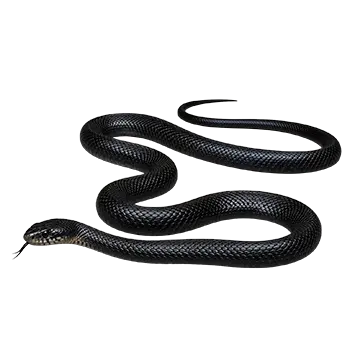

The Eastern Indigo Snake occupies a dietary niche unlike that of most commonly kept colubrids. In the wild, Drymarchon couperi is a powerful, active predator whose diet is dominated by other snakes — including venomous species such as rattlesnakes, cottonmouths, and coral snakes — along with lizards, frogs, turtles, turtle eggs, small mammals, and birds. This ophiophagous tendency sets the indigo snake apart from the typical rodent-focused diet that most captive snake keepers are accustomed to managing. In captivity, replicating the exact wild diet is impractical, but understanding its breadth is essential for building a feeding program that sustains the animal's vigorous metabolism and supports its characteristically active, diurnal lifestyle.
Metabolic demand in the Eastern Indigo Snake is notably higher than in comparably sized pythons or boas. Indigo snakes are not ambush predators that eat large meals and then rest for weeks. They are active foragers that patrol large home ranges daily, and their digestive physiology reflects this lifestyle: meals are processed quickly, and the snake is ready to feed again within days rather than weeks. This means that feeding frequency must be higher than what keepers of similarly sized constrictors might expect, and individual meal sizes should be moderate rather than massive. Offering appropriately sized prey every five to seven days for adults, and every four to five days for growing juveniles, supports healthy weight and energy levels without promoting obesity.
Protein quality is paramount for this species. Because wild indigo snakes consume a high proportion of ectothermic prey — other reptiles and amphibians — their natural diet is leaner than that of a snake subsisting primarily on mammals. Captive diets built exclusively around fatty adult mice or rats can lead to excessive fat deposition, particularly around the liver and internal organs. Balancing the diet with leaner prey options, or managing rodent prey size so that fat content remains moderate, helps maintain the lean, muscular body condition that characterizes a healthy indigo snake.
Hydration plays a critical role in the Eastern Indigo Snake's nutritional health. In their native longleaf pine and scrub habitats across the southeastern United States, these snakes have regular access to standing water in gopher tortoise burrows, wetland margins, and seasonal pools. In captivity, a large, clean water bowl that the snake can drink from freely and soak in when desired supports proper digestion, kidney function, and skin health. Dehydration in indigo snakes manifests as wrinkled skin between scales, retained sheds, and sluggish feeding response, and it should be addressed immediately by ensuring water availability and reviewing ambient humidity.