
Enclosure Size and Design

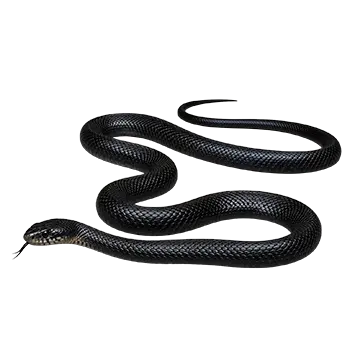
The Eastern Indigo Snake is the longest native snake species in North America, and its housing requirements reflect both its physical dimensions and its unusually active, diurnal behavioral profile. Unlike many colubrid and boid species that spend the majority of their time coiled in a hide, indigo snakes are persistent explorers that patrol their enclosure throughout the day, investigating every surface, probing every seam, and testing every door. An enclosure that is adequate in square footage but poorly secured will eventually be breached by this intelligent and mechanically adept species. Security and space are the two non-negotiable pillars of indigo snake housing.

Minimum enclosure dimensions for an adult Eastern Indigo Snake should provide a footprint of at least six feet long by two and a half feet deep, with a height of at least two feet. These are minimums — larger enclosures are always better for a species that is this active. A snake in the seven-to-eight-foot range benefits substantially from an enclosure that is eight feet long by three feet deep, providing genuine room to stretch, thermoregulate, and engage in naturalistic movement patterns. Height beyond two feet is appreciated, as indigo snakes will utilize elevated structures and climbing opportunities, though they are primarily terrestrial.

Commercially available reptile enclosures in the sizes required for adult indigo snakes are limited. PVC and HDPE enclosures from specialty reptile furniture manufacturers are the most popular choice among serious keepers. These enclosures offer excellent insulation, humidity retention, and durability, and they can be ordered in custom dimensions. Glass terrariums with screen tops are generally unsuitable for adult indigo snakes because they lose humidity and heat too rapidly, the screen tops are vulnerable to the snake's persistent pressure, and the open visibility from all sides can stress a newly acquired animal.

Custom-built enclosures represent the gold standard for housing adult Eastern Indigo Snakes. A well-designed custom build allows the keeper to specify exact dimensions, door placement, ventilation configuration, lighting integration, and substrate depth. Materials such as sealed plywood with a waterproof coating, PVC panel systems, or even modified furniture pieces can be adapted into functional, attractive enclosures. The interior surfaces must be smooth, non-absorbent, and free of gaps or crevices where the snake could wedge itself or where moisture could promote mold growth. All doors and access points must feature secure latches — sliding glass doors should have keyed locks, and any ventilation openings must be covered with hardware cloth rather than standard window screen.

Substrate Options

Substrate selection for the Eastern Indigo Snake balances moisture retention, ease of maintenance, naturalistic appearance, and respiratory safety. The ideal substrate maintains moderate ambient humidity without becoming waterlogged, resists mold growth, and allows the snake to burrow or push through it as part of its natural exploratory behavior. No single substrate is perfect for every keeper or every enclosure design, but several options have proven effective across the indigo snake keeping community.

Cypress mulch is widely regarded as the best single-substrate option for Eastern Indigo Snakes. It holds moisture well without becoming soggy, resists mold and bacterial growth due to its natural antimicrobial properties, and provides a naturalistic forest-floor appearance that complements the snake's dark iridescent coloration. A substrate depth of three to four inches allows the snake to push beneath the surface and create pockets of microhabitat with slightly elevated humidity, which supports skin health and facilitates clean shedding. Cypress mulch is readily available in bulk from garden supply outlets and reptile specialty retailers.

Coconut coir — available as compressed bricks that expand when hydrated — is another excellent moisture-retaining substrate. It holds humidity even more effectively than cypress mulch and is particularly useful in drier climates or in enclosures where maintaining adequate humidity is a challenge. However, coir tends to become dusty when it dries out completely and can compact over time, so it benefits from periodic fluffing and replacement. Mixing coconut coir with cypress mulch in a roughly equal ratio produces a substrate blend that combines the moisture-holding capacity of the coir with the structural stability and mold resistance of the cypress.

Substrates to avoid include cedar and pine shavings, which release volatile phenolic compounds that are toxic to reptiles and can cause respiratory distress, neurological damage, and liver failure over time. Sand is inappropriate for Eastern Indigo Snakes — it provides no humidity retention, poses an impaction risk if ingested with prey, and does not reflect the species' natural habitat. Newspaper and paper towels, while acceptable for quarantine enclosures or temporary housing during enclosure maintenance, do not support the humidity levels or behavioral needs of the species for long-term housing. Reptile carpet harbors bacteria beneath the surface, is difficult to clean thoroughly, and offers no burrowing opportunity.

Spot-cleaning the substrate daily — removing feces, urates, and any soiled patches — extends the useful life of a substrate bed considerably. A full substrate change every four to six weeks, depending on enclosure size and the snake's waste output, keeps the environment hygienic and fresh. During substrate changes, the enclosure interior should be wiped down with a reptile-safe disinfectant, rinsed thoroughly, and allowed to dry before fresh substrate is added. This maintenance schedule prevents bacterial and fungal buildup that could compromise the snake's respiratory or dermal health.

Heating and Temperature Gradients

Thermoregulation is a fundamental biological need for all ectothermic reptiles, and the Eastern Indigo Snake requires a well-defined thermal gradient across its enclosure to regulate its metabolism, digestion, immune function, and activity level. In the wild, Drymarchon couperi utilizes gopher tortoise burrows as thermal refugia, retreating underground during temperature extremes and basking in sun-dappled clearings to elevate body temperature during cooler periods. The captive enclosure must replicate this gradient so the snake can shuttle between warm and cool zones according to its physiological needs.

The warm end of the enclosure should maintain an ambient air temperature of eighty-five to eighty-eight degrees Fahrenheit, with a basking surface that reaches ninety to ninety-two degrees. The cool end should remain in the mid-to-upper seventies, providing a retreat where the snake can lower its body temperature when it has absorbed sufficient heat. This gradient of roughly ten to fifteen degrees across the length of the enclosure allows the snake to fine-tune its body temperature throughout the day, moving between zones as digestive demand, activity level, and circadian rhythm dictate.

Radiant heat panels mounted to the ceiling of the enclosure are the preferred primary heat source for PVC and custom-built enclosures. These panels distribute even, gentle heat across a defined area without producing the intense point-source temperatures of heat lamps, reducing the risk of thermal burns. For enclosures with sufficient height and ventilation, ceramic heat emitters mounted in dome fixtures provide effective overhead heating without emitting visible light that would disrupt the natural photoperiod during nighttime hours. Under-tank heating pads are a secondary option but must be used with a thermostat and should never be the sole heat source, as they heat only the substrate surface and do not adequately warm the ambient air.

Every heating device in an Eastern Indigo Snake enclosure must be connected to a proportional thermostat. Unregulated heat sources are the leading cause of thermal burns and enclosure overheating in captive reptiles. A proportional thermostat — as opposed to a simple on-off thermostat — modulates power to the heating element continuously, maintaining a stable target temperature without the oscillating swings that on-off units produce. The thermostat probe should be positioned at the basking surface or at the height where the snake rests in the warm zone, secured with a probe guard to prevent the snake from dislodging it. Nighttime temperatures can drop to the low-to-mid seventies across the enclosure without concern, as this mimics the natural diurnal temperature cycle.

Lighting and Photoperiod

The Eastern Indigo Snake is a diurnal species — active during daylight hours and sleeping at night — and its lighting needs differ meaningfully from those of nocturnal colubrids and boids. Providing a consistent photoperiod with appropriate light intensity supports natural circadian rhythms, encourages active daytime behavior, and contributes to overall physiological health. A twelve-hour light and twelve-hour dark cycle is the standard recommendation for most of the year, with slight seasonal adjustments if the keeper wishes to simulate natural photoperiod variation for breeding conditioning.

Full-spectrum LED lighting that replicates the color temperature of natural daylight — typically in the range of five thousand to sixty-five hundred Kelvin — is the most energy-efficient and practical option for illuminating an indigo snake enclosure. These fixtures produce minimal heat, last for years, and provide the visual brightness that a diurnal species expects during its active hours. The lights should illuminate the entire enclosure rather than just one area, as the snake will move throughout the space during the day and benefits from consistent light exposure across its range of movement.

UVB lighting, while not considered strictly essential for snake species in the way it is for many lizards, offers documented benefits for diurnal species like the Eastern Indigo Snake. Low-level UVB exposure — a five to seven percent output tube or compact fluorescent positioned to deliver a Ferguson Zone two to three UVB index at the snake's basking height — supports endogenous vitamin D3 synthesis and has been associated with improved immune function, better appetite, and more vibrant coloration in several Drymarchon studies. If UVB is provided, the lamp must be positioned inside the enclosure or directly against an unobstructed mesh panel, as glass and plastic filter out UVB wavelengths. UVB bulbs should be replaced according to the manufacturer's recommended schedule, typically every six to twelve months, because UV output degrades over time even when the bulb continues to produce visible light.

All lighting should be controlled by a timer to maintain a consistent and reliable photoperiod. Manual switching introduces the risk of forgotten lights — either leaving the enclosure illuminated overnight or dark during the day — both of which disrupt the snake's circadian rhythm. A simple mechanical or digital timer connected to the light fixtures automates the cycle and ensures reliability. During nighttime hours, the enclosure should be completely dark. Red and blue night-viewing bulbs, once popular in reptile keeping, have been shown to disrupt sleep and stress nocturnal and diurnal species alike and should not be used.

Humidity and Ventilation

Maintaining appropriate humidity levels is one of the more challenging aspects of Eastern Indigo Snake husbandry, particularly for keepers in arid climates or those housing their animals in screen-topped glass enclosures. The target humidity range for this species is fifty to seventy percent, with brief spikes to eighty percent being acceptable and even beneficial during shedding periods. Humidity below forty percent on a sustained basis leads to dehydration, retained sheds, and respiratory irritation, while humidity consistently above eighty percent promotes bacterial and fungal proliferation on the substrate and the snake's skin.

The enclosure's construction plays the largest role in humidity management. PVC, HDPE, and sealed-wood enclosures inherently retain moisture far more effectively than glass tanks with screen lids. If a glass enclosure must be used, covering seventy-five to eighty-five percent of the screen top with a non-porous material — acrylic panels, aluminum foil, or damp towels as a temporary measure — dramatically reduces moisture loss through evaporation. Purpose-built PVC enclosures with restricted ventilation ports offer the best combination of humidity retention and air circulation, and many manufacturers offer configurable ventilation options that allow the keeper to fine-tune airflow.

Active humidity management tools include large water bowls, misting systems, and humidity boxes. A large water bowl placed on the warm side of the enclosure contributes to ambient humidity through passive evaporation. Automatic misting systems with adjustable timers and nozzle placement can deliver fine water droplets on a set schedule, raising humidity during critical periods without manual intervention. A humidity box — a covered container with a single entrance hole, filled with damp sphagnum moss — provides a microhabitat where the snake can retreat during shedding to ensure a clean, complete shed. The moss should be checked regularly and replaced when it begins to break down or develop an off odor.

Ventilation must be balanced against humidity retention. A completely sealed enclosure would trap moisture effectively but would also accumulate ammonia from waste, carbon dioxide, and stale air, creating an unhealthy environment. Cross-ventilation — intake ports positioned low on one side and exhaust ports positioned high on the opposite side — allows natural convective airflow that cycles fresh air through the enclosure without creating drafts or stripping humidity. The total ventilation area should be modest relative to the enclosure's volume; oversized vents, particularly on screen-topped tanks, are the primary reason keepers struggle with low humidity.

A reliable hygrometer — ideally a digital unit with a remote probe — should be positioned in the center of the enclosure at the snake's resting height to provide an accurate reading of the conditions the animal actually experiences. Analog dial hygrometers are notoriously inaccurate and should be replaced with digital alternatives. Monitoring humidity at both the warm and cool ends of the enclosure reveals the gradient that exists across the space, as the warm end will naturally have lower humidity due to evaporation rates, while the cool end retains more moisture. This gradient gives the snake behavioral options for managing its own hydration.

Hides, Furnishings, and Interior Layout

The interior layout of an Eastern Indigo Snake enclosure should provide functional complexity without creating maintenance headaches or hygiene risks. Hides, climbing structures, visual barriers, and a water feature are the core furnishing categories, and each serves a specific behavioral or physiological purpose. A bare enclosure with only a water bowl and a heat source may keep the snake alive but fails to support the range of natural behaviors that contribute to physical fitness, mental stimulation, and stress reduction.

At minimum, two hides should be provided — one in the warm zone and one in the cool zone — so the snake can thermoregulate without sacrificing its sense of security. Hides should be large enough for the snake to coil inside comfortably but snug enough to provide contact on multiple sides, as snakes derive security from thigmotaxis — the sensation of body contact with surrounding surfaces. Commercial reptile hides made from molded resin or plastic are durable, easy to clean, and available in sizes appropriate for large colubrids. Cork bark rounds and half-rounds are a popular natural alternative that look attractive and provide textured surfaces the snake can use during shedding.

Climbing structures are more relevant for Eastern Indigo Snakes than for many terrestrial colubrid species. While primarily ground-dwelling, indigo snakes in the wild regularly climb low vegetation, fallen trees, and root tangles. Providing sturdy branches, cork bark panels mounted at angles, or commercial climbing platforms encourages physical activity and allows the snake to utilize vertical space. All climbing structures must be securely anchored to prevent collapse — a branch that falls on a six-foot snake can cause genuine injury. Branches collected from outdoors should be baked at two hundred degrees Fahrenheit for thirty to forty-five minutes to kill parasites and bacteria before introduction to the enclosure.

The water feature in an indigo snake enclosure serves as both a hydration station and a soaking pool. A heavy ceramic crock or a commercial reptile water basin large enough for the snake to submerge at least half its body provides opportunities for voluntary soaking, which supports hydration, skin health, and shedding. The water should be changed daily or whenever the snake defecates or soaks in it, as snakes commonly defecate in their water bowls. Elevating the bowl slightly on a flat platform or tile prevents substrate from being kicked into the water and keeps the surrounding substrate drier.

Visual barriers — partial walls, dense artificial foliage, or strategically placed cork bark — break up the interior sight lines of the enclosure and reduce the open, exposed feeling that can stress newly acquired snakes. An enclosure that looks open and spacious to the keeper looks exposed and unsafe to a prey animal that is also, in wild contexts, a potential prey item for raptors and large mammals. As the snake acclimates to its enclosure and the keeper's routine, visual barriers become less critical for stress management but continue to add enrichment value by creating distinct microhabitats within the larger space.

Always consult a qualified professional before making any health-related decisions. This content is provided for informational reference only and should not replace professional guidance specific to your animal.