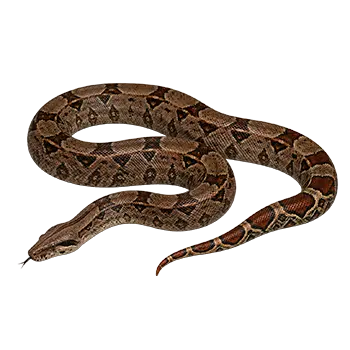

Understanding Enrichment for Boas

The concept of environmental enrichment for snakes has historically received far less attention than enrichment for mammals, birds, and even other reptiles, largely because of outdated assumptions that snakes are simple, stimulus-indifferent animals whose needs are fully met by heat, water, and food. Modern herpetological research and decades of observational experience from experienced keepers have thoroughly disproven this view. Colombian Red-Tail Boas are cognitively capable animals that explore their environment, recognize spatial landmarks within their enclosure, exhibit preferences for specific resting sites and pathways, and show measurable behavioral changes in response to environmental novelty. Enrichment is not a luxury — it is a component of responsible husbandry.

The goal of enrichment for a captive Colombian Red-Tail Boa is to provide opportunities for the snake to express its natural behavioral repertoire: climbing, exploring, investigating novel scents and textures, choosing between microclimates, and using its body in ways that promote physical fitness. In the wild, Boa constrictor imperator navigates complex three-dimensional habitats — forest edges, semi-arid scrublands, agricultural margins, and riparian corridors — where it must solve spatial problems, assess prey opportunities, avoid predators, and thermoregulate using dozens of microhabitat options. A bare enclosure with a single hide and a water bowl reduces this rich behavioral landscape to a monotonous cycle of eating and resting.

Effective enrichment operates on two timescales: structural enrichment that forms the permanent architecture of the habitat, and rotational enrichment that introduces periodic novelty to prevent habituation. Structural elements include branches, ledges, hides, and textured surfaces that remain in the enclosure long-term and provide the baseline environmental complexity the snake interacts with daily. Rotational elements include rearranging furniture, introducing new scent stimuli, varying the positions of hides, and occasionally adding temporary objects that the snake can investigate. Both forms of enrichment contribute to a captive environment that keeps the snake physically active and behaviorally engaged.

The enrichment needs of a Colombian Red-Tail Boa shift across its life stages. Juvenile boas are more arboreal, more exploratory, and more responsive to novel stimuli than adults, and they benefit from enclosures that emphasize vertical space, multiple climbing routes, and frequent habitat rearrangement. Adult boas become more terrestrial and sedentary but still benefit from environmental complexity — they simply interact with it at a slower pace. Enrichment for adult boas should prioritize spatial choice, comfortable resting platforms at multiple heights, and opportunities for periodic exploration rather than high-energy activity.

Climbing Structures

Climbing structures are the cornerstone of physical enrichment for Colombian Red-Tail Boas, particularly for juveniles and sub-adults that retain strong arboreal tendencies from their wild behavioral heritage. In their native range, young Boa constrictor imperator spend a significant portion of their time off the ground — draped over branches, coiled in tree hollows, and navigating vine tangles as they hunt arboreal prey such as bats and birds. Providing captive boas with sturdy climbing opportunities allows them to express these innate behaviors and promotes muscular development throughout the body rather than only along the ventral surface.

Natural hardwood branches are the most popular and effective climbing structures for boa enclosures. Manzanita, grapevine, and driftwood are favored because they are dense, strong, resistant to rot, and available in a range of diameters and shapes. The branch diameter should be large enough that the snake can wrap its body around the branch with a secure grip — roughly equal to or slightly larger than the snake's body diameter at mid-body. Branches that are too thin flex under the snake's weight and feel unstable, discouraging use. Branches that are too thick for the snake to grip provide a resting surface but not a true climbing experience.

Cork bark tubes and flats offer a unique combination of climbing surface and hiding opportunity. Cork bark is lightweight, naturally rot-resistant, and textured in a way that provides excellent traction for a snake's ventral scales. Large cork rounds can be positioned vertically against the enclosure wall to create climbing tunnels, or horizontally as elevated resting platforms. Cork flats mounted to the back wall of the enclosure add vertical dimension without occupying floor space and encourage the snake to explore the full three-dimensional volume of its habitat.

Commercial reptile ledges and platforms designed for arboreal species are increasingly available in sizes and weight ratings appropriate for Colombian Red-Tail Boas. These products, typically made from resin-coated foam or textured plastic, mount to the enclosure wall with suction cups, magnets, or screws, providing elevated basking and resting surfaces at fixed heights. When selecting commercial ledges, keepers should verify the weight rating against the snake's current and projected adult weight — a product designed for a crested gecko will not support a fifteen-pound boa. The most practical designs are those that mount with screws through the enclosure wall, as suction cups and magnets can fail under load, dropping the snake and potentially injuring it.

Hiding and Burrowing Enrichment

While hides are typically discussed in the context of basic enclosure setup, their enrichment value extends well beyond simple stress reduction. The number, variety, and placement of hiding opportunities directly influence how a Colombian Red-Tail Boa interacts with its environment. A snake with only two identical hides — one warm, one cool — has a binary choice that it makes once and then remains sedentary. A snake with multiple hides of different sizes, shapes, materials, and locations has a richer set of options that it evaluates and selects among based on its current thermoregulatory needs, hunger state, shedding status, and perceived security level.

Hide variety introduces decision-making into the snake's daily routine. A half-log hide feels different from a rock cave which feels different from a cork bark arch. Each offers a distinct tactile experience, a different level of visual concealment, and a unique relationship to the surrounding temperature and humidity microclimate. Rotating hides every few weeks — swapping a plastic hide box for a ceramic cave, or replacing a commercial rock hide with a section of cork tube — introduces controlled novelty that stimulates investigatory behavior without overwhelming the animal.

Burrowing enrichment taps into a behavior that Colombian Red-Tail Boas engage in readily when given the opportunity. In the wild, these snakes exploit leaf litter, loose soil, and ground cover to partially conceal themselves while remaining positioned for ambush predation. A deep substrate layer of four to six inches — coconut coir, cypress mulch, or a mix of both — allows the snake to push beneath the surface and create its own tunnels and resting hollows. The act of burrowing is itself enriching, providing physical resistance that exercises the snake's musculature and creating a microenvironment where the snake controls its own humidity and temperature exposure.

Layered substrate enrichment combines burrowing opportunity with textural variety. Placing a base layer of coconut coir topped with dried leaf litter — oak, magnolia, or other non-toxic broadleaf species — creates a multi-textured substrate environment that more closely replicates a forest floor. The leaf layer rustles as the snake moves through it, providing auditory and tactile feedback, and it breaks down gradually, contributing to a naturalistic humidity cycle within the enclosure. This approach requires more frequent substrate maintenance than a single-material setup but rewards the keeper with a snake that exhibits a broader range of natural behaviors.

Water Features and Soaking Opportunities

Water is both a physiological necessity and an enrichment resource for Colombian Red-Tail Boas. Beyond its role in hydration and humidity, water offers a tactile and thermal experience that many boas seek out voluntarily, particularly during shedding cycles and warm weather. Providing a water feature that goes beyond the basic bowl — one that the snake can partially or fully submerge in — creates an additional behavioral option that enhances the complexity of the captive environment.

A large soaking dish that allows the boa to coil inside with most of its body submerged serves as the simplest form of water enrichment. Heavy-duty plastic or ceramic tubs in the five-to-ten-gallon range work well for adult Colombian Red-Tail Boas. The dish should be positioned on the cooler side of the enclosure to prevent the water from warming to ambient hot-side temperatures, which would eliminate its thermoregulatory value. Some keepers position a second, smaller water bowl on the warm side for drinking convenience, while reserving the larger soaking dish for the cool side. This dual-bowl arrangement gives the snake access to water at two different temperatures and locations, adding another dimension of choice to its environment.

Periodic supervised soaking outside the enclosure can serve as a form of enrichment for boas that tolerate handling well. A bathtub, large storage container, or dedicated soaking tub filled with two to three inches of lukewarm water — roughly eighty to eighty-five degrees Fahrenheit — allows the snake to swim, explore a novel environment, and experience different textures and spatial dimensions than those available in its enclosure. These sessions should be closely supervised, limited to fifteen to thirty minutes, and conducted only with snakes that are not in a feeding or shedding cycle. The goal is gentle environmental novelty, not forced exercise or prolonged exposure to unfamiliar surroundings.

Water bowl positioning within the enclosure can be rotated periodically as a form of low-effort enrichment. Moving the water bowl to a different location every few weeks forces the snake to rediscover the resource, stimulating exploratory behavior and spatial mapping. This technique is subtle but effective, particularly for adult boas that have settled into highly predictable movement patterns within a long-established habitat.

Sensory Stimulation

Colombian Red-Tail Boas perceive their world through a sophisticated set of sensory systems that differ fundamentally from those of mammals. The Jacobson's organ (vomeronasal organ) is the primary chemosensory apparatus, processing airborne chemical information collected by the forked tongue. Heat-sensitive labial pits along the upper lip detect infrared radiation from warm-bodied prey. Tactile input from the entire body surface, transmitted through the belly scales during locomotion, provides spatial and textural information about the substrate and surroundings. Effective enrichment engages these sensory channels in ways that stimulate investigatory behavior and provide the snake with novel information to process.

Scent enrichment is one of the most powerful and accessible forms of sensory stimulation for a Colombian Red-Tail Boa. Introducing novel scent items into the enclosure — a shed skin from another snake species, a paper towel rubbed on a different substrate, a small cloth scented with the bedding of a rodent or bird — triggers tongue-flicking, increased movement, and sustained investigatory behavior as the snake processes the unfamiliar chemical signature. The key is novelty: familiar scents produce minimal response, while new and unexpected ones provoke active investigation. Scent items should be non-toxic, free of chemical residues, and removed after twenty-four to forty-eight hours to prevent habituation.

Textural variety engages the snake's extensive tactile sensory system. Different substrates, branch surfaces, rock textures, and hide materials provide distinct physical sensations as the snake moves over and through them. Introducing a section of smooth river rock in a predominantly bark-substrate enclosure, or placing a rough-textured ceramic tile in a flat area of the warm zone, creates a tactile contrast that the snake can choose to explore or avoid. These additions should be cleaned and sanitized before introduction and positioned so they do not create gaps or hazards where the snake could become trapped.

Controlled visual enrichment is less well understood in snakes than in other taxa, but Colombian Red-Tail Boas do respond to movement and contrast in their visual field. Positioning the enclosure in a room where the snake can observe household activity at a distance — without being exposed to vibrations, loud noises, or direct approach by unfamiliar people or animals — provides a low-level visual stimulus that many boas appear to monitor with interest. Conversely, an enclosure placed in a dark, unused room deprives the snake of visual input entirely. The balance point is a location with moderate ambient activity that the snake can observe from the security of its enclosure without feeling threatened.

Environmental Rotation and Novelty

Habituation — the gradual reduction in behavioral response to a stimulus that has become familiar — is the primary challenge in any long-term enrichment program. A Colombian Red-Tail Boa that has occupied the same enclosure with the same furnishings for months or years has mapped every surface, scented every object, and established fixed movement patterns that require minimal cognitive engagement. Environmental rotation combats habituation by periodically altering the enclosure's internal landscape, forcing the snake to re-explore and re-map its habitat.

The simplest form of rotation is rearranging existing enclosure furniture. Moving the warm-side hide to a different position, rotating a branch to a new angle, or shifting the water bowl to the opposite end of the enclosure takes five minutes and produces a noticeable increase in exploratory behavior over the following twenty-four to seventy-two hours. The snake will tongue-flick more frequently, move through areas it previously bypassed, and reassess its preferred resting sites. This rearrangement should be done during routine cleaning when the snake has already been removed from the enclosure, minimizing additional disruption.

Introducing entirely new objects on a periodic basis — every two to four weeks — provides a stronger novelty stimulus than rearranging familiar items. A new piece of cork bark, a different style of hide, a section of PVC pipe, or a textured rock that the snake has never encountered before all qualify as novel objects. The snake's response is typically heightened tongue-flicking and cautious approach followed by extended investigation. Objects should be thoroughly cleaned and disinfected before introduction, and any item that shows signs of degradation, sharp edges, or chemical off-gassing should be discarded immediately.

Seasonal environmental shifts, while more demanding to implement, represent the most sophisticated form of rotational enrichment. Adjusting the photoperiod, slightly modifying temperature ranges, and changing substrate composition between summer and winter seasons creates a macro-level cycle that mirrors the natural environmental variation Boa constrictor imperator would experience in the wild. These changes need not be dramatic — a two-degree temperature reduction and a one-hour photoperiod shortening during winter months is sufficient — but they provide the snake's endocrine and behavioral systems with temporal cues that support natural cycling of activity levels, appetite, and in breeding animals, reproductive readiness.

Record-keeping enhances the effectiveness of any rotation program. A simple log noting which items were added or rearranged, when the change occurred, and what behavioral response was observed allows the keeper to identify which enrichment strategies produce the strongest engagement for their individual snake. Colombian Red-Tail Boas, like all animals, have individual preferences — one snake may respond enthusiastically to scent enrichment but ignore new climbing structures, while another may be the opposite. Tracking these patterns over time enables the keeper to tailor their enrichment program to the specific animal.

Safety Considerations for Enrichment

Every enrichment item introduced to a Colombian Red-Tail Boa enclosure must be evaluated for safety before the snake encounters it. The snake's method of interacting with its environment — full-body contact, tongue investigation, constriction around objects for stability while climbing — means that hazards invisible to a casual observer can cause serious injury. A disciplined approach to safety assessment protects the snake and gives the keeper confidence that enrichment additions are beneficial rather than risky.

Chemical safety is the first consideration. Any natural wood, bark, or plant material collected from outdoor sources must be free of pesticide and herbicide exposure, and it should be baked at two hundred degrees Fahrenheit for one to two hours or soaked in a dilute bleach solution and thoroughly rinsed to eliminate parasites, mold spores, and bacteria. Commercial reptile products should be free of paint, dye, or coating that could flake off and be ingested. Scent enrichment items must not carry chemical fragrances, essential oils, or cleaning product residues, all of which can cause respiratory distress or chemical burns to the snake's oral mucosa.

Physical hazards include sharp edges, entanglement risks, pinch points, and unstable structures. Branches should be sanded at cut ends to remove splinters. Wire, string, and thin flexible materials should never be used in or near the enclosure because a snake that pushes through a loop of string or wire can become tightly constricted in a way that cuts off circulation or damages scales. Enclosure furniture must be positioned so that it cannot shift, fall, or pin the snake — a heavy rock balanced on a branch, for example, is a disaster waiting for gravity to intervene.

Thermal hazards arise when enrichment items are positioned in proximity to heating devices. A branch placed directly above a ceramic heat emitter or too close to a radiant heat panel creates a basking perch where surface temperatures may far exceed the safe range. The snake, drawn to the elevated position by its climbing instinct and to the warmth by its thermoregulatory drive, may sustain thermal burns before recognizing the danger. All climbing structures and elevated perches should be positioned with adequate clearance from heat sources, and surface temperatures on any resting area should be verified with an infrared thermometer after installation.

Hygiene is the ongoing safety consideration that applies to every enrichment item throughout its lifespan in the enclosure. Porous natural materials like cork bark and wood absorb moisture, bacteria, and waste products over time, and they must be inspected regularly for signs of mold, bacterial slime, or structural degradation. Items that cannot be effectively cleaned and dried should be replaced rather than returned to the enclosure. Establishing a rotation schedule that retires aging natural materials and introduces fresh replacements ensures that the enrichment program remains both stimulating and sanitary.

Always consult a qualified professional before making any health-related decisions. This content is provided for informational reference only and should not replace professional guidance specific to your animal.