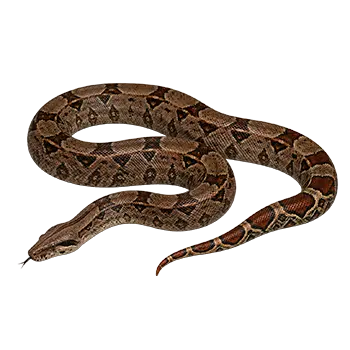

The Colombian Red-Tail Boa is a medium-to-large constrictor whose dietary requirements in captivity are straightforward compared to many exotic reptiles, yet demand careful attention to prey quality, meal sizing, and feeding frequency. Boa constrictor imperator is an obligate carnivore that in the wild consumes birds, rodents, bats, lizards, and small mammals by ambush predation, relying on powerful constriction to subdue prey before swallowing it whole. In captivity, this translates to a whole-prey diet built primarily around commercially bred rodents, which deliver complete nutrition — protein, fat, calcium from the skeleton, organ-derived vitamins, and trace minerals — in every meal.
Caloric management is one of the most important aspects of feeding a Colombian Red-Tail Boa. These snakes have a slow metabolism relative to their body mass, and they are highly efficient at converting food into stored energy. This evolutionary adaptation, which serves them well in habitats where prey availability fluctuates seasonally, means that captive boas are exceptionally prone to obesity when fed too frequently or offered oversized prey. An overweight boa develops fatty deposits along its body that are visible as bulging between the scales, and chronic obesity leads to hepatic lipidosis, reproductive failure, and a significantly shortened lifespan. A healthy Colombian Red-Tail Boa should have a rounded triangular cross-section with a visible spine ridge and smooth, even body contour without lateral rolls of fat.
The protein-to-fat ratio in the diet naturally shifts as the boa ages. Neonates and juveniles are in a rapid growth phase and benefit from more frequent meals of appropriately sized prey, which provides the protein needed for muscle development and skeletal growth. Sub-adults between two and four years of age are transitioning out of their fastest growth period and should see a gradual reduction in feeding frequency. Adults in maintenance mode, particularly males, require the least frequent feeding schedule of any life stage. Breeding females are the exception, as follicle development and egg production demand increased caloric and mineral intake during the months leading up to ovulation.
Hydration plays a supporting but essential role in the nutritional health of a Colombian Red-Tail Boa. While these snakes derive some moisture from their prey, they also drink regularly from standing water sources and absorb environmental moisture through their skin during periods of elevated humidity. A clean, appropriately sized water bowl that allows the snake to drink comfortably — and ideally to soak during pre-shed periods — should be available at all times. Dehydration impairs digestion, increases the risk of constipation, and can contribute to retained sheds that compromise the snake's skin health and overall condition.