
Enclosure Size Requirements

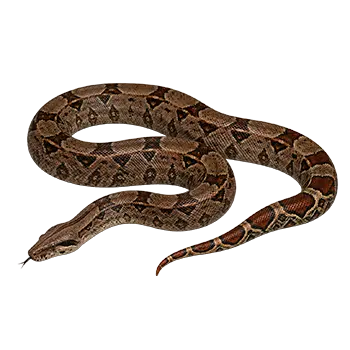
The Colombian Red-Tail Boa requires enclosure dimensions that accommodate its substantial adult size while providing the environmental gradients essential for thermoregulation and behavioral health. The minimum recommended enclosure footprint for an adult female — which commonly reaches six to eight feet in length — is six feet long by two feet deep by two feet tall, yielding twenty-four square feet of usable floor space. Adult males, which typically mature at five to six feet, can be maintained in enclosures as small as four feet long by two feet deep, though providing additional space is always preferable when room and budget allow. These dimensions are minimums, and larger enclosures consistently produce more active, more behaviorally complex animals.

Sizing the enclosure for a neonate or juvenile Colombian Red-Tail Boa requires a different calculus. A ten-to-fifteen-inch neonate placed directly into an adult-sized enclosure will struggle to locate its heat source, water bowl, and hides, leading to stress, feeding refusal, and failure to thrive. Neonates do best in small, secure containers — six-to-twelve-quart plastic tubs with ventilation holes or small front-opening terrariums in the twelve-by-eight-inch range — where every resource is within easy reach. As the snake grows, the enclosure should be upsized incrementally. A common progression is to move from a neonate tub to a twenty-gallon-equivalent enclosure at around twelve months, then to a forty-gallon-equivalent at two to three years, and finally to the permanent adult enclosure by age three to four.

Height deserves more consideration than many boa keepers give it. While Colombian Red-Tail Boas are not as arboreal as their close relative the emerald tree boa, juveniles and sub-adults are semi-arboreal and will readily climb sturdy branches, ledges, and cage furniture when given the opportunity. Providing at least eighteen to twenty-four inches of interior height with accessible climbing structures encourages natural behavior and physical exercise. Adults become increasingly terrestrial as they gain weight but still benefit from elevated perching options, particularly a shelf or broad branch positioned in the warm zone where the snake can bask at height.

The enclosure must be absolutely escape-proof. Boa constrictor imperator is a powerful, persistent, and surprisingly flexible animal that will exploit any gap, loose-fitting lid, or unsecured door. A snake that can press its nose into a space can often work its entire body through that opening given enough time and motivation. Sliding glass doors must have pin locks or keyed locks. Hinged doors should feature latch hardware rated for the snake's strength. Screen-top aquariums are generally inappropriate for Colombian Red-Tail Boas because the snake can push against the mesh with enough force to dislodge clips, and the screen material itself provides poor heat and humidity retention.

Enclosure Types and Materials

The enclosure material a keeper selects has lasting implications for heat retention, humidity management, durability, weight, and cost. PVC (polyvinyl chloride) enclosures have become the dominant choice among serious boa keepers over the past decade, and for good reason. PVC panels are lightweight, impervious to water damage, excellent insulators that hold both heat and humidity with minimal energy input, and easy to clean with standard disinfectants. Several manufacturers produce PVC enclosures in the dimensions appropriate for adult Colombian Red-Tail Boas, with features like front-opening sliding or hinged doors, integrated light fixture recesses, and cord pass-throughs for heating and monitoring equipment. The primary drawback of PVC is lead time — custom-built enclosures from popular manufacturers often carry wait times of several weeks to several months.

Melamine-coated particle board enclosures offer a more budget-friendly alternative that shares many of PVC's practical virtues. Melamine is reasonably moisture-resistant, provides good insulation, and is easy to wipe down. However, melamine's weakness is its vulnerability to prolonged moisture exposure at unsealed edges and joints. Over time, humidity and occasional water spillage can cause particle board to swell, delaminate, and develop mold in areas where the melamine coating has been compromised. Keepers who choose melamine enclosures should seal all exposed edges and joints with aquarium-grade silicone or polyurethane sealant and inspect these seals annually.

Glass terrariums remain popular among hobbyists, particularly the front-opening designs that provide excellent visibility and a polished aesthetic. Glass is non-porous, chemically inert, easy to sterilize, and available from multiple manufacturers in a range of sizes. The disadvantages for Colombian Red-Tail Boa housing are significant, however. Glass is a poor insulator, which means maintaining appropriate temperature gradients requires more heating equipment running at higher output, increasing electricity costs and creating a greater risk of overheating if a thermostat fails. Glass also does a poor job of retaining humidity, which is critically important for a species that requires sixty to seventy percent ambient humidity to shed cleanly and maintain respiratory health.

Plastic storage tubs and rack systems represent the most utilitarian end of the housing spectrum. Commercial boa breeders with large collections rely heavily on rack systems — stackable rows of plastic tubs heated by belly heat tape — because they are space-efficient, inexpensive, easy to clean, and provide the snug, secure microenvironment that boas find comfortable. For keepers with a single pet boa, a rack system lacks visual appeal but remains a functionally excellent option. The critical requirements are adequate ventilation, secure lids that prevent escape, and tub dimensions that meet the minimum space guidelines for the snake's current size.

Substrate Options

Substrate selection for a Colombian Red-Tail Boa enclosure must balance humidity retention, ease of cleaning, naturalness of appearance, cost, and safety. No single substrate is perfect for every situation, and many experienced keepers adjust their substrate choice based on the snake's life stage, the enclosure type, and the ambient humidity of the room in which the enclosure is located.

Coconut coir, sold as compressed bricks that expand when hydrated, is one of the most popular substrates for Colombian Red-Tail Boas. It excels at holding moisture without becoming waterlogged, resists mold growth, has a natural appearance, and is available at reasonable cost in bulk quantities. Coir can be misted to raise localized humidity and dries out gradually between mistings, which creates a natural humidity cycle within the enclosure. The primary maintenance consideration is spot-cleaning waste promptly and replacing the entire substrate bed every four to six weeks, or sooner if odor or breakdown becomes apparent.

Cypress mulch is another excellent choice that provides superior humidity retention and a visually appealing forest-floor aesthetic. The natural oils in cypress wood resist bacterial and fungal growth, giving it a longer usable lifespan than many alternative substrates. Cypress mulch should be sourced from reptile-specific suppliers rather than garden centers, because landscaping mulches may contain cedar, pine, or chemically treated wood mixed in with the cypress, and aromatic softwood oils are toxic to reptiles. Pure cypress mulch, free of dyes, pesticides, and contaminants, is safe and functional for Colombian Red-Tail Boas of all ages.

Newspaper and paper towels serve as a utilitarian substrate option that prioritizes hygiene and simplicity over aesthetics. Many breeders and keepers of large collections use newspaper as a default substrate because it is inexpensive, allows instant visual identification of waste products, and can be replaced in minutes. Paper substrates do nothing to maintain humidity, which means the keeper must rely entirely on other methods — misting, humid hides, or enclosure design — to achieve the sixty to seventy percent ambient humidity range that Colombian Red-Tail Boas require. For neonates and quarantine situations, however, paper substrates are often the best choice because they make it easy to monitor fecal output, identify mites, and maintain a sterile environment.

Substrates to avoid include cedar and pine shavings, which contain volatile aromatic compounds — specifically phenols and terpenes — that are toxic to reptiles and cause respiratory irritation, neurological symptoms, and organ damage with chronic exposure. Sand is inappropriate because it provides no humidity retention and poses an impaction risk if ingested during feeding. Gravel, aquarium rocks, and large bark chips are similarly unsuitable because they cannot be kept clean, trap waste beneath their surface, and can be accidentally swallowed with prey.

Temperature and Heating

Creating and maintaining the correct temperature gradient within a Colombian Red-Tail Boa enclosure is arguably the single most important husbandry variable affecting the animal's health, digestion, immune function, and behavior. As an ectothermic animal, Boa constrictor imperator depends entirely on its environment to regulate body temperature, and it accomplishes this by shuttling between warmer and cooler zones within its habitat. The enclosure must provide a warm basking zone, an ambient warm side, and a cool side retreat, allowing the snake to self-select its preferred temperature at any given moment.

The basking zone should reach eighty-eight to ninety degrees Fahrenheit, measured at the surface where the snake rests. The warm-side ambient temperature — the general air temperature on the heated end of the enclosure — should hover between eighty-two and eighty-six degrees. The cool side should drop to seventy-five to eighty degrees, providing a meaningful differential that the snake can exploit for thermoregulation. A nighttime temperature drop of five to eight degrees across the entire enclosure mimics natural conditions and supports normal circadian cycling, though temperatures should never fall below seventy degrees at the coolest point.

Heating equipment for Colombian Red-Tail Boa enclosures falls into three primary categories: under-tank heat mats and heat tape, radiant heat panels, and heat-emitting light bulbs. Under-tank heat mats and heat tape are effective belly-heat sources that warm the substrate and floor surface from below, providing a heated resting area that aids digestion. Radiant heat panels, mounted to the ceiling of the enclosure, emit infrared heat downward and are particularly well-suited for PVC and wooden enclosures where they can be recessed into the lid. Ceramic heat emitters and deep-heat projectors combine the ceiling-mounted convenience of a bulb fixture with the benefit of producing heat without visible light, making them suitable for round-the-clock heating without disrupting the photoperiod.

Every heating device in a Colombian Red-Tail Boa enclosure must be connected to a thermostat. This is not a recommendation — it is a non-negotiable safety requirement. An unregulated heat mat can reach surface temperatures exceeding one hundred and twenty degrees Fahrenheit, causing severe thermal burns to a snake resting on it. An unregulated ceramic heat emitter can overheat an enclosed space to lethal levels within hours. Proportional thermostats, which modulate power output to maintain a target temperature rather than simply cycling the device on and off, provide the most stable and precise temperature control. On-off thermostats are acceptable but produce wider temperature fluctuations that are less ideal for sensitive species.

Humidity and Ventilation

Colombian Red-Tail Boas originate from tropical and subtropical habitats in Central and South America where ambient humidity ranges from sixty to eighty-five percent depending on season and microhabitat. In captivity, maintaining sixty to seventy percent relative humidity within the enclosure supports respiratory health, promotes clean and complete shedding, and aids in the digestive process. Humidity levels that chronically fall below fifty percent lead to retained sheds, dehydration, and increased susceptibility to respiratory infections, while sustained levels above eighty percent promote bacterial growth, scale rot, and respiratory distress.

The enclosure's construction material is the first line of defense in humidity management. PVC, plastic, and melamine enclosures retain humidity efficiently because their non-porous surfaces do not absorb or transmit moisture. Glass terrariums and screen-topped aquariums lose humidity rapidly through exposed glass surfaces and ventilation screens. Keepers using glass enclosures often need to cover a portion of the screen top with a solid panel — acrylic, foil tape, or a custom-cut PVC sheet — to reduce evaporative loss while maintaining adequate airflow.

Active humidity supplementation comes primarily from substrate choice and misting. Moisture-retentive substrates like coconut coir and cypress mulch act as humidity reservoirs that gradually release moisture into the enclosure air. Misting the substrate with room-temperature water once daily or every other day, depending on the ambient humidity of the room, is usually sufficient to maintain target levels. Automated misting systems are available for keepers who want hands-off humidity management, though they require careful calibration to avoid oversaturation and must be paired with a digital hygrometer for ongoing monitoring.

Ventilation is the counterbalance to humidity retention, and getting the ratio right is essential. A completely sealed enclosure would hold humidity perfectly but would also trap ammonia, carbon dioxide, and bacterial aerosols that compromise air quality and the snake's respiratory health. Colombian Red-Tail Boa enclosures should have ventilation openings positioned to create passive airflow — typically vents on opposite sides of the enclosure, one low and one high, to promote convective air exchange without creating drafts that strip humidity. The size and number of vents should allow air to turn over gradually without requiring fans, which can create localized dry zones and stress the snake.

A humid hide — a shelter with a restricted entrance containing damp sphagnum moss or paper towels — provides a microclimate of near-saturated humidity where the snake can retreat during pre-shed periods or when the ambient enclosure humidity dips below optimal levels. This single accessory prevents the vast majority of shedding problems and gives the snake environmental choice, which is a core principle of effective husbandry.

Lighting Considerations

Lighting in a Colombian Red-Tail Boa enclosure serves two distinct functions: establishing a photoperiod that supports the snake's circadian rhythm and providing human visibility into the habitat. Unlike many diurnal reptile species, Colombian Red-Tail Boas do not have high-intensity lighting or specialized UVB requirements. They are predominantly crepuscular and nocturnal, most active during dawn, dusk, and nighttime hours, and they spend much of the daylight period resting in hides or beneath cover. Nonetheless, a consistent light cycle is important for maintaining normal hormonal cycling, appetite regulation, and seasonal behavioral patterns.

A simple twelve-hours-on, twelve-hours-off photoperiod provides a stable baseline that suits Colombian Red-Tail Boas year-round. Some keepers adjust the cycle seasonally — shortening daylight hours to ten during winter months and extending to fourteen in summer — to mimic natural conditions and stimulate breeding behavior. This seasonal adjustment is optional for non-breeding animals but can improve overall behavioral naturalness and feeding regularity. The light source should be positioned outside the enclosure or behind a protective guard to prevent the snake from wrapping around and contacting the fixture, which poses a burn risk.

Low-level UVB lighting is an area of evolving understanding in boa husbandry. Traditional wisdom held that nocturnal and crepuscular snakes derive no benefit from UVB exposure, and many boas have been kept successfully for decades without it. However, recent research suggests that some level of UVB exposure may improve calcium utilization, support immune function, and enhance the vividness of the snake's coloration over time. If a keeper chooses to provide UVB, a low-output linear fluorescent tube — T5 or T8 in the five to seven percent UVB range — mounted inside the enclosure with appropriate shaded retreat areas allows the snake to self-regulate its exposure. This is entirely optional and should never be implemented at the expense of proper thermal gradients or hiding opportunities.

LED light strips and low-wattage daylight bulbs offer energy-efficient ambient lighting that enhances the keeper's view of the enclosure without generating significant heat. Avoid bright, high-intensity lighting positioned directly above the snake's resting areas, as this creates an uncomfortable and stressful environment for a species that naturally avoids direct sunlight. Red and blue night-viewing bulbs, once popular in the hobby, are now understood to be visible to many snake species and can disrupt nighttime behavior; they should be avoided in favor of complete darkness at night or, if nighttime observation is desired, low-intensity infrared illumination that falls outside the snake's visual spectrum.

Enclosure Furnishings and Layout

The interior layout of a Colombian Red-Tail Boa enclosure transforms a bare container into a functional habitat that supports the animal's behavioral repertoire and thermoregulatory needs. At minimum, the enclosure must contain two hides — one on the warm side and one on the cool side — a water bowl, and a temperature gradient. Beyond these essentials, additional furnishings enhance the snake's quality of life and create a more naturalistic and visually engaging display.

Hides are the most critical furnishing in any boa enclosure. A Colombian Red-Tail Boa that does not feel secure will become chronically stressed, leading to appetite suppression, defensive behavior, and compromised immune function. An effective hide is enclosed on all sides except for a single opening that is just large enough for the snake to enter and exit without excessive clearance. Commercial reptile hides in half-log, cave, and rock-ledge styles are available in sizes appropriate for every life stage. The snake should be able to coil inside the hide with its body touching the walls on most sides — a hide that is too large provides insufficient security, and the snake may avoid using it altogether.

Climbing structures benefit Colombian Red-Tail Boas of all ages but are particularly important for juveniles and sub-adults, which are more arboreal than their adult counterparts. Sturdy branches, cork bark rounds, and purpose-built reptile ledges mounted at varying heights provide exercise opportunities, additional basking sites, and environmental complexity. All climbing structures must be securely anchored and capable of supporting the snake's full weight without shifting or collapsing. A five-foot boa weighing fifteen pounds can exert considerable force on a branch while climbing, and an unsecured fixture that falls can injure the snake or damage heating equipment positioned below.

The water bowl is a functional piece of enclosure furniture that doubles as a humidity source and an enrichment feature. Colombian Red-Tail Boas drink regularly and soak periodically, especially before shedding. The bowl should be heavy or weighted to resist tipping — a boa pushing through or resting against a lightweight bowl will spill water across the substrate repeatedly — and large enough for the snake to submerge at least half its body comfortably. Ceramic crocks and heavy-duty plastic dishes designed for large reptiles are the most practical options. The water should be changed every one to two days or immediately if the snake defecates in it, which is a common behavior.

Background panels, artificial plants, and other decorative elements round out the enclosure's interior without serving a strictly functional purpose. Cork bark flats mounted to the back wall add texture and additional climbing surfaces. Artificial vines and broadleaf plants create visual barriers that increase the snake's sense of cover without trapping moisture or harboring parasites the way live plants can. The overall goal of the layout is to create a habitat that offers thermal choice, security, physical complexity, and visual interest while remaining easy for the keeper to access for cleaning, feeding, and health monitoring.

Always consult a qualified professional before making any health-related decisions. This content is provided for informational reference only and should not replace professional guidance specific to your animal.