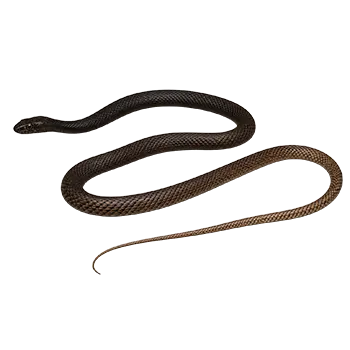

The Coachwhip is not a snake that thrives in a sterile, minimally furnished enclosure. Unlike many heavy-bodied ambush predators that spend the majority of their time motionless and are genuinely content with a hide box and a water dish, Masticophis flagellum is a high-energy, visually oriented predator that actively patrols its territory during daylight hours, investigating its surroundings with a level of alertness and curiosity that is more reminiscent of a monitor lizard than a typical colubrid. A Coachwhip that has nothing to explore, climb, or interact with will quickly develop behavioral indicators of chronic stress, including persistent nose-rubbing against enclosure walls, repetitive pacing, refusal of food, and defensive aggression during handling attempts.
Enrichment for snakes is a concept that has gained significant traction in herpetological circles over the past two decades, driven by behavioral research demonstrating that even species traditionally considered simple or inactive benefit measurably from environmental complexity. For a species as cognitively active and physically energetic as the Coachwhip, enrichment is not an optional luxury — it is a fundamental husbandry requirement. Studies on captive colubrid behavior have shown that snakes provided with varied environmental features spend more time in exploratory locomotion, exhibit fewer stress-related behaviors, maintain healthier body condition, and demonstrate more consistent feeding responses compared to snakes housed in barren setups.
The goal of enrichment for Coachwhips is to approximate the sensory and physical complexity of the animal's natural environment. In the wild, a Coachwhip navigates through grass tussocks, over fallen branches, under rock ledges, across sandy clearings, and up into low shrubs and trees. The terrain is varied, the cover is intermittent, and the snake encounters a constantly shifting landscape of scents, visual stimuli, and tactile surfaces during its daily activity. Captive enrichment cannot fully replicate this, but it can provide enough variety to keep the snake physically active and mentally engaged.
Enrichment should be viewed as an ongoing practice rather than a one-time setup decision. A static enclosure arrangement, no matter how elaborately decorated at the outset, becomes familiar background that the snake ceases to interact with meaningfully over time. Regularly rotating and rearranging enrichment items introduces novelty that prompts renewed investigation and exploration, maintaining the behavioral benefits over the long term.