
Enclosure Size and Dimensions

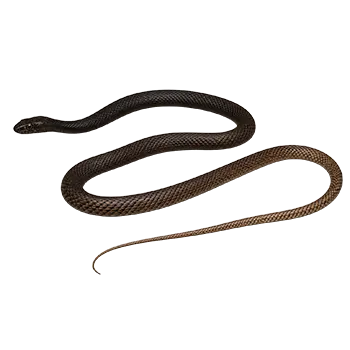
The Coachwhip is one of the most active snake species kept in captivity, and its enclosure must reflect the extraordinary speed and restless energy that define this animal's behavior. Masticophis flagellum is a diurnal, visually oriented hunter that patrols large territories in the wild, covering significant ground each day in pursuit of prey. Confining a snake with this behavioral profile to a cramped enclosure leads to chronic stress, stereotypic behaviors such as repetitive nose-rubbing along seams and edges, and a deterioration in overall health that no amount of veterinary intervention can fully correct if the root cause is not addressed.

The minimum recommended enclosure for an adult Coachwhip is six feet long by two feet deep by two feet tall, though many experienced keepers advocate for even larger setups when space allows. A four-to-five-foot Coachwhip will use every inch of a six-foot enclosure, and specimens approaching or exceeding six feet ideally deserve eight feet of horizontal space. Vertical space matters as well — Coachwhips are semi-arboreal opportunists that will climb sturdy branches and elevated ledges readily — but horizontal floor space is the primary consideration because these snakes spend the majority of their active time cruising at ground level.

Enclosure orientation should prioritize length over height. Front-opening enclosures are strongly preferred over top-opening designs for two practical reasons. First, opening an enclosure from above triggers a predatory-threat response in many snakes, and the Coachwhip's exceptional speed means that a startled animal can bolt past the keeper and out the top of an open-lid enclosure before a reaction is possible. Second, front-opening doors with secure latches allow the keeper to interact with the snake at its level, which reduces stress and makes routine maintenance substantially easier.

Juvenile Coachwhips can be started in smaller enclosures to facilitate monitoring and feeding, but they outgrow starter setups quickly. A hatchling can be housed temporarily in a well-ventilated ten-to-twenty-gallon enclosure with tight-fitting lids, but within six to twelve months, most animals will need to be transitioned to their adult-sized setup. Keeping a fast-growing juvenile in an undersized enclosure for too long contributes to stress-related feeding refusals and increases the risk of rostral abrasion from constant attempts to push against the enclosure walls.

Substrate Options

Substrate selection for the Coachwhip should reflect the arid and semi-arid habitats this species occupies in nature while also supporting the practical demands of hygiene and maintenance in a captive setting. In the wild, Coachwhips range across sandy prairies, dry grasslands, open pine flatwoods, scrublands, and desert edges — environments characterized by loose, well-drained soils with minimal persistent moisture. The substrate in captivity should replicate these conditions rather than creating the damp, humid microenvironment that tropical species require.

Aspen shavings are a popular and effective substrate choice for Coachwhips. Aspen is absorbent, relatively dust-free when purchased from reputable brands, and easy to spot-clean by removing soiled sections without disturbing the entire substrate bed. It allows the snake to burrow lightly, which Coachwhips will do occasionally despite their predominantly surface-active lifestyle, and it does not retain excessive moisture when maintained in the low-humidity conditions this species prefers. Aspen should be replaced entirely every four to six weeks or sooner if odor or visible soiling indicates degradation.

Sand and soil mixtures designed for arid-habitat reptiles offer a more naturalistic alternative. A blend of washed play sand and organic topsoil in a ratio of approximately three parts sand to one part soil creates a substrate that mimics the terrain Coachwhips encounter in the wild, supports limited digging behavior, and maintains the dry conditions the species requires. This type of substrate works particularly well in bioactive or semi-bioactive setups where a cleanup crew of isopods and springtails processes organic waste. However, loose particulate substrates require careful management during feeding to prevent accidental ingestion, which can cause intestinal impaction over time.

Paper-based substrates including unprinted newsprint, butcher paper, and recycled paper bedding products are the most hygienic option and are often recommended for quarantine enclosures, newly acquired animals, and snakes recovering from illness. These substrates offer zero impaction risk, are inexpensive, and make it simple to monitor the snake's waste output for signs of digestive problems or parasitic infection. The trade-off is aesthetic — paper substrates look institutional and do not allow natural behaviors like burrowing — but for keepers who prioritize function over appearance, they are an excellent choice.

Cedar and pine shavings must be avoided entirely. Both contain aromatic phenol compounds that are toxic to reptiles, causing respiratory irritation, neurological damage, and organ failure with prolonged exposure. The pleasant scent that makes these wood products popular for mammal bedding is itself the toxic component, and no amount of airing out or kiln-drying eliminates the risk sufficiently for safe use with snakes. Cypress mulch, while safe for tropical species that require high humidity, retains too much moisture for the arid conditions Coachwhips need and is not recommended.

Heating and Temperature Gradient

Establishing a proper thermal gradient is among the most critical aspects of Coachwhip husbandry, and the temperature requirements of this species are somewhat higher than those of many commonly kept colubrids. As a diurnal, sun-loving snake native to the warm southern and western regions of the United States, the Coachwhip requires a basking spot that reaches ninety to ninety-five degrees Fahrenheit, an ambient warm-side temperature in the mid-eighties, and a cool-side retreat in the mid-to-upper seventies. Nighttime temperatures can safely drop into the low seventies across the enclosure, reflecting the natural diurnal temperature swing these snakes experience in the wild.

Overhead heating is strongly preferred for Coachwhips over under-tank heating elements. In the wild, Coachwhips thermoregulate primarily by basking in direct sunlight, and overhead heat sources such as ceramic heat emitters, radiant heat panels, or carefully positioned halogen basking lamps replicate this natural heat delivery mechanism. Under-tank heat mats do not warm the air column effectively, and because Coachwhips spend much of their time actively moving rather than sitting in one spot on the substrate, a heat mat alone rarely delivers adequate thermal exposure. A heat mat can serve as a supplemental source to maintain nighttime floor temperatures, but it should not be the primary heating element.

All heating elements must be regulated by a thermostat — this is not optional equipment but an essential safety device. An unregulated heat lamp or ceramic emitter can push surface temperatures well above safe limits, causing thermal burns that may not be immediately visible under the snake's scales but that produce deep tissue damage requiring veterinary treatment. A proportional or dimming thermostat provides the most precise temperature control by adjusting power output continuously rather than cycling the heat source on and off. The thermostat probe should be positioned at the basking surface, not in the ambient air several inches away, because surface temperature is what the snake actually contacts during basking.

Seasonal temperature variation can benefit Coachwhips, particularly those from populations in the northern or western portions of the species' range where winter cooling occurs naturally. A modest reduction in temperatures during the winter months — dropping the basking spot to the mid-eighties and the cool side to the low seventies for a period of eight to twelve weeks — can stimulate natural behavioral cycles, improve long-term appetite regulation, and is considered essential for keepers who intend to breed their animals. The cooling period should be implemented gradually over the course of two to three weeks rather than abruptly, and the snake should have fully digested its last meal before temperatures begin to drop.

Lighting and Photoperiod

Lighting is a more significant consideration for Coachwhips than for many nocturnal or crepuscular snake species because Masticophis flagellum is an active diurnal hunter that relies heavily on vision to navigate its environment and locate prey. Providing a clear day-night light cycle that mimics natural photoperiod supports healthy circadian rhythms, feeding behavior, and seasonal activity patterns. A twelve-hour-on, twelve-hour-off light cycle works well for the majority of the year, with adjustments to ten hours of daylight during winter cooling periods and up to fourteen hours during peak summer activity to approximate natural seasonal shifts.

UVB lighting is a topic of increasing attention in colubrid husbandry. While Coachwhips are not obligate UVB-dependent species in the way that many diurnal lizards are, a growing body of research and anecdotal evidence from experienced keepers suggests that low to moderate UVB exposure benefits colubrid snakes by supporting vitamin D3 synthesis, improving immune function, and promoting more natural behavioral patterns. A low-output UVB tube rated at five to seven percent positioned inside the enclosure with an appropriate distance to the basking area provides beneficial exposure without the intensity required for desert lizards. If UVB is provided, the bulb must be replaced according to the manufacturer's recommended schedule, as UV output degrades over months even while the bulb continues to produce visible light.

Visible-spectrum lighting serves both functional and behavioral purposes. A bright, full-spectrum daylight bulb illuminates the enclosure and allows the keeper to observe the snake clearly, but more importantly, it provides the visual environmental cues that a diurnal species depends on to regulate its daily activity cycle. Coachwhips housed in dimly lit enclosures often become less active, less alert, and may develop irregular feeding patterns. A well-lit enclosure encourages the natural patrolling, basking, and exploratory behaviors that indicate a psychologically healthy Coachwhip.

All lighting should be mounted outside the enclosure or protected by a guard if mounted inside. Coachwhips are powerful climbers and remarkably agile, and an unprotected light fixture inside the enclosure will eventually be contacted by a climbing snake. Direct contact with a hot bulb causes severe thermal burns, and even brief contact with a UVB tube at close range can damage the snake's eyes. Wire mesh bulb guards designed for reptile enclosures are inexpensive and effective, and they should be considered mandatory for any lighting positioned within the enclosure interior.

Humidity and Ventilation

The Coachwhip's humidity requirements are among the lowest of any commonly kept snake species, and maintaining appropriately dry conditions is essential for preventing the respiratory infections and scale rot that plague arid-adapted snakes housed in overly moist environments. Ambient humidity in the enclosure should be maintained between thirty and fifty percent under normal conditions, which is naturally achieved in most indoor environments without supplemental humidification. In geographic regions with persistently high ambient humidity, active ventilation or the use of a dehumidifier in the reptile room may be necessary to bring moisture levels down to an acceptable range.

Ventilation is the primary mechanism by which humidity is regulated in a Coachwhip enclosure, and it deserves careful consideration during enclosure selection or construction. Enclosures with solid walls on three sides and a screen or perforated panel on the front or top provide adequate airflow for moisture management while preventing the excessive drafts that can make temperature regulation difficult. Fully screen-topped enclosures offer excellent ventilation but may allow too much heat to escape, requiring more powerful heating elements to maintain the basking temperatures this species needs. PVC and sealed wooden enclosures retain heat efficiently but may require supplemental ventilation to prevent stagnant air pockets where moisture accumulates.

During shedding cycles, a temporary humidity boost helps the Coachwhip complete its shed cleanly and in one piece. Providing a humid hide — a partially enclosed container lined with damp sphagnum moss or paper towels — gives the snake access to localized moisture without raising the ambient humidity of the entire enclosure. The humid hide should be placed on the warm side of the enclosure so the moisture evaporates gently rather than pooling, and the substrate inside should be damp but not saturated. Most Coachwhips will use a humid hide reliably once they discover it, spending time inside during the opaque pre-shed phase and emerging once the old skin begins to loosen.

Water spills from overturned bowls are the most common cause of localized humidity spikes in Coachwhip enclosures. Because these snakes are fast-moving and sometimes erratic in their movements, a lightweight water dish will be overturned regularly. Heavy ceramic crocks or bowls with weighted bases are strongly preferred, and they should be placed in the cooler end of the enclosure where any incidental moisture evaporates more slowly and does not create a warm, damp zone that encourages bacterial and fungal growth. Spills should be cleaned up promptly, and any substrate that becomes saturated should be removed and replaced with dry material immediately.

Enclosure Security and Escape Prevention

Escape prevention is not a secondary consideration for the Coachwhip — it is among the most critical aspects of enclosure design for this species. Masticophis flagellum is faster than virtually any other snake a keeper is likely to encounter, capable of explosive bursts of speed that can carry it across a room and out of sight in seconds. A Coachwhip that escapes its enclosure in a home is extraordinarily difficult to recapture, as the snake's speed, agility, and tendency to seek out narrow crevices and elevated hiding spots make recovery a stressful and sometimes prolonged ordeal. Prevention is immeasurably easier than recapture.

Every potential exit point in the enclosure must be evaluated with the understanding that Coachwhips are persistent, strong, and remarkably thin-bodied relative to their length. Sliding glass doors must fit tightly in their tracks with no vertical gap at the meeting point. Keyed or pin-style locks that physically prevent the doors from being slid open are essential — friction-fit clips and simple wedges are not secure enough for this species. Screen lids on aquarium-style setups must be clamped down firmly on all sides, and even standard reptile screen clips may not provide sufficient resistance against a determined Coachwhip pressing upward with sustained force.

Ventilation openings, cord pass-throughs, and probe access holes represent escape routes that keepers frequently overlook during initial setup. Any opening wider than the snake's head is a potential exit. Ventilation grilles should have mesh spacing no wider than a quarter inch for adult Coachwhips and even tighter for juveniles, whose slender heads can pass through surprisingly narrow gaps. Thermostat probe wires and power cords should enter the enclosure through tight-fitting grommets rather than through gaps created by propping open a lid or door.

Custom-built and PVC enclosures offer the highest level of security for Coachwhips because they can be designed from the outset with escape prevention as a priority. Manufacturers who specialize in reptile enclosures for active colubrids and racers produce designs with locking front panels, sealed seams, and integrated ventilation that eliminates the aftermarket improvisation often needed with repurposed aquariums and general-purpose terrariums. While the initial cost of a purpose-built PVC enclosure is higher than a glass aquarium, the durability, insulation properties, and security features make it the most practical long-term investment for housing a species that will exploit any weakness in containment.

A secondary containment strategy provides an additional layer of security that experienced Coachwhip keepers strongly recommend. Keeping the enclosure in a room with a solid, closeable door ensures that an escape from the enclosure does not immediately become an escape into the broader household. Performing all enclosure maintenance with the room door closed limits the snake's possible range if it bolts during feeding, cleaning, or health checks. This simple precaution has saved countless keepers from the panicked whole-house search that a loose Coachwhip inevitably triggers.

Always consult a qualified professional before making any health-related decisions. This content is provided for informational reference only and should not replace professional guidance specific to your animal.