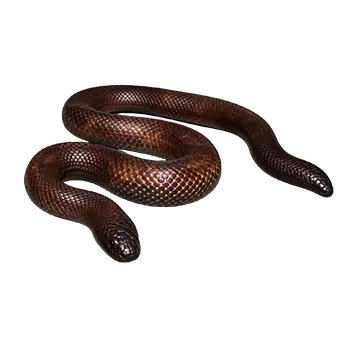

A thermostat is the most critical piece of technology in any Calabar Python enclosure. No heating device — whether under-tank heat mat, heat tape, ceramic heat emitter, or radiant heat panel — should ever be operated without thermostat regulation. Unregulated heat sources are the leading cause of thermal burns in captive reptiles, and the risk is amplified in a fossorial species like Calabaria reinhardtii, which may rest for extended periods directly against a heated surface buried beneath substrate. A thermostat continuously monitors the temperature at the probe location and cycles the heating element on and off or adjusts its power output to maintain a stable target temperature.
Proportional thermostats represent the gold standard for Calabar Python heating control. Unlike simple on-off thermostats that allow the heating element to reach full power before cutting it entirely — creating a sawtooth temperature pattern — proportional models continuously modulate the power delivered to the heater, producing a smooth, stable temperature curve with minimal fluctuation. This precision matters for a burrowing species because the substrate itself acts as a thermal buffer, and temperature swings at the heater surface translate into slower but still significant fluctuations at the depth where the snake rests. A proportional thermostat eliminates the peak temperatures that occur during the on-phase of an on-off unit and reduces the risk of localized overheating at the substrate-heater interface.
Probe placement is as important as the quality of the thermostat itself. For under-tank heating, the probe should be positioned between the heat mat and the enclosure floor, or at the substrate surface directly above the heat mat, depending on the thermostat manufacturer's recommendations. Placing the probe at substrate surface level is generally the more conservative approach because it regulates the temperature at the point closest to where the snake will actually rest if it burrows down to the enclosure floor. A probe placed at mid-substrate depth may read cooler than the actual temperature at the glass-substrate interface, allowing the floor to exceed safe temperatures. The probe cable should be secured to prevent the snake from displacing it during burrowing activity, which would cause the thermostat to lose its reference point and potentially allow the heater to run uncontrolled.
Keepers maintaining multiple Calabar Python enclosures or a mixed reptile collection may benefit from multi-zone thermostat controllers that manage several heating circuits from a single unit. These systems reduce equipment clutter, centralize temperature monitoring, and often include alarm functions that alert the keeper if any zone drifts outside a programmed range. While the per-unit cost is higher than individual thermostats, the consolidated management and safety features justify the investment for collections of more than three or four enclosures.