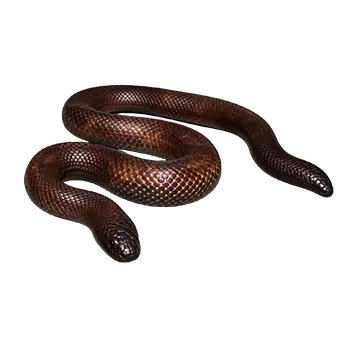

A reliable water dish is the single most important accessory in any Calabar Python enclosure. Calabaria reinhardtii originates from the humid tropical forests of West and Central Africa, where moisture is abundant at ground level and the soil itself retains significant water content. In captivity, the water dish serves a dual purpose: it provides the snake with a direct source of drinking water and contributes substantially to ambient humidity through surface evaporation. Selecting the right dish involves balancing size, stability, material, and placement to meet the specific needs of a burrowing species that can displace objects while tunneling through substrate.
Ceramic crocks designed for reptile use are the preferred water dish for Calabar Pythons. Their weight provides natural resistance to tipping, which is a constant risk in an enclosure where the snake burrows actively through deep substrate and may push against the base of the dish from below. A ceramic dish heavy enough to resist displacement by a two-to-three-foot snake while remaining small enough to fit comfortably within the enclosure's cool side is the ideal balance. The interior glaze of a quality ceramic crock is smooth and nonporous, which resists bacterial biofilm formation and simplifies cleaning compared to rough or unglazed surfaces.
The dish should be large enough for the snake to submerge a significant portion of its body if it chooses to soak. While Calabar Pythons are not semi-aquatic and do not soak as routinely as some tropical snake species, they will occasionally enter the water dish during the pre-shed period to soften loosening skin or during periods of elevated ambient temperature to thermoregulate. A dish approximately four to six inches in diameter and one and a half to two inches deep accommodates soaking behavior without creating a volume of water so large that a spill would saturate the substrate catastrophically. Overly deep dishes present a minimal drowning risk for adult snakes but can be hazardous for neonates, which should be provided with shallower water vessels.
Water quality and freshness require daily attention. Standing water in a warm, humid enclosure becomes a bacterial incubator rapidly, and biofilm — the slimy coating that develops on the interior surface of a neglected water dish — harbors pathogenic organisms that can cause stomatitis and gastrointestinal infections. The water dish should be emptied, scrubbed with a reptile-safe disinfectant or a dilute bleach solution, rinsed thoroughly, and refilled with fresh dechlorinated water at least every two days, and daily changes are preferable. Municipal tap water treated with a commercial reptile water conditioner to neutralize chlorine and chloramines is suitable for most situations.