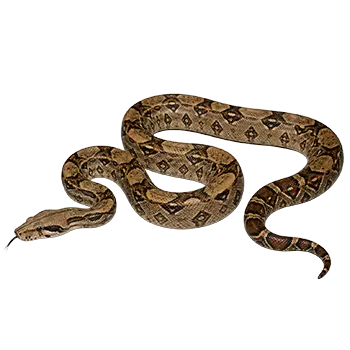

Snake hooks and snake tongs are essential accessories for any boa constrictor keeper. A hook is used to gently lift and redirect the snake during routine handling, enclosure maintenance, and initial contact. Touching a resting boa with a hook before picking it up communicates that it is handling time, not feeding time, which helps condition the snake to distinguish between the two and reduces the chance of a defensive strike or feeding response.
Hooks come in a variety of lengths and styles. A standard hook with a gentle curve at the end is suitable for most boa handling situations. The hook should be long enough to allow the keeper to make initial contact without reaching deep into the enclosure, which can startle the snake. For adult boas over six feet, a longer hook provides better reach and more control. The hook does not need to fully support the snake's weight; it simply guides the animal's head and front third so that the keeper can then support the body with their hands.
Snake tongs are a secondary tool used less frequently with boas than with venomous species, but they have practical applications in boa keeping as well. Tongs are useful for removing soiled substrate, retrieving uneaten prey items, and repositioning enclosure furnishings without putting hands into the enclosure. Rubber-tipped tongs designed for reptile use are preferable to metal-tipped models, which can injure a snake's skin if accidental contact occurs.
For keepers of large adult boas, having a second person available during handling sessions is a practical safety measure rather than a sign of inexperience. Any boa over six feet should ideally be handled with a partner present, and snakes over eight feet should not be handled solo under any circumstances. This is a safety protocol, not a reflection on the snake's temperament. Even the most docile boa can constrict reflexively if it feels insecure, and a second person ensures that the situation can be managed safely.