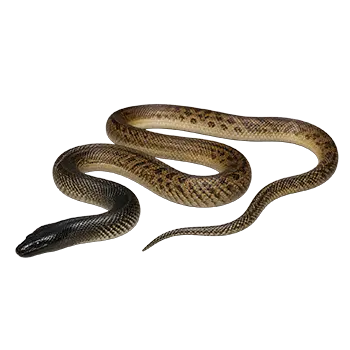

Understanding Enrichment for Snakes

The concept of enrichment for snakes is fundamentally different from what most people associate with pet toys. Snakes do not play with objects the way a dog fetches a ball or a cat bats at a feather wand. Instead, snake enrichment focuses on providing environmental complexity, novel sensory experiences, and opportunities to express natural behaviors such as exploring, burrowing, climbing, and investigating scent trails. For Black-Headed Pythons, which are intelligent and curious by python standards, enrichment is an important component of long-term welfare.

A lack of environmental stimulation in captivity can lead to repetitive behaviors, lethargy, and a general decline in the snake's physical condition and responsiveness. Snakes housed in barren enclosures with nothing but a water dish and a single hide tend to become sedentary and may even develop behavioral issues such as persistent nose-rubbing against enclosure walls, which can cause rostral abrasions.

Effective enrichment for Black-Headed Pythons leverages the species' natural tendencies. In the wild, these snakes are active foragers that explore complex terrain, navigate through rocky crevices and leaf litter, and seek out microhabitats with varying temperatures and humidity levels. Replicating even a fraction of this complexity in captivity can make a meaningful difference in the animal's quality of life.

The products and strategies discussed in this guide focus on practical, evidence-informed approaches to enrichment that work within the constraints of a home vivarium. The goal is not to turn the enclosure into a jungle gym but to create an environment that encourages movement, exploration, and engagement with the surroundings.

Climbing & Exploration Structures

Although Black-Headed Pythons are primarily terrestrial, they are more inclined to utilize low climbing structures than many keepers realize. Providing sturdy branches, cork bark rounds, and low platform ledges encourages the snake to move in three dimensions and supports a broader range of natural postures and movements. The key is to keep climbing options low to the ground — this is not an arboreal species, and tall vertical structures go largely unused.

Cork bark is one of the most versatile enrichment materials available for reptile enclosures. Cork rounds can serve as tunnels for the snake to traverse, flat cork pieces create elevated platforms, and cork tubes of varying diameters provide both climbing opportunities and enclosed hiding spots. The natural texture of cork also provides gentle abrasion that can assist with shedding, an added functional benefit.

Driftwood and grapevine wood are popular choices for creating naturalistic climbing features. When selecting wood for the enclosure, look for pieces with stable bases or secure mounting options to prevent them from shifting or toppling when the snake moves across them. A five-to-eight-foot python has considerable mass, and any structure that cannot support its weight is both useless and hazardous.

Rock formations, whether natural stone or commercially produced resin replicas, can also add climbing and basking surfaces to the enclosure. Natural stone retains heat well and can serve as a secondary basking area when positioned near a heat source. Resin replicas are lighter and easier to arrange but do not retain heat in the same way. Whichever you choose, ensure there are no gaps where the snake could become wedged or pinched.

Burrowing & Tunneling Enrichment

Burrowing is one of the most prominent natural behaviors of Black-Headed Pythons, and facilitating this behavior in captivity is one of the simplest and most effective forms of enrichment available. In the wild, these snakes spend considerable time beneath the surface, using their smooth, muscular bodies and distinctively hardened head to push through loose substrate, leaf litter, and soil.

Providing a substrate layer deep enough for the snake to fully submerge itself is the most straightforward way to support burrowing. Aspen shavings, coconut husk chips, or a naturalistic soil-sand mix can all be used at depths of three to four inches or more for adults. The act of pushing through and rearranging substrate engages the snake physically and mentally, and many keepers report increased activity levels when burrowing opportunities are provided.

Commercially available tunnel systems designed for reptiles offer another avenue for burrowing enrichment. Flexible corrugated tubes, rigid PVC pipe sections, and molded resin tunnels can be placed beneath or within the substrate to create a network of underground pathways. These are particularly useful in enclosures where deep substrate is not practical, as they simulate the experience of moving through confined underground spaces.

Burrowing enrichment can be enhanced by periodically rearranging the tunnel layout or adding new substrate materials. This introduces novelty — a critical component of effective enrichment — without requiring a complete overhaul of the enclosure. Even small changes in the subterranean landscape prompt the snake to re-explore its environment, stimulating cognitive engagement and physical activity.

Sensory & Scent-Based Enrichment

Snakes experience the world primarily through chemoreception — detecting chemical cues in the environment using their forked tongue and Jacobson's organ. For Black-Headed Pythons, scent-based enrichment is arguably the most engaging type of stimulation you can provide, as it taps directly into the animal's primary sensory modality.

One of the simplest forms of scent enrichment involves introducing novel but safe scents into the enclosure. This can be achieved by placing a small amount of substrate from another reptile's enclosure into the Black-Headed Python's habitat, or by rubbing a clean cloth against the shed skin of a different snake species and placing it inside the enclosure. The unfamiliar scent triggers investigative tongue-flicking and increased movement as the snake maps the new olfactory information.

Prey-scented enrichment is another effective technique. Rubbing a thawed prey item along a trail through the enclosure before feeding creates a scent path that the snake can follow, simulating the tracking behavior it would use in the wild. This transforms feeding from a passive event — the snake sits and waits for food to appear — into an active foraging exercise that engages natural predatory instincts.

Some keepers introduce natural materials such as dried leaves, bark from non-toxic trees, or small bundles of dried grass to provide environmental scent complexity. These materials carry subtle organic odors that differ from the sterile enclosure environment and encourage exploration. Replace or rotate these materials regularly to maintain their novelty value, and always ensure that any natural materials introduced are free from pesticides, herbicides, and parasites.

Water Features & Soaking Opportunities

While Black-Headed Pythons are not aquatic by any measure, they do interact with water in their environment and can benefit from enrichment that incorporates a water element. A water dish large enough for the snake to coil inside and soak is a basic but important feature. Many Black-Headed Pythons will soak voluntarily, particularly during pre-shed periods when increased moisture helps loosen the old skin layer.

Upgrading from a basic water dish to a shallow, naturalistic water feature can provide additional enrichment value. Commercially available reptile water bowls that mimic natural rock pools integrate visually into the enclosure and often feature textured surfaces that make entry and exit easy for the snake. Some models include built-in ramps or graduated edges, which are helpful for preventing drowning — though this is primarily a concern for very small hatchlings rather than sub-adult and adult specimens.

For keepers interested in a more elaborate setup, small recirculating water features with low-flow pumps can add both visual appeal and auditory stimulation to the enclosure. The gentle sound and movement of water may attract the snake's attention and encourage investigation. However, any water feature must be easy to disassemble and clean, as standing or recirculating water in a warm enclosure can rapidly become a breeding ground for bacteria if not maintained diligently.

Regardless of the type of water feature used, the water must be changed frequently — daily for still dishes, and on a regular maintenance schedule for recirculating systems. Black-Headed Pythons, like many snakes, will occasionally defecate in their water dish, so prompt cleaning is essential. Use dechlorinated or conditioned water, especially if your tap water contains high levels of chlorine or chloramine.

Rotation & Novelty Strategies

One of the most important principles of effective enrichment is novelty. Even the most elaborate enclosure becomes routine if nothing ever changes. Black-Headed Pythons, while not problem-solvers on the level of monitors or corvids, are observant animals that respond to changes in their environment with increased alertness and exploration. Building a rotation strategy into your husbandry routine keeps the environment engaging over the long term.

The simplest form of rotation involves periodically rearranging the existing décor within the enclosure. Moving hides to different positions, rotating branches to new angles, or shifting cork bark pieces to create different pathways costs nothing and takes only a few minutes. The snake treats the rearranged environment as partially novel and will re-explore areas it had previously mapped.

Maintaining a small inventory of enrichment items that can be swapped in and out of the enclosure extends this approach. Keep a few extra hides, tunnels, or branches on hand that are not permanently in the enclosure. Introducing a new item while removing a familiar one creates a combination of novelty and displacement that prompts investigation. Clean and store removed items so they can be reintroduced after a rest period, during which time the snake will have partially forgotten them.

The frequency of enrichment rotation depends on the individual animal's responsiveness and your observation of its behavior. Some keepers rotate elements weekly, while others do so bi-weekly or monthly. Watch for signs that the snake has stopped interacting with its environment — reduced movement, prolonged periods in a single hide, or a general lack of tongue-flicking activity when the enclosure is approached. These can indicate that the environment has become too predictable and would benefit from a change.

Keep in mind that enrichment should never come at the cost of stability and security. Snakes need consistent access to appropriate temperatures, hides, and water. Changes should be additive or lateral — swapping one enrichment item for another — rather than removing essential elements. The goal is to maintain a baseline of comfort while introducing just enough novelty to keep the animal mentally engaged.

Always consult a qualified professional before making any health-related decisions. This content is provided for informational reference only and should not replace professional guidance specific to your animal.