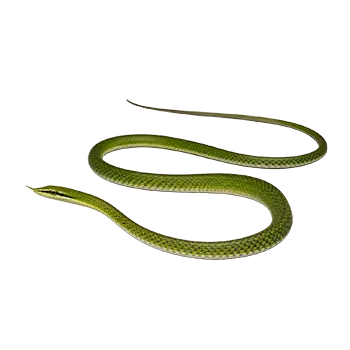

Understanding Enrichment for Arboreal Snakes

Environmental enrichment for snakes has historically been undervalued in the reptile hobby, largely because snakes lack the overt play behaviors and interactive curiosity that make enrichment easy to observe and appreciate in mammals and birds. However, the scientific literature on reptile cognition and welfare has expanded considerably in recent years, and the consensus among herpetological researchers and progressive keepers is clear: snakes benefit measurably from environments that provide opportunities for exploration, choice, and behavioral variety. For the Asian Vine Snake, an active diurnal hunter with keen eyesight and complex spatial navigation abilities, enrichment is not an optional enhancement — it is a fundamental component of responsible husbandry.

The concept of enrichment for Ahaetulla prasina must be framed through the lens of this species' natural behavioral repertoire. In the wild, Asian Vine Snakes spend their active hours navigating complex three-dimensional networks of branches, vines, and foliage in search of lizard prey. They assess distances with binocular vision, extend their slender bodies across open gaps between branches, and adjust their position in response to wind movement, sun angle, prey detection, and perceived predator presence. A captive environment that reduces this behavioral complexity to a single perching branch in an otherwise bare enclosure deprives the snake of nearly every opportunity to express its evolved behavioral repertoire.

The goal of enrichment for this species is not to entertain the snake in the way one might entertain a dog with a ball or a parrot with a puzzle. Rather, it is to create an environment complex enough that the snake can engage in the full range of behaviors it would perform in the wild — navigating, hunting, hiding, basking, exploring, and choosing between microhabitats. An enriched enclosure provides options, and those options are the enrichment. The snake chooses where to perch, how to move between locations, whether to bask or retreat into shade, and where to position itself relative to airflow and humidity gradients. Each choice represents a cognitive engagement that a barren enclosure would eliminate.

Enrichment also plays a direct role in physical health. An Asian Vine Snake that moves frequently through a complex network of branches and vines maintains better muscle tone, cardiovascular fitness, and joint flexibility than one that sits stationary on a single perch for days at a time. Sedentary captive snakes are more prone to obesity — even in a species as naturally slender as this one — and the muscle atrophy that accompanies inactivity compromises the snake's ability to climb, hunt, and even shed properly. A well-enriched enclosure promotes activity not through forced exercise but through intrinsic motivation: the snake moves because the environment gives it reasons to.

Climbing and Perching Structures

The climbing network within the enclosure is the single most important enrichment investment for the Asian Vine Snake, and it should receive more planning and budget allocation than any other category of enclosure furnishing. The branch network should create a continuous, interconnected system of pathways that allows the snake to travel from the lowest accessible point to the highest perch without touching the ground. Gaps between branches should be bridged by supplemental vines, dowels, or flexible connectors so that the snake can move fluidly rather than being forced to descend to the floor and climb back up — a behavior that this species performs reluctantly and that indicates insufficient arboreal infrastructure.

Branch diameter variety is a subtle but significant enrichment factor. The Asian Vine Snake's prehensile grip works differently on thin twigs versus thicker branches, and the muscular engagement required to navigate each diameter provides physical stimulation comparable to a person walking on varied terrain versus a flat surface. Including branches that range from pencil-thin twigs — which the snake grips tightly and navigates slowly — to finger-width branches that support comfortable resting creates a physically diverse locomotion environment that exercises different muscle groups and movement strategies.

Horizontal perches positioned at multiple heights serve as primary resting and basking stations. Asian Vine Snakes typically select a preferred perching height and return to it repeatedly, but this preference can shift over time in response to temperature changes, seasonal behavior, and simple novelty. Providing at least three horizontal perching options at different heights — one near the basking zone, one at mid-level, and one lower — gives the snake the ability to thermoregulate behaviorally by choosing the perch that delivers the preferred body temperature at any given time. The basking perch should be positioned within the appropriate distance from the heat and UVB source, while the lower perches provide cooler retreat options.

Suspended platforms and cork bark shelves mounted to the enclosure walls add horizontal surface area in the upper portions of the enclosure without blocking vertical movement. These platforms create resting spots with different textures and thermal properties than branches, and some vine snakes will drape themselves across a cork bark platform in a posture rarely seen on cylindrical perches. Mounting platforms at slight angles rather than perfectly level adds postural variety and prevents water from pooling on the surface after misting sessions.

Foliage and Visual Barriers

Dense foliage is an enrichment element that serves double duty as both a stress-reduction tool and a behavioral stimulator for the Asian Vine Snake. In the wild, Ahaetulla prasina relies on its remarkable green coloration and vine-like body shape to blend seamlessly into leafy vegetation, where it hunts by remaining motionless among leaves until prey wanders within striking distance. An enclosure filled with appropriately dense foliage allows the snake to engage in this camouflage-dependent hunting strategy, which is one of the most behaviorally complex activities in its repertoire. Without foliage, the snake cannot ambush hunt effectively, which removes a key behavioral opportunity and forces it into an artificial existence that bears little resemblance to its natural life.

Visual barriers created by strategically placed plant clusters provide the snake with the ability to remove itself from visual contact with the room, the keeper, and other household disturbances. This capacity for visual retreat is critically important for a shy, stress-sensitive species that responds to perceived threats by freezing in place and relying on crypsis. A vine snake that has no foliage to hide among and is constantly visible to passersby will experience chronic low-level stress that manifests as reduced appetite, increased defensive behavior, and compromised immune function over weeks and months.

Live plants offer enrichment benefits that artificial plants cannot fully replicate. Living foliage introduces subtle environmental dynamism — leaves grow and change position over time, new shoots create novel pathways and hiding spots, and the plant's metabolic activity contributes to air quality and humidity regulation within the enclosure. The gentle movement of live leaves in response to airflow or the snake's passage adds visual and tactile complexity to the environment. Pothos, ficus benjamina, and various philodendron species are well-suited for the warm, humid, moderately lit conditions of a vine snake enclosure, and their non-toxic status eliminates concern about incidental ingestion during feeding.

Artificial foliage provides reliable, maintenance-free coverage and is particularly useful in areas of the enclosure where live plants would struggle due to insufficient light or excessive heat from a basking bulb. High-quality silk or plastic plants with realistic leaf textures and flexible stems can be positioned precisely where coverage is needed and repositioned during enrichment rotation sessions. Mixing live and artificial foliage throughout the enclosure combines the biological benefits of living plants with the practical reliability of artificial ones, ensuring that no portion of the enclosure lacks adequate vegetative cover regardless of seasonal plant growth cycles or individual plant health setbacks.

Sensory Enrichment

Sensory enrichment targets the Asian Vine Snake's well-developed visual, olfactory, and tactile senses through environmental stimuli that encourage the snake to investigate, assess, and respond to novel inputs. This category of enrichment is distinct from structural enrichment in that it does not require permanent enclosure modifications — sensory stimuli can be introduced, varied, and removed on a rotating basis to maintain novelty, which is itself a critical enrichment principle. An environment that never changes eventually becomes as unstimulating as an environment that was never enriched in the first place.

Olfactory enrichment leverages the snake's vomeronasal organ, which detects chemical cues from the environment via tongue-flicking. Introducing novel scents to the enclosure — a clean branch segment from a different wood species, a small amount of substrate from another reptile's enclosure (ensuring biosecurity by using only substrate from healthy, parasite-free animals), or a dried leaf cluster from a non-toxic outdoor plant — stimulates investigatory tongue-flicking behavior and sustained exploratory movement as the snake maps the new chemical landscape. The novelty of unfamiliar scent signatures triggers the same heightened awareness and active investigation that the snake would experience upon encountering new territory in the wild.

Visual enrichment for a species with binocular vision and acute motion detection can be as simple as altering the viewing angle available to the snake. Repositioning the enclosure periodically so that the snake's primary visual field includes a different portion of the room, or placing the enclosure near a window where the snake can observe outdoor movement — birds, wind-blown foliage, passing clouds — provides constantly varying visual input that maintains alertness and cognitive engagement. Care must be taken to ensure that window exposure does not overheat the enclosure through direct sunlight, which can create lethal temperature spikes in an enclosed glass vivarium within minutes.

Tactile enrichment involves providing varied surface textures throughout the enclosure. Different bark types — smooth manzanita, rough cork, fibrous grape vine — challenge the snake's grip in different ways and provide a range of tactile experiences during locomotion. Adding textured elements such as moss-covered branches, rough stone ledges, or sections of bamboo with different internal and external surface profiles expands the variety of physical sensations the snake encounters as it moves through its habitat. These texture differences may seem trivial to a human observer, but for an animal that contacts surfaces with its entire ventral body length during every movement, the difference between smooth and rough is the equivalent of walking barefoot on carpet versus gravel — noticeable, engaging, and stimulating.

Naturalistic Habitat Features

Naturalistic habitat features bridge the gap between utilitarian enclosure furnishing and immersive environmental design by incorporating elements that replicate specific aspects of the Asian Vine Snake's wild habitat. These features serve enrichment functions while simultaneously improving the aesthetic quality of the enclosure — a secondary benefit that should not be dismissed, because a visually compelling vivarium encourages the keeper to invest more time in observation and maintenance, both of which directly benefit the snake's welfare.

Water features such as small drip walls or recirculating streams provide dynamic environmental elements that serve multiple enrichment functions simultaneously. The sound and movement of flowing water attract the snake's attention and encourage exploratory behavior, the elevated humidity near a water feature creates a localized microclimate the snake can choose to occupy or avoid, and the presence of running water provides a drinking opportunity that many vine snakes prefer to still-water dishes. A simple drip wall can be constructed from a small aquarium pump directing water over a textured background panel where it trickles down into a catch basin, or commercial drip wall products designed for tropical vivariums can be installed with minimal modification.

Leaf litter added to the substrate surface introduces a naturalistic ground-cover layer that supports microfauna in bioactive setups and creates additional olfactory complexity as leaves decompose gradually in the warm, humid environment. While the vine snake rarely descends to the substrate, the presence of a living leaf litter layer contributes to the overall ecological balance of the enclosure and provides habitat for springtails and isopods that serve as the cleanup crew in bioactive systems. Dried magnolia leaves, Indian almond leaves, and live oak leaves are commonly used in tropical vivarium setups and are readily available from terrarium supply vendors.

Moss features — both living and preserved — add textural variety and moisture-management benefits to vertical surfaces within the enclosure. Sheet moss attached to cork bark panels or background surfaces retains moisture after misting and creates a damp microhabitat zone the snake can rest against during the shedding process. Living moss requires moderate light and consistent humidity to thrive but rewards the keeper with a self-maintaining moisture reservoir that contributes to the enclosure's overall humidity stability. Sphagnum moss tucked into branch crotches or draped over horizontal surfaces serves a similar moisture-retention function and can be easily replaced as it degrades.

Background panels that replicate the appearance of natural tree bark, rock faces, or root systems transform the flat rear wall of the enclosure into an additional climbing and sheltering surface. Three-dimensional backgrounds made from carved foam coated in non-toxic sealant, or natural cork bark panels mounted directly to the enclosure wall, provide additional vertical surface area, create crevice hiding spots between the panel and the glass, and eliminate the visually sterile appearance of an exposed enclosure wall. For the snake, a textured background is another climbable surface that expands the usable space of the enclosure beyond what the interior branch network provides.

Enrichment Rotation and Safety

Enrichment rotation is the practice of periodically changing elements within the enclosure to maintain environmental novelty — the quality that makes enrichment effective over the long term. An unchanging environment, no matter how well-furnished, eventually becomes fully mapped and predictable to the snake, at which point it ceases to provide meaningful cognitive stimulation. The rotation schedule must balance the benefits of novelty against the stress that excessive change can inflict on a shy, security-dependent species like the Asian Vine Snake. A practical approach is to modify one or two elements of the enclosure every two to four weeks while leaving the overall structure — primary perches, core foliage clusters, and hide locations — undisturbed.

Elements suitable for rotation include secondary branches, artificial vine pathways, foliage density in specific zones, textured surface additions, and olfactory enrichment items. The snake's primary perching branch and its preferred hiding spot should remain constant, as these represent the anchor points of the snake's spatial map and their removal causes disproportionate stress relative to the novelty gained. Think of enrichment rotation as rearranging the furniture in a room while keeping the bed and the front door in the same place — enough change to be interesting, not enough to be disorienting.

Safety considerations must govern every enrichment decision. All materials introduced into the enclosure must be non-toxic, free of sharp edges, securely fastened, and incapable of trapping or injuring the snake. Branches should be inspected for loose bark flaps that could trap the snake's head or body, and any branch with visible insect infestation, fungal growth, or resin seepage should be discarded. Natural materials collected from outdoors must be sanitized before use — baking branches at two hundred degrees Fahrenheit for thirty minutes or soaking them in a dilute bleach solution followed by thorough rinsing and complete drying eliminates parasites, insect eggs, and surface pathogens.

Artificial enrichment products should be evaluated for construction quality before introduction. Cheaply made artificial vines with exposed wire ends, poorly glued joints that could come apart and be ingested, or paint and dyes that leach in humid conditions all pose risks. Products marketed for reptile use from established brands have generally been evaluated for safety, but imported or generic products may not have undergone any testing. A simple safety test — soak the product in warm water for twenty-four hours and inspect for discoloration, odor, or structural degradation — can reveal potential problems before the item enters the enclosure. The enrichment program should enhance the snake's quality of life without introducing new hazards, and every item should be subject to the same scrutiny a keeper would apply to any permanent enclosure fixture.

Always consult a qualified professional before making any health-related decisions. This content is provided for informational reference only and should not replace professional guidance specific to your animal.