
Enclosure Type and Size

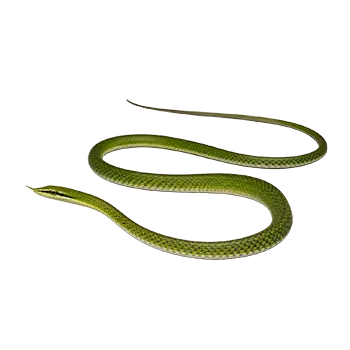
The Asian Vine Snake is an obligate arboreal species that spends virtually its entire life in the canopy and mid-story layers of tropical vegetation, and the enclosure must be designed from the ground up to accommodate this vertical lifestyle. Standard horizontal reptile terrariums that serve terrestrial and semi-arboreal species well are fundamentally inappropriate for Ahaetulla prasina. The enclosure must be taller than it is wide, with a minimum recommendation of twenty-four inches deep by twenty-four inches wide by thirty-six inches tall for a single adult. Larger enclosures — thirty-six by twenty-four by forty-eight inches or greater — are strongly preferred and provide more usable vertical space for climbing, hunting, and thermoregulation.

Screen cages designed for arboreal reptiles, such as those manufactured for chameleons, are a popular choice among vine snake keepers and offer several advantages. Full-screen construction provides excellent ventilation, which helps prevent the stagnant air conditions that promote respiratory infections in tropical species. Screen walls also allow for effective misting and drip-system integration, as water can drain freely rather than pooling on impermeable surfaces. However, screen cages present a significant challenge in maintaining adequate humidity in dry indoor environments, particularly during winter months when household heating reduces ambient moisture levels. In arid climates, keepers may need to supplement a screen cage with partial panel coverage using plastic sheeting or shower curtain material on two or three sides to retain humidity while preserving airflow on the remaining surfaces.

Glass or PVC terrariums with front-opening doors represent an alternative that excels at humidity retention while still providing adequate ventilation through screened top panels and adjustable vents. These enclosures maintain a more stable microclimate with less effort than full-screen cages, which reduces the keeper's daily maintenance burden and provides the snake with more consistent environmental conditions. The trade-off is reduced airflow, which can be mitigated by selecting models with dual-vent systems or by installing a small computer fan to promote gentle air circulation without creating drafts.

Regardless of enclosure type, the enclosure must be escape-proof. Asian Vine Snakes are extraordinarily slender — a three-foot individual may have a head no wider than a pencil eraser — and they are persistent explorers that will probe every gap, hinge, and screen seam for potential exit points. Sliding screen tops with push-pin locks, loose-fitting doors, and unsealed cable pass-throughs are all common escape routes. The enclosure should be inspected meticulously before introducing the snake, and any gap that exceeds one-eighth of an inch should be sealed with aquarium-safe silicone, foam weather stripping, or hardware cloth.

Vertical Space and Climbing Structure

Vertical space is not merely beneficial for the Asian Vine Snake — it is the single most critical dimension of the enclosure because this species utilizes horizontal perches at varying heights as its primary living environment. A vine snake that is forced to spend the majority of its time at ground level due to insufficient climbing infrastructure will exhibit chronic stress behaviors including persistent hiding, feeding refusal, and repetitive glass-surfing or screen-rubbing. The internal architecture of the enclosure should create a three-dimensional network of branches, vines, and foliage that fills the upper two-thirds of the available space.

Natural branches sourced from non-toxic hardwood trees provide the most effective and visually appealing climbing surfaces. Branches should vary in diameter from roughly one-quarter inch to three-quarters of an inch — thin enough for the snake to grip with its slender body but thick enough to support its weight without excessive flexion. Grapewood, manzanita, cork bark tubes, and Malaysian driftwood are all commonly available through reptile suppliers and are safe for use in humid environments. Branches should be arranged at multiple angles — horizontal, diagonal, and gently curving — to create pathways that allow the snake to traverse the full height and width of the enclosure without touching the ground.

Artificial vines made from bendable wire cores wrapped in textured plastic or fabric provide supplemental climbing routes and can be shaped to fill gaps between natural branches. These products are particularly useful for creating the continuous horizontal pathways that vine snakes prefer when traveling across their habitat. High-quality artificial vines with a realistic bark texture offer better grip than smooth plastic versions, and the wire core allows keepers to reshape routes periodically, which provides environmental novelty without requiring a full enclosure redesign.

Live or artificial foliage is an essential complement to the branch network and serves multiple functions. Dense leaf cover provides visual security that reduces stress in this naturally shy species, creates microhabitat zones with slightly different humidity and light levels, and supports the natural hunting behavior of a predator that relies on concealment to ambush lizard prey among vegetation. Pothos, philodendron, and ficus are popular live plant choices that tolerate the warm, humid conditions required by this species. Artificial plants offer the advantage of zero maintenance and consistent coverage but should be selected for realistic leaf size and density rather than decorative appeal — the snake does not care about aesthetics, but it does care about having enough cover to feel hidden from perceived threats.

Substrate and Floor Setup

While the Asian Vine Snake spends the overwhelming majority of its time elevated on branches and vines, the substrate layer at the bottom of the enclosure plays an important supporting role in humidity regulation, waste management, and the overall health of the captive microclimate. A moisture-retentive substrate that supports the target humidity range of sixty to eighty percent without becoming waterlogged is the ideal choice. Coconut fiber, also marketed as coco coir or eco earth, is the most widely used substrate for tropical arboreal snake enclosures and performs well in this application. It absorbs and slowly releases moisture, resists mold growth when maintained at appropriate dampness levels, and is readily available in compressed brick form from virtually every reptile supply retailer.

A substrate layer depth of two to three inches provides sufficient moisture-buffering capacity without excessive depth that could harbor pockets of anaerobic decomposition. Some keepers add a drainage layer beneath the substrate — a one-inch bed of expanded clay balls or aquarium gravel covered by a mesh screen separator — which prevents the substrate from sitting in standing water after heavy misting sessions. This drainage-layer approach is particularly valuable in glass or PVC enclosures where water has no natural exit route, and it substantially reduces the risk of substrate souring that produces foul odors and bacterial growth.

Spot-cleaning the substrate after each visible fecal deposit or urate output prevents waste from decomposing in the warm, humid environment and contributing to bacterial or fungal overgrowth. Asian Vine Snakes produce relatively small waste volumes compared to heavy-bodied species, but the warm and moist conditions that this species requires are also ideal conditions for rapid microbial proliferation. A full substrate replacement every four to six weeks, combined with a thorough enclosure disinfection, maintains sanitary conditions and prevents the gradual buildup of nitrogenous waste compounds that can irritate the snake's respiratory system.

Bioactive substrates represent an advanced option that some experienced keepers employ to create a self-maintaining ecosystem within the enclosure. A bioactive setup layers drainage material, a mesh screen barrier, an organic substrate mix enriched with leaf litter, and a cleanup crew of springtails and tropical isopods that consume waste, mold, and decaying plant material. When properly established, a bioactive substrate can reduce maintenance frequency, stabilize humidity, and support live plant growth. However, bioactive setups require a deeper understanding of soil ecology and a longer establishment period before introducing the snake, making them better suited to keepers with prior experience in tropical vivarium construction.

Temperature and Heating

The Asian Vine Snake originates from the tropical lowland and montane forests of Southeast Asia, where ambient temperatures remain warm and relatively stable year-round. In captivity, the enclosure should provide a thermal gradient that allows the snake to self-regulate its body temperature by moving between warmer and cooler zones. The warm side of the enclosure should reach eighty-five to eighty-eight degrees Fahrenheit at the basking perch, while the cool side should remain between seventy-five and eighty degrees. A nighttime temperature drop to seventy to seventy-five degrees across the entire enclosure is appropriate and mirrors the natural diel cycle this species experiences in the wild.

Heating strategy must account for the arboreal nature of this species. Under-tank heating pads, which are effective for terrestrial snakes that thermoregulate by resting on warm surfaces, are largely useless for a snake that rarely contacts the enclosure floor. Overhead heating is the appropriate method, and the two primary options are incandescent basking bulbs and ceramic heat emitters. A low-wattage basking bulb positioned above a designated perching branch at the warm end of the enclosure creates a localized warm zone that the snake can access voluntarily. The bulb should be shielded by a ceramic fixture rated for the wattage used and protected by a bulb guard or positioned outside the screen top to prevent direct contact burns.

Ceramic heat emitters produce heat without light and are useful for maintaining nighttime temperatures in cool rooms without disrupting the snake's photoperiod. Because Asian Vine Snakes are diurnal and rely on day-night light cycling to regulate their activity patterns, using a light-emitting heat source only during daytime hours and switching to a ceramic emitter or allowing natural nighttime cooling is the physiologically appropriate approach. Colored bulbs marketed as nighttime heat sources — red, blue, or purple — should be avoided, as there is evidence that reptiles can perceive these wavelengths and that continuous nocturnal illumination disrupts sleep and circadian rhythms.

All heat sources must be connected to a thermostat to prevent temperature spikes that can rapidly overheat the narrow air column of a tall enclosure. A proportional thermostat, which modulates power output to maintain a target temperature rather than simply switching power on and off at set thresholds, provides the most stable and naturalistic thermal environment. The thermostat probe should be positioned at the basking perch level on the warm side, as this is the hottest point the snake is likely to contact. A secondary thermometer at the cool end of the enclosure verifies that the gradient is functioning correctly and that the cool zone is not being inadvertently heated by radiant overflow from the warm side.

Humidity and Ventilation

Humidity management is arguably the most demanding aspect of housing the Asian Vine Snake, because this species requires sustained high humidity while simultaneously needing adequate air circulation to prevent the respiratory problems that thrive in stagnant, overly damp environments. The target humidity range is sixty to eighty percent, with brief spikes above eighty percent during and immediately after misting sessions being acceptable and even beneficial. Sustained humidity below fifty percent leads to chronic dehydration, retained shed cycles, and increased susceptibility to respiratory infection, while sustained humidity above ninety percent without adequate ventilation creates conditions favorable to bacterial and fungal growth on the snake's skin and within the respiratory tract.

Misting is the primary tool for elevating and maintaining humidity. Manual misting with a hand-pump pressure sprayer is the most basic approach and works adequately for keepers who can commit to two or three misting sessions per day. Each session should thoroughly wet the foliage and branch surfaces within the enclosure, replicating the dew and rain exposure this species receives in tropical forests. Automated misting systems dramatically reduce the daily labor of humidity management and can be programmed to deliver precise durations at scheduled intervals, ensuring consistent humidity even when the keeper is away from home. These systems are discussed in detail in the tech and monitoring section.

Ventilation design determines whether high humidity remains healthy or becomes a liability. The ideal enclosure provides cross-ventilation — air enters from a lower vent or screen panel and exits through an upper opening, creating a gentle chimney effect that moves humid air without creating direct drafts on the snake. Screen-top enclosures with solid or partially covered sides achieve this naturally, as moist warm air rises and exits through the top while drier ambient air is drawn in through lower gaps. Fully sealed enclosures with only a single vent point create pockets of stagnant air where condensation collects and microbial growth accelerates, particularly in corners and behind decor items that restrict airflow.

Seasonal adjustments to humidity management are often necessary because indoor ambient humidity fluctuates significantly between summer and winter in temperate climates. During winter, forced-air heating systems can reduce household humidity to twenty or thirty percent, which places enormous strain on the keeper's ability to maintain sixty-percent-plus humidity inside the enclosure. Adding partial panel covers to screen cages, increasing misting frequency, placing a large water dish near the heat source to promote passive evaporation, and running a room humidifier in the space where the enclosure is located are all strategies that help bridge the dry season. Conversely, summer months in humid climates may push enclosure humidity above target without any intervention, requiring increased ventilation to prevent oversaturation.

Lighting Requirements

The Asian Vine Snake is a diurnal species that is active during daylight hours and rests at night, and its lighting requirements reflect this daytime-oriented biology. A consistent photoperiod of twelve hours of light and twelve hours of darkness provides the circadian stability this species needs to maintain normal feeding, activity, and hormonal cycles. Significant deviations from this schedule — extended periods of continuous light or darkness — can disrupt feeding behavior, elevate stress hormone levels, and suppress immune function over time. A simple plug-in timer connected to the enclosure's light fixtures ensures consistent photoperiod management without relying on the keeper's daily memory.

UVB lighting is strongly recommended for the Asian Vine Snake, and the evidence supporting its benefit for diurnal reptile species continues to grow within the herpetological veterinary community. Ahaetulla prasina basks in filtered sunlight in its natural habitat, where it receives moderate levels of UVB radiation that support endogenous vitamin D3 synthesis, which in turn facilitates calcium absorption from dietary sources. A linear fluorescent or LED UVB fixture producing a Ferguson Zone two to three output — moderate, forest-canopy-level exposure — positioned above the primary basking perch provides appropriate UVB levels without the intensity associated with desert-species fixtures. The fixture should span approximately half the length of the enclosure to create a UV gradient that allows the snake to self-regulate its exposure.

UVB bulbs degrade over time even when they continue producing visible light, and most manufacturers recommend replacement every six to twelve months depending on the bulb technology. A UV meter, while an investment, allows keepers to verify actual UVB output at the basking distance and replace bulbs based on measured performance rather than arbitrary schedules. The distance between the UVB source and the basking perch matters considerably — UVB intensity diminishes rapidly with distance, and a bulb that provides adequate exposure at eight inches may deliver negligible UVB at eighteen inches. Positioning the basking branch within the manufacturer's recommended distance range ensures the snake benefits from the installation.

Ambient visible-spectrum lighting improves the overall quality of the captive environment and supports the visual hunting behavior that defines this species. Asian Vine Snakes possess excellent binocular vision adapted for detecting the movement of small prey among foliage in well-lit conditions, and a brightly illuminated enclosure during daytime hours enhances their ability to hunt, explore, and engage in natural behaviors. A full-spectrum LED plant-growth light or a daylight-temperature fluorescent tube provides even, naturalistic illumination that also benefits any live plants in the enclosure. Combining UVB and visible-spectrum lighting in a single canopy fixture simplifies installation and ensures that both spectral requirements are met from a unified source.

Always consult a qualified professional before making any health-related decisions. This content is provided for informational reference only and should not replace professional guidance specific to your animal.