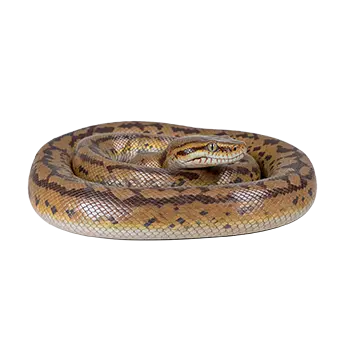

Argentine Rainbow Boas are strict carnivores whose nutritional requirements center on whole prey. In their native range across northern Argentina and parts of Paraguay, these boas feed on small mammals, birds, and the occasional lizard, consuming their prey whole and extracting a complete nutritional package from bones, organs, muscle, and integument. Captive husbandry should aim to replicate this dietary profile as closely as possible, relying on commercially bred rodents as the primary food source.
Compared to some of the larger boid species, the Argentine Rainbow Boa has a moderate metabolism that reflects its semi-terrestrial lifestyle. These snakes spend considerable time at ground level or in low vegetation, which means their energy expenditure is lower than that of highly arboreal or actively foraging species. Overfeeding is one of the most common husbandry errors with this species, and it leads to obesity, hepatic lipidosis, and reduced longevity. A well-conditioned Argentine Rainbow Boa should have a gently rounded cross-section with a faintly visible spine ridge and no lateral fat deposits.
Life stage significantly influences nutritional requirements. Neonates and juveniles are in a phase of rapid growth and require proportionally more frequent meals to build healthy muscle mass and skeletal structure. Adults in maintenance mode need far fewer calories, and their feeding frequency should reflect that reduced demand. Breeding females have elevated nutritional needs during follicle development, and keepers who plan to breed should increase meal frequency slightly in the months leading up to the breeding season.
Hydration is a critical and often underestimated component of nutrition for this humidity-dependent species. Argentine Rainbow Boas originate from subtropical environments with moderate to high humidity, and they require consistent access to clean drinking water. Dehydration impairs digestion, slows nutrient absorption, and can contribute to incomplete sheds that compromise skin health. A sturdy water bowl large enough for the snake to soak in, refreshed every one to two days, supports both hydration and digestive efficiency.