
Enclosure Types and Sizing

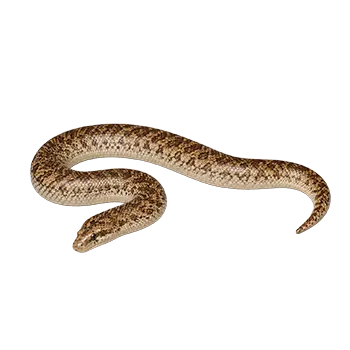
Arabian Sand Boas are small, fossorial snakes that prioritize horizontal floor space and substrate depth over vertical climbing room. The ideal enclosure for an adult Arabian Sand Boa is a glass terrarium, front-opening reptile enclosure, or plastic tub measuring at least twenty gallons in volume, with dimensions that emphasize length and width over height. A footprint of roughly thirty inches long by twelve inches wide provides ample room for a thermal gradient, a water dish, and several inches of burrowing substrate without wasted vertical space that the snake will never use.

Front-opening terrariums are widely preferred by keepers of fossorial species because they allow substrate to remain undisturbed during routine maintenance. Top-opening tanks require the keeper to reach through or displace the substrate layer every time they access the enclosure, which can stress a burrowing snake that spends most of its life hidden beneath the surface. Front-opening designs also make spot-cleaning, water dish changes, and visual health checks far less disruptive to the animal.

Plastic tub setups are a practical and cost-effective alternative, particularly for breeders or keepers housing multiple sand boas. A tub with a secure, ventilated lid in the range of twenty to thirty quarts provides adequate space for a single adult and makes temperature regulation straightforward. Ventilation holes should be drilled or melted into the sides rather than the lid to prevent substrate from blocking airflow, and the holes should be small enough to prevent escape — Arabian Sand Boas are surprisingly adept at finding and exploiting gaps.

Juvenile Arabian Sand Boas do best in smaller enclosures that are scaled up as they grow. A ten-gallon tank or a six- to twelve-quart plastic tub is appropriate for neonates and young juveniles. Placing a very small snake in an oversized enclosure can cause feeding difficulties and stress, as the animal may feel exposed and insecure in a space that offers too much open territory relative to its body size. Upgrading enclosure size gradually as the snake matures ensures consistent feeding behavior and visible comfort at each life stage.

Substrate Selection

Substrate is arguably the single most important housing decision for an Arabian Sand Boa, because this species spends the overwhelming majority of its life buried beneath the surface. The substrate must allow natural burrowing behavior, hold tunnels at least marginally, and not pose ingestion risks during feeding. The two most widely recommended substrate options for this species are fine-grain play sand and a sand-soil mixture that combines washed play sand with organic, addite-free topsoil in a ratio of approximately three parts sand to one part soil.

Pure play sand offers the advantage of easy sourcing, low cost, and a natural appearance that closely resembles the aeolian sand dunes of the Arabian Sand Boa's native habitat. It flows freely and allows the snake to submerge itself quickly, which is the defining behavior of this species. The drawback is that pure sand does not hold burrow structure well, so tunnels collapse quickly and the snake must constantly re-excavate. Some keepers mitigate this by lightly misting one area of the sand to improve cohesion, though care must be taken not to raise overall humidity beyond the species' tolerance.

Sand-soil mixtures address the structural limitation of pure sand. The soil component adds enough binding quality that burrows hold their shape for hours or even days, giving the snake a more complex and enriching subterranean environment. The soil should be free of fertilizers, perlite, vermiculite, and any chemical additives. Commercially available reptile-branded excavation substrates accomplish the same goal in a pre-mixed, sterilized form, though at a higher price point than mixing your own from bulk play sand and bagged topsoil.

Substrate depth is a critical variable that many keepers underestimate. Arabian Sand Boas require a minimum of three to four inches of substrate to engage in natural burrowing behavior. Five to six inches is preferable and allows the snake to fully submerge with room to create lateral tunnels. Thin substrate layers — one or two inches — frustrate the burrowing instinct and can lead to stress behaviors including glass surfing, food refusal, and attempts to escape. The weight of deep sand in a glass tank should be factored into shelf or stand load capacity.

Calcium sand, crusite-based substrates, and walnut shell products should be avoided entirely. Calcium sand clumps when wet and can cause intestinal blockages if ingested during feeding. Walnut shell fragments have sharp edges that can damage delicate ventral scales and internal tissues. Aspen shavings, while safe for many colubrid species, do not provide the fine-grain burrowing experience that sand boas require and should not be used as a primary substrate for this species.

Heating and Temperature Gradient

Establishing a proper thermal gradient is essential for the health and metabolic function of an Arabian Sand Boa. As an ectothermic desert species, this snake relies entirely on environmental heat sources to regulate its body temperature, drive digestion, and support immune function. The warm end of the enclosure should maintain a surface temperature of approximately 90 to 95 degrees Fahrenheit, while the cool end should sit in the range of 75 to 80 degrees Fahrenheit. This gradient allows the snake to thermoregulate by moving between zones as needed.

Under-tank heat mats are the most commonly used and most appropriate primary heat source for Arabian Sand Boas. Because this species lives beneath the substrate surface, belly heat delivered from below the enclosure floor mimics the natural warming pattern of sun-heated desert sand. The heat mat should cover roughly one-third of the enclosure's floor area, positioned entirely on one end to create a clear warm zone. It is absolutely critical that every under-tank heater is connected to a thermostat — unregulated heat mats can reach surface temperatures well above 110 degrees Fahrenheit, which will cause fatal thermal burns through even several inches of substrate.

Overhead heat sources such as ceramic heat emitters or radiant heat panels are viable alternatives or supplements, particularly in larger enclosures or in rooms where ambient temperature drops significantly at night. However, overhead heating is less efficient for fossorial species because the heat must penetrate through the substrate layer to reach the snake's actual resting depth. If an overhead heat source is used, substrate-level temperatures should be verified with a probe thermometer buried at the snake's typical depth rather than relying on ambient air temperature readings.

Nighttime temperature drops are natural and generally beneficial for Arabian Sand Boas, as their native habitat experiences significant diurnal temperature swings. Allowing the warm end to drop to 80 to 85 degrees Fahrenheit at night while the cool end falls to 70 to 75 degrees Fahrenheit simulates natural desert conditions and supports healthy circadian rhythms. Extreme cold below 65 degrees Fahrenheit should be avoided, as it can suppress immune function and cause respiratory complications. In cold climates, a low-wattage ceramic heat emitter on a thermostat can maintain a safe minimum overnight temperature without adding light.

Humidity and Ventilation

Arabian Sand Boas originate from one of the most arid environments on earth, and their captive housing must reflect this. Ambient humidity within the enclosure should remain between 30 and 40 percent for the majority of the time, which is typically close to or below average indoor humidity in most homes. Sustained humidity above 50 percent creates conditions that promote respiratory infections, scale rot, and fungal dermatitis — all of which are far more dangerous to a desert-adapted species than to tropical reptiles.

Ventilation is the primary mechanism for maintaining low humidity. Enclosures with screen tops provide excellent airflow and are naturally self-regulating in dry indoor environments. Front-opening terrariums with screen ventilation strips also perform well. Plastic tub setups require more deliberate ventilation design — multiple rows of small holes drilled along the upper sides of the tub ensure adequate air exchange without creating drafts at substrate level. If condensation is visible on the enclosure walls at any time other than immediately after a misting, ventilation is insufficient and must be improved.

Despite the generally arid requirements, a brief humidity increase during shedding periods can prevent stuck shed and incomplete ecdysis. When a keeper notices the telltale signs of an impending shed — clouded eyes, dulled coloration, and reduced activity — lightly misting a small area of the substrate on the cool side of the enclosure once daily for two to three days can provide the localized moisture the snake needs to shed cleanly. This targeted approach raises humidity temporarily and locally without saturating the entire habitat.

The water dish itself contributes to ambient humidity and should be sized appropriately to avoid excessive evaporation. A small, shallow dish that the snake can drink from but not soak in is ideal. Placing the water dish on the cool side of the enclosure minimizes evaporation from the heat gradient and helps keep overall humidity in the correct range. If the enclosure consistently reads above 45 percent humidity despite proper ventilation, reducing the water dish size, switching to a narrower-mouth dish, or increasing the ventilation area are all effective corrective measures.

Hides and Interior Layout

While the substrate itself serves as the Arabian Sand Boa's primary hiding space, providing supplemental hides and surface features enhances the enclosure's functionality and gives the snake options for thermoregulation above the substrate surface. At minimum, one hide should be placed on the warm end and one on the cool end of the enclosure. These can be commercially produced reptile hides, inverted half-logs, cork bark flats, or even simple overturned ceramic dishes with an entry hole — the material matters less than the size and security of the hiding space.

Hides for Arabian Sand Boas should be snug. A hide that is too large defeats its purpose, as the snake will not feel the contact pressure against its body that provides a sense of security. The interior of the hide should allow the snake to coil comfortably while still touching the walls and ceiling. As the snake grows, hides should be swapped out for incrementally larger ones that maintain this snug fit. Having a selection of hides in graduated sizes on hand makes this transition seamless.

Substrate-level decor serves a dual purpose of visual appeal and functional enrichment. Smooth stones, resin rock formations, and pieces of driftwood partially buried in the substrate create subsurface obstacles that the snake encounters during its burrowing activities, adding complexity and interest to its underground environment. Avoid items with sharp edges, small crevices that could trap a burrowing snake, or lightweight pieces that could shift and collapse onto the animal. Every item placed in the enclosure should be stable and unable to topple.

The overall interior layout should leave the majority of the floor space uncluttered and available for deep substrate. Arabian Sand Boas do not climb, rarely explore elevated surfaces, and gain no benefit from branches, vines, or tall decorations. A minimalist approach that prioritizes substrate depth, two appropriately sized hides, a water dish, and a few buried structural elements creates the most species-appropriate environment. Keepers who prefer a more naturalistic display can incorporate artificial desert plants anchored securely in the substrate, but these are purely aesthetic additions that do not contribute to the snake's welfare.

Lighting Considerations

Arabian Sand Boas are primarily crepuscular to nocturnal and do not require specialized lighting for metabolic processes. Unlike many diurnal lizard species, sand boas do not depend on ultraviolet B radiation to synthesize vitamin D3, as they obtain this vitamin entirely from the liver and organs of their whole-prey diet. This means that UVB bulbs, mercury vapor lamps, and other UV-producing fixtures are not required components of an Arabian Sand Boa enclosure.

However, providing a consistent photoperiod — a predictable cycle of light and dark — is beneficial for maintaining healthy circadian rhythms and natural behavioral patterns. A simple timer controlling ambient room lighting or a low-wattage LED fixture on a twelve-hours-on, twelve-hours-off cycle during spring and summer, adjusted to ten hours on and fourteen hours off during fall and winter, provides the seasonal light cues that support normal feeding cycles and, in breeding animals, reproductive cycling.

Direct, intense lighting should be avoided. Arabian Sand Boas are adapted to living beneath sand in a dimly lit subterranean world, and prolonged exposure to bright overhead lights can cause stress, avoidance behavior, and light-related eye irritation in a species with dorsally positioned eyes adapted for low-light ambush hunting. If a light is used directly over the enclosure for viewing purposes, it should be low-intensity, diffused, and on a timer that limits exposure to no more than a few hours per day.

Red or blue night-viewing bulbs, once widely marketed for nocturnal reptile observation, have largely fallen out of favor among experienced keepers and herpetological veterinarians. Research suggests that reptiles can perceive these wavelengths and that constant nighttime illumination disrupts rest cycles. If nighttime observation is desired, infrared-emitting devices or brief use of a dim flashlight are less disruptive alternatives that allow the keeper to check on the snake without affecting its behavior or sleep patterns.

Cleaning and Maintenance

Maintaining a clean enclosure is essential for preventing bacterial growth, parasitic buildup, and respiratory issues in Arabian Sand Boas. The dry, sandy substrate used for this species naturally inhibits some microbial growth compared to humid tropical setups, but it still requires regular attention. Spot-cleaning should be performed as soon as feces or urates are noticed, which typically means a check every two to three days. A small scoop or slotted spoon makes it easy to remove soiled substrate without displacing the entire sand bed.

Full substrate replacement should be performed every four to six weeks under normal conditions. During a full change, the snake should be temporarily relocated to a secure holding container while the enclosure is emptied, wiped down with a reptile-safe disinfectant, rinsed thoroughly, and allowed to dry completely before fresh substrate is added. The water dish, hides, and any decor items should be washed and disinfected at the same time. Quaternary ammonium-based reptile disinfectants or a dilute chlorhexidine solution are effective and safe options when rinsed thoroughly after application.

Water dishes should be cleaned and refilled with fresh water at least every two to three days, or immediately if substrate, feces, or shed skin contaminates the water. Biofilm — a slimy bacterial layer — can develop on water dish surfaces even in low-humidity enclosures, so scrubbing the dish with hot water and a dedicated brush during each water change is good practice. Stainless steel or glazed ceramic dishes resist biofilm better than plastic and are easier to sterilize.

Enclosure hardware — including heat mat connections, thermostat probes, and ventilation screens — should be inspected during each full cleaning for wear, damage, or malfunction. A heat mat with a frayed cord, a thermostat probe that has shifted position, or a screen top with a developing gap can all pose safety risks. Incorporating hardware checks into the regular cleaning routine ensures that potential problems are caught early before they compromise the snake's environment or safety.

Always consult a qualified professional before making any health-related decisions. This content is provided for informational reference only and should not replace professional guidance specific to your animal.