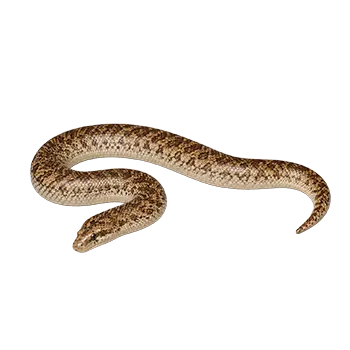

A properly selected water dish is one of the most fundamental accessories in any Arabian Sand Boa enclosure. Despite originating from one of the driest environments on earth, this species requires constant access to clean drinking water. The dish should be shallow enough that the snake can drink comfortably without submerging its head — a water depth of roughly half an inch to three-quarters of an inch is appropriate for adults — and heavy enough to resist tipping when the snake pushes against it during its underground movements.
Ceramic and glazed stoneware dishes are the best materials for Arabian Sand Boa water vessels. Their weight provides inherent stability against the lateral forces that a burrowing snake exerts on nearby objects, and their non-porous glazed surfaces resist bacterial biofilm buildup far better than plastic alternatives. The glazed finish also makes cleaning simpler — a quick scrub with hot water and a dedicated brush removes residue without the micro-scratches that develop on plastic over time and harbor bacteria. Small ceramic ramekins and shallow stoneware bowls designed for reptile use are widely available in sizes well suited to this species.
Placement of the water dish affects both humidity management and the snake's access patterns. Positioning the dish on the cool side of the enclosure minimizes evaporation, which helps maintain the low ambient humidity that this desert species requires. The dish should rest on a stable, level section of substrate or on a flat stone platform that prevents it from sinking or tilting as the snake burrows beneath and around it. A dish that slowly sinks into loose sand will eventually tip and saturate the substrate, creating a damp zone that can promote scale rot and respiratory issues.
Some keepers of arid-environment snakes debate whether a permanent water dish raises humidity to problematic levels. In practice, a small, appropriately sized dish in a well-ventilated enclosure contributes a negligible amount of moisture to the ambient air. If humidity readings consistently exceed 40 percent and the water dish is identified as the contributing factor, switching to a smaller dish, using a dish with a narrower opening, or providing water for several hours per day rather than continuously are all viable adjustments that maintain hydration access without compromising the arid environment.